|
Critical comments on the genus Propachynolophus Lemoine, 1891 (Mammalia, Perissodactyla, Equoidea)
Published online: 27/09/2017
Keywords:
Eocene; Eurohippus; Pachynolophus; Propalaeotherium; tooth morphology
https://doi.org/10.18563/pv.41.1.e3
Abstract
Abstract
The validity of Propachynolophus Lemoine, 1891, supposedly an intermediate between Hyracotherium Owen, 1841 and Pachynolophus Pomel, 1847, has been questioned for a long time. A detailed analysis of features on which this genus is based further supported by a formal cladistic analysis demonstrates that Propachynolophus is not a valid taxon. The type species, “Propachynolophus gaudryi Lemoine, 1891” shall be assigned to Propalaeotherium Gervais, 1849, under the new combination Propalaeotherium gaudryi (Lemoine, 1891). “Pachynolophus maldani Lemoine, 1878”, later assigned to Propachynolophus, typifies the new genus Orolophus, under the binomen Orolophus maldani (Lemoine, 1878). The other referred species, “Propachynolophus levei Hooker, 1994” and “P. remyi Checa-Soler, 1997” are poorly documented, and both species shall be provisionally referred to as “Hyracotherium” levei (Hooker, 1994) and “Hyracotherium” remyi (Checa-Soler, 1997), pending new discoveries.
PV article infos
Published in Vol 41-1 (2018)
|
PDF
S.I. Data
|

|
Compléments sur les Chiroptères de l'Eocène moyen d'Europe. Les genres Palaeochiropteryx et Cecilionycteris.
Published online: 01/10/1980
Keywords:
Chiroptera; Geiseltal; Messel; Middle Eocene
https://doi.org/10.18563/pv.9.ext.91-126
Abstract
New dental and skeletal material referable to Palaeochiropteryx tupaiodon from the Middle Eocene locality of
Messel (G.F.R.) is studied, which provides additions to the previously gained knowledge of this european genus. Dental specimens from Geiseltal (G.D.R.), also of Middle Eocene age, allow us to analyze Cecilionycteria prisca. Some of these are separated to establish a new genus, Matthesia, and two new species, M. germanica and M. ? insolita.
PV article infos
Published in Vol. 9, Ext (1980)
|
PDF
|

|
Analysis of mammalian communities from the late Eocene and Oligocene of southern France
Published online: 15/12/1986
Keywords:
Late Eocene; Mammalian communities; Oligocene; Quercy; Southern France
https://doi.org/10.18563/pv.16.4.191-212
Abstract
Valverde's cenogram method is used to analyse mammalian communities from the late Eocene to late Oligocene of southern France, mainly from the "Phosphorites du Quercy". Cenogram analysis involves plotting the size of each component species in a fauna on a semilog diagram in rank order, permitting fossil faunas to be compared with Recent ones. The configurations of Recent communities serve as models for establishing the general environmental characteristics of fossil mammalian faunas. This method of analysis applied to faunal sequence can reveal major and sudden ecological perturbations. The paleobiogeographical event (i.e. the mammalian immigration wave) at the Eocene-Oligocene Boundary in western Europe, known as the «Grande Coupure", is here shown to represent a drastic and sudden ecological change: late Eocene tropical environments in Europe deteriorated rapidly turning to subdesert or desert environments al the beginning of the Oligoccne.
PV article infos
Published in Vol. 16, Fasc. 4 (1986)
|
PDF
|

|
Relations phylétiques de Bachitherium filhol, ruminant de l'Oligocène d'Europe Occidentale.
Published online: 20/06/1987
Keywords:
Artiodactyla; Bachitherium; Cladistic analysis; France; Mammalia; Oligocene; Ruminantia
https://doi.org/10.18563/pv.17.2.43-73
Abstract
A detailed comparative study of a complete skeleton of Bachitherium and a cladistic analysis of the sub-order Neoselenodontia lead us to propose a cladogram and a new classification of this group. The Tylopoda are the sister-group of the Ruminantia, which are chiefly defined by the fusion of the cuboid and navicular. Within this infra-order, Amphimeryx is the sister genus of a tetraselenodont group, in which the Hypertragulidae are well-separated group from a monophyletic group defined by the loss of trapezium, fusion of capitatum and trapezoid, and the isolation of the hypoconid on lower molars. The most primitive genera of this group, Lophiomeryx and Iberomeryx still have an open trigonid on the lower molars, but this is lingually closed in Archaeomeryx, sister-genus of the higher Ruminantia which have fused metatarsals and more evolved milk teeth. We divide them into two pan/orders : Tragulina (including the recent and miocene Tragulidae, and the North-American Leptomerycidae), and Pecora, with reduced lateral metacarpals and a new crest (telocristid) on the lower premolars. Within the Pecora, the upper molars of Gelocus are more primitive than those of Bachitherium (a genus with many autapomorphies in the dentition) itself more primitive than the group Prodremotherium + Eupecora, with fused metacarpals. We consider the Eupecora (including several genera without frontal appendages) to be monophyletic.
PV article infos
Published in Vol. 17, Fasc. 2 (1987)
|
PDF
|

|
Le genre Leptolophus (Perissodactyla, Mammalia): morphologie et histologie dentaires, anatomie cranienne, implications fonctionnelles.
Published online: 15/09/1998
Keywords:
dental histology; Eocene; functional anatomy; Palaeotheriidae; skull anatomy; Southern France; Systematics
https://doi.org/10.18563/pv.27.1-2.45-108
Abstract
A strong lophodonty, an extreme heterodonty, some hypsodonty and regular overlayings of coronal cement are prominent features of the genus Leptolophus (Palaeotheriinae = Palaeotheriidae s.s.). The histological pattern of the teeth unusually joins type II enamel prisms, characteristic of advanced ungulates, together with archaic features, such as an almost complete lack of Hunter-Schreger zonation and a weak expanse of peritubular dentine. The skull is narrow and slender, with an elongated ante-orbital facial region, a moderately notched nasal aperture, a rather elongated post-canine diastem, parallel zygornatic arches and a fairly dorsally located squamoso-mandibular joint.The functional analysis brings to light "ectolophodont" masticatory cycles with two phases, in which maximum power was applied, contrary to equíds, on hindmost teeth; likewise, skull accomodations to increasing height of the teeth are quite different. This study leads to the assumption that Leptolophus may have been light mammals, living in rather open surroundings, browsing on herbaceous plants or leaves cropped close to the ground. Moreover, it appears that it could have been some inadequacy of dental structures to the dietary, which leaded to quick wear of the teeth and to many enamel notches, but had been somewhat balanced by the early increase of hypsodonty, not induced in such a case by a biotop deterioration (as it will happen at the end of the Eocene). This ínadaptation might account for the short duration of the genus Leptolophus, whose the 3 species, L. stehlini, L. nouletí and L. magnus n. sp. are indeed confined in the level MP 16. Its geographical spreading (as far as known, South of western Europe) and the morphological pattern of its dentition suggest that this genus would have been related to early upper Eocene endemic spanish forms.
PV article infos
Published in Vol. 27, Fasc. 1-2 (1998)
|
PDF
|

|
The fossil rabbit from Valdemino cave (Borgio Verezzi,Savona) in the context of western Europe Oryctolagini of Quaternary.
Published online: 15/12/1997
Keywords:
Lagomorpha; Mammals; North-western Italy; Oryctolagus; Plio-Pleistocene; Savona
https://doi.org/10.18563/pv.26.1-4.167-187
Abstract
The present research deals with the remains of a lagomorph found at Valdemino cave and comes to the conclusion that it is a rabbit with peculiar characteristics in comparison with the other known species Oryctolagus laynensis, O. lacosti and 0. cuniculus. We studied other fossil remains of rabbit populations from Villafranchían and middle Pleistocene deposits and compared them with data from the literature and with recent material. The analysis leads us to maintain two phylogenetic hypotheses about the history of Oryctolagini. The ñrst one, already formulated by Lopez Martinez, suggests that 0. cuniculus derives from O. laynensis,while the origin of O. lacostí is unknown; according to the second hypothesis 0. laynensis would be the common ancestor of two phyletic lineages, 0. lacosti and 0. cuniculus. In both cases the lagomorph from Valdemino would be the form derived from 0. lacosti, from which however it differs in peculiar characteristics. Since the rabbit from Valdemino survives until the beginning of Postgalerian, its disappearance may coincide with the retreat of 0. cuniculus from western Europe in Spain and, perhaps, in south-western France, before the last glaciation. O. cuniculus survived in Spain, from where it spread once again over western Europe as a result of man.
PV article infos
Published in Vol. 26, Fasc. 1-4 (1997)
|
PDF
|

|
Les artiodactyles du gisement yprésien terminal de Premontre (Aisne, France)
Published online: 16/12/1996
Keywords:
Artiodactyls; France; Mammals; new species; Ypresian
https://doi.org/10.18563/pv.25.2-4.391-414
Abstract
The artiodactyls (Mammalia) from the latest Ypresian locality of Prémontré from the Paris Basin (niveau repère MP 10 in the lower Eocene of the Paris Basin) are described in this paper. Three species have been identified: 1) Diacodexis cf. varleti SUDRE et al., 1983; 2) a new species of Eurodexis ERFURT & SUDRE (E. russelli nov. sp.) defined after the revision of the species Messelobunodon? ceciliensis from the Lutetian beds of Geiseltal (Germany); and 3) Eurodexeinae indet., a probable ancestor of another form from the Geiseltal which was previously recorded as Homacodon? sp. (Erfurt 1993) and now named Parahexacodus germanicus. The two later forms are referred to the new subfamily Eurodexeinae (Erfurt & Sudre 1996). The analysis of these forms as weIl as comparative studies have led us to reconsider our previous conclusions regarding the content of the species Protodichobune oweni LEMOINE 1878 and some aspects of Ypresian diacodexid evolution. One can postulate that the divergence of E. russelli nov. sp. occurred during the first radiation of these primitive artiodactyls. Some other stem form with bunodont teeth such as Protodichobune and Aumelasia have also differentiated from Diacodexis. Like Eurodexis, these two genera persist during the middle Eocene. The absence of Protodichobune and Aumelasia at Prémontré is probably due to particular ecological conditions.
PV article infos
Published in Vol. 25, Fasc. 2-4 (1996)
|
PDF
|

|
Strange Eocene rodents from Spain
Published online: 16/12/1996
Keywords:
Biogeography; Eocene; PHYLOGENY; Rodents; Spain; Zamoramys extraneus n. gen. n. sp.
https://doi.org/10.18563/pv.25.2-4.323-338
Abstract
A new European rodent from the middle Eocene of Spain, Zamoramys extraneus n. gen., n. sp., appears to be closely related to the middle Eocene chapattimyid rodents of Indo-Pakistan. This contradicts the generally accepted paleobiogeographic hypothesis of a Tethyian barrier between Europe and Asia isolating Europe during the middle Eocene. Because of this barrier, some authors have proposed that European and Asian rodents were not closely related, their similarity being the result of morphological convergence. Here monophyly has been tested, using the parsimony criterion, based on an analysis of dental characters (including discussing of homology and the validity of some characteristics). Our results indicate a phylogenetic relationship among the Asiatic Ctenodactyloidea, Zamoramys from Spain, and the European endemic Theridomyoidea. We also conclude from our analysis that theridomyoids and European ischyromyoids are probably not closely related phylogenetically.
PV article infos
Published in Vol. 25, Fasc. 2-4 (1996)
|
PDF
|

|
Les Tayassuidés des phosphorites du Quercy
Published online: 15/11/1974
Keywords:
Quercy Phosphorites; Tayassuidae
https://doi.org/10.18563/pv.6.1-2.55-85
Abstract
Revision of the Tayassuidae from the old collections of the Quercy leads to interesting facts about taxonomic and phylogenetic problems. It could not have been well done without constant comparison with contemporaneous Tayassuidae from stratified series, as well as with European Miocene Tayassuidae and Hyotheriinae. The result is that only three species are present in the Phosphorites of Quercy: Doliochoerus quercyi FiLHOL (represented by two sub-species: the older, D. quercyi quercyi and the more recent, D. quercyi aquensis), Palaeochoerus gergorianus CROIZET et BLAINVILLE and Palaeochoerus purillus nov. sp. The two former species disappeared with Stampian time, while the third is the direct ancestor of the Aquitanian Palaeochoerus typus POMEL, which became extinct before the beginning of Burdigalian.
The comparison with Hyotheriinae brought to light new criteria for determinations, based on the study of lower premolars. These observations are condensed in a table of keys for determinations.
As a result of these studies, it came to light that the Suoidea of the Oligo-Miocene of Europe have never given rise to, except in rare cases, very long lineages. The different forms of pigs are replaced constantly in Europe by the simple game of extinctions and migrations. The reason of that discontinuity is considered here.
PV article infos
Published in Vol. 06, Fasc. 1-2 (1974)
|
PDF
|

|
Mode de vie et affinités de Paschatherium (Condylarthra, Hyopsopontidae) d'après ses os du tarse
Published online: 16/12/1996
Keywords:
Astragalus; Calcaneum; Condylarthra; Eocene; Functional morphology; Paschatherium; PHYLOGENY
https://doi.org/10.18563/pv.25.2-4.225-242
Abstract
Tarsals that can be confidently attributed to Paschatheríum dolloi from Dormaal (Belgium) are described. The astragalus is short; its broad neck is set at an angle of 30 degrees to the trochlea. The trochlea is pulley-shaped and proximally extended. There is no astragalar foramen. The medial tibial facet extends distally in a cup deeply excavated in the neck and buttressed. The sustentacular facet extends toward the navicular facet but is not fully confluent with it. The calcaneum bears a proximo-distally extended proximal facet for the astragalus. A relatively large peroneal tubercle projects from the body, and is situated distally. Functionally, the trochlea indicates extensive flexion-extension movements of the foot. Calcaneo-astragalar facets indicate sliding and rotation between the two tarsals. The inclination of the navicular facet suggests frequent foot inversion. The peroneal tubercle reflects good muscular capacities for foot rotation. Overall morphology is interpreted as a scansorial adaptation similar to that of sciurids.Comparisons are made with the tarsals of Macrocranion vandebroeki from Dormaal and Hyopsodus paulus from the Bridgerian of Wyoming. Some similarities between the astragali of Paschatherium and Macrocraníon (trochlea) are interpreted as convergences for rapid locomotion. However absence of mobility at the lower ankle and midtarsal joints in M. vandebroekzi suggests that this species was cursorial, as is known for M. tenerum from Messel. Similarities in the calcanea of Paschatherium and Hyopsodus are probably the result of close phylogenetic relations, and confirm the placement of Paschatherium in the hyopsodontids. The differences in the calcanea of Paschatherium and Macrocranion underline that Paschatherium is distinct from erinaceomorph insectivores. The differences in astragalar morphology between Paschatherium and Hyopsodus show that a marked adaptive divergence separates the two genera. We speculate about the common occurrence of a deep tibial cup (“cotylar fossa”) and a pulley-shaped trochlea in Paschatherium and hyracoids, suggesting that an adaptive scenario similar to that having led to Paschatherium (scansoriality) might explain the acquisition of the peculiar hyracoid tarsal characters; such a scenario contradicts the concept of Pantomesaxonia. Other peculiar characters of Hyopsodus suggest that hyopsodontids might be given more consideration in the search for hyracoid (and tethythere) origins.
PV article infos
Published in Vol. 25, Fasc. 2-4 (1996)
|
PDF
|

|
Les insectivores des phosphorites du Quercy
Published online: 15/11/1974
Keywords:
Insectivores; Quercy Phosphorites
https://doi.org/10.18563/pv.6.1-2.109-159
Abstract
Many types of insectivores have been described from specimens found in the Quercy phosphorites. These remains very often were not dated because they came from old collections. Recent excavations have permitted the situation of Amphidozotherium cayluxi FILHOL in the late Eocene. Two new genera are descrlbed based on material both from the old collections (Cryplotopos nov. g.) and from that recently recovered (Darbonetus nov. g., beginning of the middle Oligocene). Their systematic positions are revised and comparisons with American faunas are made. Amphidozotherium is not a talpid, but an erinaceoid belonging to an indeterminate family. Saturninia gracilis STHELIN is classified among the Nyctitheriinae, Myxomygale antiqua FILHOL among the Urotrichini Talpinae, and the genus Geotypus POMEL among the Scaptonichini Talpinae. A new study of the talpids from Auvergne has been rendered necessary. During the late Eocene and Oligocene precise morphology relationships existed between certain insectivores of Europe and North America.
PV article infos
Published in Vol. 06, Fasc. 1-2 (1974)
|
PDF
|

|
Table ronde sur les phosphorites du Quercy Montauban 15-16 Décembre 1972
Published online: 15/11/1974
Keywords:
Quercy Phosphorites
https://doi.org/10.18563/pv.6.1-2.1-3
Abstract
Voici une centaine d'années débutait sur les Causses du Quercy l'exploitation des phosphorites qui devait permettre d'amasser des collections de Vertébrés fossiles uniques au monde. Ces fossiles firent l'objet de nombreuses publications et les noms de Filhol, Gaudry, Schlosser, Stehlin, Teilhard de Chardin sont attachés à ces premières études.
Après quelques années de prospection, les fouilles dans le Quercy ont repris en 1965, organisées par les laboratoires montpelliérains et parisiens. Ces premières recherches ont été aidées par le Centre National de la Recherche Scientifique qui a organisé une « table ronde» pour faire le point des premiers résultats obtenus. Ceux-ci ont été jugés suffisamment prometteurs pour que le C.N.R.S, ait décidé de poursuivre son effort par l'intermédiaire d'une Recherche Coopérative sur Programme.
PV article infos
Published in Vol. 06, Fasc. 1-2 (1974)
|
PDF
|

|
Revision of the family Cephalomyidae (Rodentia, Caviomorpha) and new cephalomyids from the early Miocene of Patagonia.
Published online: 30/07/2001
Keywords:
Cephalomyidae; Lower Miocene; Patagonia; Rodentia; Soriamys; Systematics
https://doi.org/10.18563/pv.30.1-2.51-88
Abstract
A new genus of hystricognath rodent with two new species, Soriamys gaimanensis and Soriamys ganganensis, from the Colhuehuapian Age (Early Miocene), Sarmiento Formation, of Patagonia is described. The first species comes from the south barranca of the valley of Rio Chubut, near Gaiman locality (Chubut Province). It is known through a great number of dental remains in different stages of wear. The teeth are protohypsodont, with cement in the principal valleys. P4 are simpler, more oval inoutline and without a differentiated hypocone-hypoflexus. Upper molars are pentalophodont in early stages of wear and become bilobated in middle and advanced stages; M3 have a temporary third posterior lobe due to the maintenance of the braquiflexus on the posterior wall of the tooth. Lower teeth have a completely asymrnetrical pattern in relation to the uppers. The molars are trilophodont, with only one complex crest in the trigonid composed of the fusion of the anterolophid and mesolophid. The dp4 have a derived pentalophodont pattern due to the loss or fusion of the mesolophid and the development of an accessory transverse crest between the anterolophid and metalophid. The second species is known through a complete skull and jaw and other skull fragments with the dentition, proceeding from Pampa de Gan Gan, Chubut province. Respect to the first species, the teeth are higher crowned, with an earlier occlusal simplification and a third posterior lobe of M3 more developed and persistent. The skull and jaws show many chinchilloid characters, such as jugal bone with an ascending process, concave palate, very prominent dorsal shelf of the masseteric fossa, nasolachrymal duct opened laterally on the maxillary and very developed lateral mandibular fossa. Moreover, Soriamys is closely related to Cephalomys by sharing a similar asymmetric dental pattern and other dental and mandibular characters. These two genera constitute a natural group, the Cephalomyidae, with peculiar dental characters, like the asymmetric pattem of the upper and lower teeth; Cephalomyopsis, and probably Litadontomys, can be considered part of this group. Scotamys and Perimys constitute a distinct lineage (the Neopiblemidae or Perimyidae), more closely related to the chinchillids. Many characters shared by cephalomyids, eocardiids and caviids suggest a closer affinity between the Chinchilloidea and the Cavioiidea as a whole. Abrocoma shows also an asymmetric dental pattern and other chinchilloid features that suggest some degree of relationship with the cephalomyids, still not well determined.
PV article infos
Published in Vol. 30, Fasc. 1-2 (2001)
|
PDF
|

|
Premier signalement du Monachinae (Phocidae, Mammalia) dans le Sahélien (Miocène supérieur) d'Oran (Algérie)
Published online: 15/10/1981
Keywords:
Algeria; Late Miocene; Phocidae
https://doi.org/10.18563/pv.11.5.181-194
Abstract
Messiphoca mauretanica nov. gen., nov. sp. représente le premier Phocidae fossile recensé en Afrique du Nord. Provenant du gisement sahélien (Miocène supérieur) de Raz-el-Aïn (Algérie), il est connu par quelques os du membre antérieur (humérus, radius, ulna), quelques vertèbres dorsales et un crâne très fragmentaire. La description de cette forme nouvelle amène à considérer Messiphoca mauretanica comme un Monachinae archaïque proche de l'origine du groupe Pliophoca - Monachus. L'incidence de cette interprétation d'un Phocidae «pré-Messinien ›› sur la crise de salinité du Messinien est aussi envisagée.
PV article infos
Published in Vol. 11, Fasc. 5 (1981)
|
PDF
|

|
Découverte d'un gisement de micromammifères d'âge Pliocène dans le bassin de Constantine (Algérie), présence d'un muridé nouveau : Paraethomys Athmeniae n.sp.
Published online: 16/05/1981
Keywords:
Algeria; Constantine; Micromammals; Muridae; Pliocene
https://doi.org/10.18563/pv.11.1.1-15
Abstract
The study of that locality allowed the description of a new Muridae : Paraethomys athmeniae n. sp. It reveals the existence of new rodent for Algeria : first, a Sciuridae, Atlantoxerus cf. rhodius, and second, a Gliridae, Eliomys truci. So, that work shows the presence of the genus Eliomys in North Africa before the middle of Pleistocene. Lastly, Paraethomys cf. anomalus gives an exact datation of that bed.
PV article infos
Published in Vol. 11, Fasc. 1 (1981)
|
PDF
|

|
Les Otolithes de téléostéens du Miocène de Montpeyroux (Herault),France).
Published online: 15/12/1980
Keywords:
Miocene; Montpeyroux; Otolithes; teleostean fish
https://doi.org/10.18563/pv.10.1.1-28
Abstract
Sieving and washing of about 700 kg of sediment from the miocene site at Montpeyroux produced otoliths of 34 teleost species, of which four still occur in the present day fauna or are near to extant species. Among the fossil species, eight are new : Ilisha lerichei, «genus Clupeidarum ›› orbiculatus, Dipulus mediterraneus, Morone cornuta, Chanda nelsoni, Pomadasys steurbauti, «genus Sciaenidarum ›› barthassadensis and Paraplagusia roseni. The fauna found is typical for a tropical or subtropical very littoral, probably even estuarine environment; it was living in a period near the boundary between Lower and Middle Miocene, perhaps somewhat earlier.
PV article infos
Published in Vol. 10, Fasc. 1 (1980)
|
PDF
|

|
A new vertebrate locality in the eifelian of the khush-yeilagh formation, Eastern Alborz, Iran
Published online: 01/02/1980
Keywords:
Devonian; Iran; khush-yeilagh formation; Vertebrate
https://doi.org/10.18563/pv.9.5.133-154
Abstract
A new Devonian vertebrste locality has been discovered in 1976 in the basal part of the Khush-Yeilagh Formation in the eastern Alborz Mountains of Iran. The fossils occur in a band one centimeter thick which is identifiable at other outcrops in the area. A preliminary study of the remains has yielded the following faunal list : Placodermata (Phlyctaeniida indet.. Groenlandaspididae indet.. Coccosteidae indet., Holonema sp., Ptyctodontida indet., Antiarcha indet., Bothriolepis cf. kwangtungensis), Elasmobranchii (Ctenacanthidae indet.), Acanthodii (Gyracanthus sp., « Onchus » overathensis, Ischnacanthiforme indet.), Dipnoi (? Dipteridae indet.), « Crossopterygii ›› (Onychodus cf. sigmoides, Holoptychiidae indet., Osteolepididae indet.). This fauna is older than the Middle Givetian and probably of Middle or Lower Eifelian age. Owing to its diversity, it may prove possible to use it in the future as a reference fauna for the study of the Devonian vertebrates in Central Asia and the Middle East.
PV article infos
Published in Vol. 09, Fasc. 5 (1980)
|
PDF
|
|
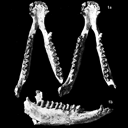
Les Palaeotheridae (Perissodactyla) de la faune de Mammifères de Fons 1 (Eocène supérieur).
Published online: 15/06/1967
Keywords:
Anchilophus; Eocene; Pachynolophus; Palaeotheriidae; Perissodactyla
https://doi.org/10.18563/pv.1.1.1-46
Abstract
The locality of Fons 1, one of the fossiliferous outcrops in the late Eocene limestones of Fons-outre-Gardon (Gard), has yielded varied remains of mammals. The specimens were prepared by dilute acetic acid attack on the rock and by impregnation with an acrylic resin.
This fauna, rich with about 20 species, can be included in the biochronologic zone of Euzet. The Palaeotheridae (sensu Simpson 1945), represented by 6 species, occupy a predominant place; Plagiolophus annectens is particularly abundant, comprising 55% of all the specimens found.
The abundance of this species has permitted a detailed comparative study with the corresponding form from Euzet. The quantitative tests brought out a slight but highly sígnificant difference between the average dimensions of the teeth in the two populations. Moreover and in spite of the feeble rate of evolution in the Plagialophus dentition, diverse archaic particularities can be seen which permit the conclusion that the form from Fons 1 is a little the older. This conclusion is corroborated by observations on the other palaeotherids, particularly Lophiotherium aff. cervulum, whose dental evolutionary stage is intermediate between those of the corresponding forms known from Robiac and Euzet.
A new species of Pachynolophus is described, P. garimondi n.sp., the last representative known of the genus. lts teeth are distinguished by their size, a great heterodonty, and the weakness
of their cingula.
PV article infos
Published in Vol. 01, Fasc. 1 (1967)
|
PDF
|

|
The eosimiid and amphipithecid primates (Anthropoidea) from the Oligocene of the Bugti hills (Balochistan, Pakistan): new insight into early higher primate evolution in South Asia.
Published online: 15/10/2006
Keywords:
Amphipithecidae; anthropoid phylogney; Bugti Hills; Early Oligocene; Eosimiidae; Pakistan
https://doi.org/10.18563/pv.34.e15
Abstract
Eosimiid and amphipithecid primates document a long and significant history of primate evolution throughout the Eocene in Southeast Asia. Despite the absence of a comprehensive post-Eocene fossil record, it was generally hypothesized that both families left no descendant in Asia. Recently, two new small-bodied taxa, Bugtipithecus and Phileosimias, have been recovered in early Oligocene coastal deposits from the Bugti Hills (Balochistan, central Pakistan) and referred to the families Amphipithecidae and Eosimiidae, respectively, on the basis of dental fossil remains. In this paper, we provide more exhaustive description, comparison, and discussion of these taxa. As for tarsiid and sivaladapid primates, the persistence of eosimiids and amphipithecids into the Oligocene clearly demonstrates that low latitudes of South Asia provided a continuous access to tropical refugia during the climatic deterioration characterizing the late Eocene-early Oligocene interval, which was seemingly lethal for primate communities elsewhere across the Holarctic continents. As a contribution to the ongoing phylogenetic debates regarding the position of eosimiids and amphipithecids on the primate family tree, we have performed a cladistic analysis in a high-level primate systematic context in order to assess the position and the role of these new taxa in that phylogenetic issue. Our results support the view according to which eosimiids and amphipithecids (and by extension Phileosimias and Bugtipithecus, respectively) are stem anthropoids. These fossils from Pakistan document an unsuspected Oligocene phase of the evolutionary history of anthropoid primates in southern Asia, which clearly enhances the extent of the anthropoid radiation in this province during the Paleogene. Several phylogenetic and paleobiogeographic aspects are discussed, notably the intra- and inter-relationships between Paleogene Asian and Afro-Arabian anthropoids, and the resulting potential dispersal models between both land-masses during the Paleogene.
PV article infos
Published in Vol. 34, Fasc. 1-2 (2006)
|
PDF
|
|
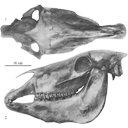
Old world hemiones and new world slender species (Mammalia, Equidae)
Published online: 16/12/2008
Keywords:
Amerhippus; biometry; Equus; Holocene; New World; Old World; Osteology; Pleistocene; Pliocene
https://doi.org/10.18563/pv.36.1-4.159-233
Abstract
Morphological and biometrical description of skulls, teeth, and limb bones of extant and fossil Old World herniones (including E. hydruntinus) and of New World 'stilt-Iegged' and other slender species from Blancan to Holocene. An Appendix presents ways in which the approximate size of some missing bones or dimensions may be deduced from available ones.
The discussed and/or illustrated fossils were found in Bolivia (Tarija), Canada (Yukon), China (Choukoutien, Gulongshan, Jiling, Loufangzi), Ecuador (Oil Fields), Ethiopia (Melka Kunturé), France (Lunel-Viel), Germany (Süssenborn), Greece (Agios Georgios, Petralona), Hungary (Dorog), Italy (Romanelli), Mexico (Cedazo, San Josecito), Mongolia (Sjara-osso-gol), Spain (Venta Micena), ex-Soviet Union (Akhalkalaki, Binagady, Chokurcha, Chukochya, Kabazi, Kolyma, Krestovka, Kurtak, Staroselie, Tologoj), USA (Alaska, Arkalon, Cedar Meadow, Channing, Conkling, Dry Mountains, Hay Springs, Leisey Shell Pit A, Lissie Formation, Natural Trap, Pool Branch, Powers Ranch, Rock Creek, San Diego, Santo Domingo, Seymour Formation, Shelter, Slaton, Trinity River). Numerous raw or statistically elaborated data are given in Tables.
There is no evidence for the existence of Old World hemiones in the New World nor of 'stilt-Iegged' equids in the Old World. The first 'stilt-Iegged' equid was found at Santo Domingo, New Mexico, and is believed to be Late Blancan. It was probably at the origin of E. calobatus (Arkalon, Rock Creek) and of the smaller E. semiplicatus (Channing, Rock Creek). Slender, but not 'stilt-Iegged', equids found at Natural Trap, Wyoming, ca. 12 ky ago belong to Amerhippus. AlI these species share with Oid World Sussemiones (and some hemiones) peculiar patterns on the lower cheek teeth.
The slender Equus sp. B of Leisey Pit A, Florida, ca. 1.2 Ma, as weIl as Amerhippus francisci and E. tau (probably a senior synonym of E. quinni) share conventional lower cheek teeth patterns. The skulls of A. francisci and E. tau, however, are quite different.
Paleontological data suggest a common origin of Amerhippus, Sussemiones, and 'stilt-Iegged' equids during the late Blancan. Old World hemiones seem to have differentiated later.
PV article infos
Published in Vol. 36, Fasc. 1-4 (2008)
|
PDF
|