|
Contributions à l'étude du gisement Miocène supérieur de Montredon (Hérault). Les grands mammifères. 10 - Conclusions générales
Published online: 15/11/1988
Keywords:
Mammalia; Montredon; Upper Miocene
https://doi.org/10.18563/pv.18.ext.189-192
Abstract
Le présent volume traite des lagomorphes, carnivores, artiodactyles, périssodactyles et proboscidiens de la faune de Montredon (Hérault). Il clôt la monographie de ce célèbre gisement d'âge miocène supérieur du Languedoc, dont la première partie, relative aux rongeurs, insectivores et chiroptères, fut publiée en 1982.
[...]
PV article infos
Published in Vol. 18, Ext (1988)
|
PDF
|

|
Paleogene faunal assemblage fron Antofagasta de la Sierra (Catamarca Province, Argentina).
Published online: 15/12/1997
Keywords:
Argentina; Faunal assemblage; Mammalia; Middle Eocene; Reptilia
https://doi.org/10.18563/pv.26.1-4.61-81
Abstract
The Paleogene faunal assemblage from Antofagasta de la Sierra (Catamarca, Argentina), is here presented, both in its geological and systematic aspects. The fossil bearing levels are referred to the Geste Formation (Pastos Grandes "Group"). The described specimens belong to the Classes Reptilia (Orders Crocodylia, Serpentes and Chelonii) and Mammalia (three taxa from the Superorder Marsupialia, representatives of the Orders Edentata, Condylarthra, Pyrotheria and Astrapotheria, and six families of the Order Notoungulata). This fauna is referred to the Mustersan Age, which in Patagonia represents the Middle Eocene. Such chronologic assignment is based on the presence of characteristic taxa, their evolutionary stage and on stratigraphic evidence. Finally, a brief comparison with other faunal assemblages from the Early Tertiary of Argentina and Chile, is presented.
PV article infos
Published in Vol. 26, Fasc. 1-4 (1997)
|
PDF
|

|
Archosauriform teeth from the upper Triassic of Saint Nicolas-de-Port (Northeastern France).
Published online: 15/12/1997
Keywords:
Archosauriforms; Graoullyodon hacheti; Saint-Nicolas-de-port; Teeth; Upper Triassic
https://doi.org/10.18563/pv.26.1-4.1-34
Abstract
The Late Triassic locality of Saint-Nicolas-de-Port (Meurthe-et-Moselle, France) has yielded numerous isolated teeth belonging to archosauriform reptiles. The following tooth groups can be identified: heterodont phytosaurs, the pterosaur Eudimorphodon, the prosauropod dinosaur Plateosaurus, three types of putative ornithischian teeth and 13 types of carnivorous Archosauriformes indet. Apparent venom-conducting teeth belonging to a new taxon of ?Archosauriformes (Graoullyodon hacheti nov. gen. nov. sp.) are also described. From a palaeogeographical point of view, the ornithischian teeth from Saint-Nicolas-de-Port (if their attribution is confirmed) are the oldest fossils of this group in Europe. The biostratigraphic distribution of the tooth forms mostly suggests a Late Norian or Early Rhaetian (depending on current interpretations) age of the deposits, but do not provide more precisions than fossils previously described from the area. The dietary habits and, consequently, the palaeoecological relationships of the different vertebrate groups discovered at Saint-Nicolas-de-Port are tentatively established: the ornithischian and prosauropod teeth reflect a herbivorous diet, whereas the other archosauriform teeth are probably from camivores or omnivores.
PV article infos
Published in Vol. 26, Fasc. 1-4 (1997)
|
PDF
|

|
Artiodactyla from the early Eocene of Kyrgyzstan
Published online: 16/12/1996
Keywords:
Artiodactyla; Asia; Diacodexeidae; Eocene; Kyrgyzstan
https://doi.org/10.18563/pv.25.2-4.359-369
Abstract
Isolated upper cheek teeth of the primitive artiodactyl Diacodexis sp., upper molars of Eolantianius russelli gen. et sp. nov. (Diacodexeidae), two lower molars tentatively referred to Eolantianius russelli gen. et sp. nov., and astragali of Diacodexeidae indet. are described from the early Eocene (late Ypresian) of locality Andarak 2 in Kyrgyzstan.
PV article infos
Published in Vol. 25, Fasc. 2-4 (1996)
|
PDF
|

|
Diversity among north african dinosaur eggshells.
Published online: 15/12/2003
Keywords:
Cretaceous; Dinosaurs diversity; Eggshells; Maastrichtian; Morocco; North Africa; taxonomy
https://doi.org/10.18563/pv.32.2-4.171-188
Abstract
Until the discovery of dinosaur eggshells locality in the Oukdiksou syncline, (Middle Atlas, Morocco) in 1999 (Garcia et al. this volume) the maastrichtian reptiles faunas were unknown in North Africa. Additional material from Achlouj-2 allows us to describe five oospecies, belonging to four oofamilies. The Megaloolithidae is recorded by Megaloolithus maghrebiellsis Garcia el al. and Pseudomegaloolithus atlasi oogen. novo oospec. nov. Tipoolithus achloujensis Garcia et al. is questionably considered as a Subtiliolithidae. A relatively small Elongatoloolithidae is represented by Rodolphoolithus arioul oogen. nov. oospec. nov. A thin Prismatoolithidae is described as a new oospecies of ? Pseudogeckoolithus Vianey-Liaud & Lopez-Martinez, 1997: P. tirboulensis. The diversity of these oospecies indicates that the dinosaur fauna comprises at least five dinosaur oospecies, with perhaps one sauropod and three theropods.
PV article infos
Published in Vol. 32, Fasc. 2-4 (2003)
|
PDF
|

|
Systematic revision of Ctenodactylidae (Mammalia, Rodentia) from theMiocene of Pakistan.
Published online: 18/03/1996
Keywords:
Ctenodactylidae; Miocene; Prosayimys; Rodents; Sayimys; Siwalik
https://doi.org/10.18563/pv.25.1.1-49
Abstract
Extensive sampling of the Siwalik deposits of the Potwar Plateau of northem Pakistan and from the Zinda Pir dome of central Pakistan has produced a fossil record of Miocene ctenodactylids that can be correlated with the paleomagnetic time scale. The early Miocene Prosayimys flynni (n. gen., n. sp.) is recognized as the first ctenodactylid in the Indian subcontinent. Prosayimys is ancestral to Sayimys. From the late early Miocene to the early late Miocene, there is an anagenetic succession of three species of Sayimys: S. cf. S. intermedius, S. sivalensis, and S. chinjiensis (n. sp.). Sayimys chinjiensis gave rise to the late late Miocene S. perplexus. A second lineage is represented by Sayimys minor, S. sp. A, and S. sp. B.
PV article infos
Published in Vol. 25, Fasc. 1 (1996)
|
PDF
|

|
Mammals and stratigraphy : Geochronology of the continental mammal-bearing Tertiary of south America.
Published online: 15/12/1983
Keywords:
Cenozoic; Geochronology; Mammalia; South America; Stratigraphy; Tertiary
https://doi.org/10.18563/pv.13.ext
Abstract
The principles and practices employed in establishment and recognition of South American land mammal ages are reviewed along with previous and present concepts of distinguishing time, rock, and faunal units. Previous chronological arrangements of South American Tertiary land mammal faunas are appraised on the basis of recent geological and paleontological data. Twelve South American Tertiary land mammal ages are here recognized [from oldest to youngest, Riochican (middle to late Paleocene); Casamayoran (early Eocene); Mustersan (middle Eocene); Divisaderan (late Eocene); Deseadan (early [to middle?] Oligocene); Colhuehuapian (late Oligocene); Santacrucian (early Miocene); Friasan (middle Miocene); Chasicoan (late Miocene); Huayquerian (latest Miocene); Montehermosan (early to middle Pliocene); and Chapadmalalan (late Pliocene)]. As all except the Friasian were originally defined on the basis of Argentine faunas, these are discussed first and at length, and each is reviewed with discussion of type locality, stratigraphy, type fauna, and faunal correlations. Non-Argentine faunas are then discussed country by country in alphabetical order.
A review is given of radioisotope dates obtained on volcanic rocks (i.e., basalts, tuffs) associated with mammalbearing beds in Argentina. Based on these age determinations and on correlation of the late Tertiary land mammals involved in the interchange between North and South America, a chronology of South American land mammal ages correlated with North American land mammal ages and European marine stages is proposed.
It is concluded that South America was an island continent through most of the Tertiary Period (ca 65 to about 3 Ma). As a result, the land mammal fauna of South America developed in isolation and was dominated by autochthonous endemic groups. Toward the end of the Tertiary (i.e., middle Miocene) a unique faunal balance had been achieved by the descendants of the ancient inhabitants (notoungulates, litopterns, condylarths, astrapotheres, edentates, marsupials) and of later (late Eocene) waif immigrants (caviomorph rodents, platyrrhine primates). A prominent feature of this mammal fauna was the combination of carnivorous and omnivorous marsupials with native placental herbivorous ungulates, subungulates, and edentates.
Sometime during the late Miocene, a limited but important interchange of mammalian taxa between North and South America took place. Procyonids (raccoons and their allies), a group of North American origin, first appear in South America in strata of Huayquerian Age, while members of the extinct South American ground sloth families Megalonychidae and Mylodontidae first appear in North America in early Hemphillian time. These groups dispersed along island arcs before the appearance of the Panamanian land bridge in the Pliocene (ca 3.0 Ma). Cricetine rodents, a group of North American origin, are first known in South America in strata of Montehermosan Age. The known taxa are too advanced and diversified to be considered the first of this group to invade South America. lt is believed by some workers that these rodents arrived before the Montehermosan, possibly in the late Miocene or earlier, by waif dispersal from North America.
The isolation of South America ended with the appearance of the Panamanian land bridge, which provided a direct, dry land connection between the two Americas. Across this portal an extensive interchange of terrestrial faunas occurred, and the fossil record documents an intermingling of these long-separated land mammals faunas.
The beginning of this interchange by land route in South America is marked by the appearance of mammals which evolved from North American emigrants in the Chapadmalal Formation of Argentina. These include a mustelid (Conepatus), a tayassuid (Argyrohyus), and four genera (Akodon, Dankomys, Graomys, Reithrodon) of cricetine rodents. The appearance of this contingent of northern animals favors the existence of the Panamanian land bridge by this time. Likewise, a large number of terrestrial vertebrates of South American origin appear in North America in beds of late Blancan Age date around 2.7 Ma. Among the mammals are Neochoerus, Erethizon, Glyptotherium, Glossotherium, Kraglievichia, and Dasypus.
PV article infos
Published in Vol. 13, Ext (1983)
|
PDF
|

|
Perutherium altiplanense, un Notongulé du Cretacé Supérieur du Pérou
Published online: 30/11/1983
Keywords:
Dental morphology; Late Cretaceous; Notoungulate; Paleobiogeography; Peru
https://doi.org/10.18563/pv.13.4.145-155
Abstract
Perutherium altiplanerise THALER, 1967 from the Late Cretaceous of Peru has long been recognized as South America's oldest known placental mammal. Since its description Perutherium has been generally regarded as having condylarth affinity Based on our identification of a unique notoungulate synapomorphy we recognize Perutherium as the oldest and the most generalized known member of that order. This new determination and the large taxonomic diversity (five families) of notoungulates in rocks of Paleocene age in Argentina and Brazil, favor a South American origin for this group. The occurrence of notoungulates in rocks of Late Paleocene age in Asia and North America is explained by dispersal of a notoungulate stock from South America to North America and from there to Asia.
PV article infos
Published in Vol. 13, Fasc. 4 (1983)
|
PDF
|

|
Contribution à l'étude des genres Gliravus et Microparamys (Rodentia) de l'Eocène d'Europe.
Published online: 15/03/1971
Keywords:
Eocene; Gliravus; Microparamys; Rodentia
https://doi.org/10.18563/pv.4.4.97-135
Abstract
Based on material found in about 15 localities the relationships of the genera Microparamys and Glirarus have been studied. One new genus, two subgenera and three species [Microparamys (Sparnacomys) chandoni n. subgen. and n. sp., Microparamys (Pantrogna) russelli n. subgen., Eoglirarus wildi n. gen. and n. sp., Gliravus meridionalis n. sp.] as well as the publication
of numerous new facts concerning species previously reported, support the phyletic scheme proposed. The latter shows that the origin of the Gliravinae is to be sought among the very small and still rather poorly known Microparamys species of the early Eocene. Gliravus: robiacensis can be considered as the common ancestor to different lineages not only of Glirarus but also of modern genera (Peridyromys, Glirudinus and Microdyromyx), at the origin of which Peridyromys micio, although difficult to interpret, occupies a similar place.
The stratigraphic conclusions permit more detail in the chronologie succession of the localities studied. The paleoecologic and biogeographic aspects lead one to the problem of the oligocene "Grande Coupure" through the study of this group.
PV article infos
Published in Vol. 04, Fasc. 4 (1971)
|
PDF
|

|
Etude de la Variabilité chez Lophiodon lautricense Noulet
Published online: 28/02/1971
Keywords:
Cheek teeth; Eocene; Lophiodon; variability
https://doi.org/10.18563/pv.4.3.67-95
Abstract
The biometric and morphologie variability of the cheek teeth in the end-of-the-phylum species Lophiodon lautricense Noulet studied in this note, reposes on the observation of about 800 teeth. These were revealed to be little variable in absolute dimensions. The considerable morphologie variability in the upper premolars permitted the problem of the molarization process to be taken up. An hypothesis concerning the order of eruption of the cheek teeth is formulated based on an examination of a large number of milk dentitions. In conclusion, it is suggested that reservations be held on the value of dental characters classically used in systematics for the group under consideration.
PV article infos
Published in Vol. 04, Fasc. 3 (1971)
|
PDF
|
|
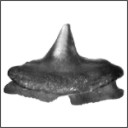
Batoids (Rajiformes, Torpediniformes, Myliobatiformes) from the Sülstorf Beds (Chattian, Late Oligocene) of Mecklenburg, northeastern Germany: a revision and description of three new species
Published online: 24/06/2015
Keywords:
Batoids; Chattian; Elasmobranchii; North Sea Basin; Oligocene
https://doi.org/10.18563/pv.39.2.e2
Abstract
Bulk-sampling of fossil-rich tempestites from the Chattian Sülstorf Beds of
Mecklenburg, north-eastern Germany, yielded a rich selachian fauna in which batoids
predominate by the abundance of teeth but are subordinate by the number of taxa. Thirteen
taxa are identified, among which rajiform batoids are the most diverse (six species). One
genus and three species are newly described: Raja thiedei sp. nov., Oligoraja pristina gen. et
sp. nov., and Torpedo chattica sp. nov. Two species are reallocated: Atlantoraja cecilae
(Steurbaut & Herman, 1978) new comb., and Dipturus casieri (Steurbaut & Herman, 1978)
new comb. Ontogenetic heterodonty is documented for the first time in the dental pattern of
Myliobatis sp. Stratigraphical ranges of batoid taxa in the period from Rupelian to Langhian
are presented and partly discussed in context with the palaeoclimatic evolution and
palaeogeographic situation of the North Sea Basin.
PV article infos
Published in Vol.39-2 (2015)
|
PDF
|
|
Lissamphibians from Dams (Quercy, SW France): Taxonomic identification and evolution across the Eocene-Oligocene transition
Published online: 25/06/2025
Keywords:
Eocene-Oligocene; Grande Coupure; Lissamphibia; Quercy Phosphorites
https://doi.org/10.18563/pv.48.1.e3
Abstract
The locality of Dams (Quercy, southwestern France) has yielded two fossil assemblages, one from the late Eocene and another from the early Oligocene, making it one of the few localities with infillings across the Eocene-Oligocene transition. At least 24 taxa (13 mammals, 11 snakes) have been identified in this locality. Study of the lissamphibian remains from Dams yields an Eocene and an Oligocene assemblage, with a total of eight taxa. The Eocene assemblage includes two unnamed salamandrine species, one unnamed pelobatid species and one pyxicephalid species (Thaumastosaurus). The Oligocene assemblage includes two unnamed pleurodeline species, one salamandrine species (Salamandra sansaniensis) and an unnamed pelobatid species. Among the eight taxa from Dams, one Eocene salamandrine and one Oligocene pleurodeline are identified for the first time in the Quercy. A review of the lissamphibians from the Quercy area identifies eleven taxa for the Late Eocene (MP19) and eight taxa for Early Oligocene (MP22), with a major turnover at the Eocene-Oligocene transition. This turnover occurs in a time of major climatic changes, with a significant decrease in temperature and precipitation and concurrent increase in seasonality in Europe, likely affecting specialized taxa.
PV article infos
Published in 48-1 (2025)
|
PDF
|
|
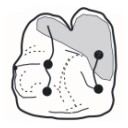
A late Eocene palaeoamasiine embrithopod (Mammalia, Afrotheria) from the Adriatic realm (Island of Rab, Croatia)
Published online: 14/12/2023
Keywords:
Balkanatolia; Grande Coupure; Great Adria; Paleobiogeography; Systematics
https://doi.org/10.18563/pv.47.1.e1
Abstract
A cheek tooth recently unearthed in the Lopar Sandstone unit, of late Eocene age, in the northern part of Rab Island, Croatia, is one of the very few Eocene mammalian remains found in the Adriatic area. Thorough comparison of this tooth with those of Old-World Palaeogene mammalian orders suggests that it is a M3 belonging to an embrithopod afrothere. The specimen is referred to as Palaeoamasia sp. This genus was formerly known only in Eocene deposits of Anatolia but with close relatives in Romania among Palaeoamasiinae. The geographical distribution of this subfamily perfectly matches the recently-named Balkanatolian landmass, which experienced in-situ evolution of endemic mammals prior to the Grande Coupure event that occurred around the Eocene–Oligocene transition. This last event is characterised by massive Asian immigration in Western Europe and the supposed extinction of many endemic Central and Western European mammals, including Palaeoamasiinae.
PV article infos
Published in 47-1 (2024)
|
PDF
|
|
Small sauropod tracks in the Hettangian of Southern France – A case of ichnite fossilization in an intertidal zone
Published online: 28/06/2022
Keywords:
Intertidal zone; Lower Jurassic; Sauropods; Southern France; Tracks
https://doi.org/10.18563/pv.45.2.e1
Abstract
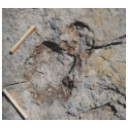
This paper presents the description and the interpretation of recently discovered traces on a Lower Hettangian dolomitic outcrop in the Bédarieux area, Southern France. One trace set immediately attracted the attention by its resemblance to a small sauropod pes-manus couple but no trackway was visible. As the other traces have a variety of shapes with no obvious significance, it took a thorough examination of the 3D and sedimentological data to come to the conclusion that most traces likely were sauropod tracks made under diverse conditions. Sedimentological and ichnological data indicate that the tracks have been made in the intertidal zone of a carbonated tidal flat shortly before an emersion period. It appears that that the variety of trace shapes is due to a variety of water depths: the sauropods were punting when the water level was high. The lack of trackways seems due to the combination of an underprint situation, buoyancy effects and the small size of the track-bearing slab. Several hypotheses can be considered for explaining the very small size of the tracks, such as insular dwarfism or the immaturity of the trackmakers.
PV article infos
Published in 45-2 (2022)
|
PDF
|

|
A New caseid Synapsid from the Permian (Guadalupian) of the Lodève basin (Occitanie, France)
Published online: 18/07/2022
Keywords:
; Caseidae; France; Guadalupian; semi-aquatic lifestyle
https://doi.org/10.18563/pv.45.2.e2
Abstract
Lalieudorhynchus gandi gen. nov. and sp. nov. is a new caseid synapsid from the Permian of the Lodève Basin, Occitanie, France. This new taxon is represented by a partial but well-preserved postcranial skeleton, and is characterized by the following apomorphies: a transverse section of the sacral and anterior caudal neural spines with a very thin keel-like process anteriorly, a slender dorsal tip of the dorsal and caudal spines, a narrow distal end of the first sacral rib, a fossa on triceps process of metacoracoid, and a very large distal tarsal 1 of same width than the astragalus, with nearly all sides being shallowly concave.
The skeleton corresponds to a sub-adult individual that was excavated from the La Lieude Formation dated as Roadian-Capitanian (Guadalupian). A sedimentological and taphonomical analysis of the type locality, together with preliminary osteohistological observations, suggest that this new French caseid was rather aquatic, as already hypothesised for other large forms.
A phylogenetic analysis of caseids is performed to test the position of this new taxon and to better understand the evolution of the clade: interestingly, Lalieudorhynchus gandi gen. nov. et sp. nov. is closer to the NorthAmerican “Cotylorhynchus” hancocki than to the other French caseids Ruthenosaurus and Euromycter from the Artinskian of the geographically closer Rodez Basin. These two last caseids document the Artinskian radiation of the clade, which remained diverse until Olson’s extinction. Caseids survived, as Lalieudorhynchus is one of the youngest representatives of the clade, and may have used novel ecological strategies to access their vegetarian food sources.
PV article infos
Published in 45-2 (2022)
|
PDF
|
|
The beginning of the adaptive radiation of Theridomorpha (Rodentia) in Western Europe: morphological and phylogenetic analyses of early and middle Eocene taxa; implications for systematics
Published online: 20/09/2021
Keywords:
characters analyses; Dental morphology; Eocene; Rodentia; variability
https://doi.org/10.18563/pv.44.2.e2
Abstract
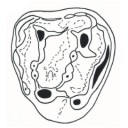
This paper provides a revision of the early and middle Eocene European rodents previously referred to as Ischyromyoidea, including taxa considered to be at the origin of the Theridomorpha. The use of an accurate dental terminology and a better understanding of the size and shape of their infra-orbital foramen (i.o.f.) led us to a substantial revision of this group, which allowed to better characterize them and to appreciate their variability. On these bases, phylogenetic analyses (cladistic and standard Bayesian
approaches) of early Ypresian to late Priabonian European rodent species were undertaken in order to highlight the root of the early Theridomorpha and its content. In this paper, the phylogeny was established based on 343 characters (338 dental) through 45 early Paleogene taxa using both cladistic and bayesian analyses. The ingroup included on one hand a few North American genera (Reithroparamys, Microparamys, and Acritoparamys) and European ones (Eogliravus, Ailuravus, Corbarimys, Meldimys, Euromys, Plesiarctomys, and Pseudoparamys) considered until now as being related with the North American superfamily Ischyromyoidea. On the other hand, it included genera close to the root of the Theridomorpha (Sparnacomys, Pantrogna, and Hartenbergeromys) and early Theridomyoidea (Masillamys, Protadelomys, and some Pseudosciuridae). The phylogenetic results obtained via the two
distinct reconstruction approaches are consistent in virtually all relationships. The proposed systematics here derives from these phylogenetic results. This phylogenetic context led us to change the suprafamilial, familial, subfamilial or generic attribution of several species. Characters of Theridomorpha, like the obliquely developed postprotocristid allied with the occurrence of a metalophulid I, have been found in genera previously considered as Ischyromyidae (Pseudoparamys, Euromys, Sparnacomys, Meldimys, Pantrogna, and Hartenbergeromys) as well as the large i.o.f., when preserved (Pseudoparamys, Hartenbergeromys, and Masillamys). Based on these morphological observations and new phylogenetic considerations, the content of the Theridomorpha clade is here enlarged, thereby extending back the first theridomorph radiations to the early Eocene. Aside, a new taxon (Reinomys rhomboides gen and sp. nov.) is described from Avenay. In addition, a new genus, Auroremys, is created for the species subita (Comte et al., 2012) from Chery-Chartreuve.
PV article infos
Published in 44-2 (2021)
|
PDF
S.I. Data
|
|
New material of “Eurysternidae” (Thalassochelydia, Pan-Cryptodira) from the Kimmeridgian of the Swiss Jura Mountains
Published online: 25/06/2020
Keywords:
Eurysternidae; Late Jurassic; morphology; Switzerland; Testudines; Thalassochelydia
https://doi.org/10.18563/pv.43.1.e2
Abstract
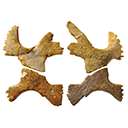
The region of Porrentruy (Swiss Jura Mountains) is known for its rich and diverse assemblage of Late Jurassic coastal marine turtles (Thalassochelydia). Dominated by the “Plesiochelyidae”, this assemblage also includes representatives of the two other thalassochelydian groups, the “Thalassemydidae” and “Eurysternidae.” In this study, we present new shell-based material from Porrentruy referable to eurysternids. One specimen represents a juvenile individual or a relatively small taxon, and is notably characterized by a well fenestrated plastron exhibiting a wider than long central plastral fontanelle. Two other specimens are much larger and possibly represent the largest eurysternids known to date. The fourth specimen is characterized by a unique plastral morphology otherwise only known in very small juveniles. This is the first time this unique plastral morphology is known to persist in an adult or subadult. The new material described herein represents at least three distinct taxa, all of them probably new. However, we refrain from naming new species based on this incomplete material in order to avoid adding confusion to an already complex taxonomical situation. This study provides new insights into the great diversity of eurysternids during the Late Jurassic.
PV article infos
Published in Vol 43-1 (2020)
|
PDF
|
|
Terrestrial vertebrate paleocommunities from the Cerro del Pueblo Formation (Late Cretaceous; Late Campanian) at Las Aguilas, Coahuila, Mexico
Published online: 16/07/2019
Keywords:
Campanian; Coahuila; dinosaurs; Mexico.; Vertebrates
https://doi.org/10.18563/pv.42.2.e1
Abstract
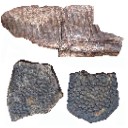
The Las Águilas site near Porvenir de Jalpa, Coahuila, Mexico, is extremely rich in tetrapod remains comprising both bones and trackways of several dinosaur taxa of late Campanian age. Within a 50 m thick section we identified at least nine layers with dinosaur bone assemblages. In one of these the dinosaur bones are associated with remnants of eusuchian crocodilians, turtles, plesiosaurs, pterosaurs, tyrannosaurids, dromaeosaurids, parksosaurid, hadrosaurids, ceratopsids, and ankylosaurs. This layer is also rich in coprolites of turtles, crocodilians and likely theropods, thus providing evidence for the wealth of Late Cretaceous vertebrate life in the area.
PV article infos
Published in Vol 42-2 (2019)
|
PDF
|

|
Die Ohr-Region der Paulchoffatiidae (Multituberculata, Ober-Jura).
Published online: 15/11/1988
Keywords:
Multituberculata; Ober-Jura; Paulchoffatiidae; Petrosum; Portugal
https://doi.org/10.18563/pv.18.3.155-185
Abstract
The petrosal of the Paulchoffatiidae HAHN, 1969 is described and compared with that of younger multituberculates and of other Mesozoic mammals. The "Morrison petrosal", described by Prothero (1983), is also discussed; it probably belongs to the multituberculates. The reconstruction of the ventral side of the Paulchoffatiinae-skull, given by Hahn in 1987, is completed by addition of the otic and the occipital region.
PV article infos
Published in Vol. 18, Fasc. 3 (1988)
|
PDF
|

|
Observations sur l'anatomie crânienne du genre Palaeotherium (Perissodactyla, Mammalia): mise en évidence d'un nouveau sous-genre, Franzenitherium
Published online: 01/12/1992
Keywords:
Palaeotherium; Paléogène; Perissodactyla; skull anatomy; Systematics
https://doi.org/10.18563/pv.21.3-4.203-224
Abstract
The skull remains referred to the genus Palaeotherium are recorded and described. Biometrical tests are made to elucidate intrageneric allometric relationships and to allow comparisons with various other perissodactyls. Apart from the well known shortness of post canine diastems and deepness of the narial opening, the genus is characterized by a great lengthening of the splanchnocranium, owing to a spreading of the post-orbital facial region, by a reduced area of the eye-socket and by the prevalence of the temporal muscle with regard to the masseter; this original shape of the masticatory apparatus needs to be related to the morphology of the jugal teeth and particularly to their asymmetrical semi-hypsodonty.
These animals, whose running ability was evidently poor, appear to have been adapted to rather closed environments, feeding on relatively soft vegetable matter; olfactory sense was likely to play a leading part in interindividual and environmental relationships. Such evolutionary trends might explain the disappearance of most of them, as clirnatic conditions deteriorated at the end of the Eocene, before the "Grande Coupure" which affected mammalian faunas at that time.
Although the present paper is not directly concemed with phylogenetics, it invalidates the supposed ancestor-descendant relationship between P. castrense and P. magnum, and it suggests a possible emergence of the P. medium lineage from a P. siderolithicum stock. Moreover, the structure of the post-orbital facial area allows the erection of a new sub-genus, Franzenitherium, for the species lautricense and duvali.
PV article infos
Published in Vol. 21, Fasc. 3-4 (1992)
|
PDF
|