|
Miocene Bovidae (Mammalia) of the Siwaliks, Part 1: Hypsodontinae and Bovinae.
Published online: 30/07/2026
Keywords:
Bovidae; horncores; Miocene; Siwaliks
https://doi.org/10.18563/pv.49.1.e1
Abstract
The fluvial sediments of the Siwaliks in northern Pakistan preserve an exceptional geologic and paleontological record encompassing parts of the Oligocene and all of the Miocene and Pliocene. The sediments, which can be thousands of meters thick, have abundant vertebrate and invertebrate fossils from hundreds of different levels. Fossils were first discovered in the Siwaliks in 1832 and there are important collections of them in the Museum of the Geological Survey of India as well as in various European, British, and American museums. Renewed collecting has now added over 10,000 bovid fossils to a new collection held by the Geological Survey of Pakistan. The fossils include rare skulls and many isolated horn cores, as well as teeth and postcranials. Here we discuss material belonging to the hypsodontinae, boselaphini, and bovini. We recognize four hypsodontine and twenty-two bovine species, plus one species of uncertain subfamilial placement. Nineteen of the twenty-seven have previously been named, while another five have cranial material suitable for defining a new species. Two species, referred to as ?Hypsodontinae sp. and Bovidae sp. 1, are distinctive but left unnamed. We are also uncertain about how distinctive what we refer to as Selenoportax aff. vexillarius is from Selenoportax vexillarius. Boselaphinines predominate in the fossil collections, both in terms of number of species and number of specimens. Most of the boselaphine genera are endemic to the Siwaliks, as are the hypsodontine Palaeohypsodontus and the possible bovini Pachyportax. The predominance of boselaphines together with the number of endemic taxa gives the Siwalik bovid fauna a distinctive aspect and collectively comprise the best-known Miocene record of the subfamily.
PV article infos
Article state: in_press
|
PDF
S.I. Data
|
|
A partial skeleton of Metaxytherium medium from the middle Miocene of La Morfassière quarry (Indre-et-Loire, France)
Published online: 16/01/2025
Keywords:
Faluns; France; Metaxytherium; Miocene; Sirenia
https://doi.org/10.18563/pv.48.1.e1
Abstract
Sirenians are among the common marine fossil remains found in the Faluns deposits of western France. We describe new material of a Dugongidae sirenian from the middle Miocene Savignean facies of La Morfassière quarry (Indre-et-Loire, northwestern France) that includes a well preserved and almost complete skull associated with its mandible, several vertebrae and ribs. The cranial remains exhibit features that allow to attribute them to Metaxytherium medium, a species recorded from the middle and early late Miocene of European and Mediterranean coasts. The discovery of an associated skull and mandible of this species is unusual in this area and deserves to be reported, mostly because its preservation contributes to a better knowledge of the variable structure of its skull and teeth anatomy. For the first time the body size and weight of M. medium can be assessed through regression equations based on skull measurements. The particularly good condition of the material can be explained by the calm and deep marine environment in which it was deposited.
PV article infos
Published in 48-1 (2025)
|
PDF
|
|
A reassessment of the giant birds Liornis floweri Ameghino, 1895 and Callornis giganteus Ameghino, 1895, from the Santacrucian (late Early Miocene) of Argentina.
Published online: 13/12/2016
Keywords:
Argentina; Aves; Callornis; Liornis; Miocene
https://doi.org/10.18563/pv.40.2.e3
Abstract
The status of the giant bird taxa Liornis floweri and Callornis giganteus from the Santa Cruz Formation (late Early Miocene) of Patagonia, first described by Ameghino (1895) is reassessed on the basis of a re-examination of the type material at the Natural History Museum, London. Liornis floweri, which lacks a Pons supratendineus on the tibiotarsus and has an unbifurcated Canalis interosseus distalis on the tarsometatarsus, is clearly a brontornithid and is considered as a junior synonym of Brontornis burmeisteri. Ameghino’s replacement of Callornis by Eucallornis is unjustified. Callornis giganteus is a chimera based on a phorusrhacid tarsometatarsus (probably belonging to Phorusrhacos longissimus) and a brontornithid tibiotarsus. The latter can be considered as the lectotype of Callornis giganteus, which may represent a small morph of Brontornis burmeisteri or a distinct taxon. It is referred to here as Brontornithidae indet. The tarsometatarsus described by Dolgopol de Saez (1927a,b) as Liornis minor and considered by her as a gracile brontornithid apparently has a bifurcated Canalis interosseus distalis and should therefore be placed among the Phorusrhacidae.
PV article infos
Published in Vol.40-2 (2016)
|
PDF
|
|
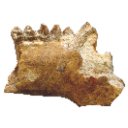
The new Algerian locality of Bir el Ater 3: validity of Libycosaurus algeriensis (Mammalia, Hippopotamoidea) and the age of the Nementcha Formation
Published online: 10/06/2015
Keywords:
Dispersal event; Miocene; North Africa; Tetralophodon
https://doi.org/10.18563/pv.39.2.e1
Abstract
The description of original material of anthracothere and proboscidean in the new locality of Bir el Ater 3 from East Algeria, and a thorough review of early Libycosaurus remains of Bir el Ater 2 allows us validating L. algeriensis as the smallest and earliest species of Libycosaurus and probably the earliest migrant of the genus from Asia. The presence of a Tetralophodon in the Neogene Nementcha formation might represent the earliest occurrence of the genus in Africa. These original fossil remains allow us to discuss the age of the Neogene part of the Nementcha formation close to the Serravalian/Tortonian boundary.
PV article infos
Published in Vol.39-2 (2015)
|
PDF
|

|
The evolution of the molar pattern of the Erethizontidae (Rodentia,Hystricognathi) and the validity of Parasteiromys Ameghino, 1904.
Published online: 15/06/1999
Keywords:
Argentina; Erethizontidae; Hystricognathi; Miocene; Molar evolution; Porcupines; Rodentia; Systematics
https://doi.org/10.18563/pv.28.1.53-73
Abstract
The genus Parasteiromys AMEGHINO, 1904 is revalidated, and P. friantae sp. nov. (Hystricognathi, Erethizontidae) from Colhuehuapian (early Miocene) sediments of the southern cliff of Colhue-Huapi Lake (Province of Chubut, Argentina), is described. The molar morphology of these taxa and of living porcupines adds new elements to understand the dental evolution of the Erethizontidae, and to propose the hypothetical ancestral molar pattern for this family. This pattern does not correspond to any of the morphologies traditionally proposed as ancestral for South American hystricognathous rodents. The proposed pattern is characterized by a metaloph disconnected from the posteroloph and oriented towards the hypocone, and the third loph incompletely developed with the lingual portion homologous to the mesolophule of Baluchimyinae (Chapattimyidae) from the Miocene of Pakistan. The inferred steps of the molar evolution of erethizontids towards the pentalophodont condition, considered derived for the family, are illustrated. This study strengthens the hypothesis placing erethizontids in a basal position among rodents of the suborder Hystricognathi.
PV article infos
Published in Vol. 28, Fasc. 1 (1999)
|
PDF
|

|
First evidence of an early Miocene marine teleostean fish fauna (otoliths) from la Paillade.(Montpellier,France)
Published online: 15/06/1999
Keywords:
Aquitanian; Biostratigraphy; La Paillade; marine deposits; Miocene; otoliths; Palaeoecology; Palaeogeography; Southern France; Teleostei
https://doi.org/10.18563/pv.28.1.1-46
Abstract
A fossil fish fauna, based on 5533 otoliths, from the La Paillade locality at Montpellier is described and figured. The otolith-bearing marls correlate to mammal zone MN l (Aguilar, 1982), and thus represent the earliest Miocene. The fish fauna consists of 30 taxa belonging to 20 families. Two species are new: Dussumieria sittigi and Liza gaudanti. The predominant faunal element is the Lesueurigobius vicínalis-species complex, composing 73% of all investigated otoliths. The palaeoecological analysis reveals a marine to euryhaline fish fauna living under tropical to subtropical conditions in the transition zone littoral - sublittoral. Water depth probably was more than 10 m. The scarcity of pelagic físhes suggests that the habitat was either a sheltered bay and/or far away from the open sea. Furthermore, some genera represented in the La Paillade fish fauna presently live exclusively in the Indopacific realm. Their presence strongly supports a broad connection between the Indian Ocean, the Mediterranean, and the Paratethys Seas during the Early Miocene (Aquitanian). From a palaeobiogeographical point of view, faunal relationships were found between the La Paillade fish fauna and both the Paratethys fish fauna and the fish fauna from the deposits in the Upper Rhinegraben and the Mayence and Hanau Basins (Germany).
PV article infos
Published in Vol. 28, Fasc. 1 (1999)
|
PDF
|

|
Stratigraphy and Oligocene-Miocene mammalian biochronology of the Aktau Moutains, Dzhungarian Alatau Range, Kazakhstan
Published online: 16/12/1996
Keywords:
Dzhungarian Alatau; Kazakhstan; Lithologic correlation; Mammalian biochronology; Miocene; Oligocene; Stratigraphy
https://doi.org/10.18563/pv.25.2-4.141-174
Abstract
Stratigraphic studies in the Aktau Mountains bordering the Dzhungarian Alatau Range in southeastern Kazakhstan have included mapping of Tertiary lithostratigraphic units, documentation of fossiliferous deposits, correlation of sections, etc. These investigations have led in turn to revised interpretation of the Tertiary geology of the area. The Tertiary sequence in the Aktau Mountains is represented by three lithostratigraphic units (in ascending order): (1) the middle Eocene Akbulak Formation; (2) the Oligocene Aktau Formation with a lower member including white quartz sands that contain fossil mammals, and an upper member including red-colored clays and sandstones, brick red clays, an anhydrite and gypsum clayey horizon, and bright brown-red clays; and (3) the upper Oligocene-Miocene Chul'adyr Formation with a lower member of greenish and yellowish conglomerates and gritstones, a middle member including grayish and yellowish sands and gritstones, and an upper member including brown and red clays and carbonate- and anhydrite-rich clays. The Aktau and Chul”adyr Formations represent separate cycles of sedimentation. Mammalian biostratigraphy and biochronology of the three vertebrate faunas in Aktau Mountains are reviewed. The mammalian fauna from white sands of the lower Aktau Formation is small but includes Ardynia and is thought to be early Oligocene in age. The mammalian fauna from conglomerates and gritstones of the lower member of the Chul”adyr Formation is also small but includes Paraceratherium and is thought to be late Oligocene in age. The mammalian fauna from sands of the middle member of the Chul'adyr Formation is extensive, with micro- and macrofauna attributed to Neogene mammal zones MN4 to MN 6, indicating a latest early Miocene to earliest middle Miocene age (Orleanian-Astaracian). Most genera of middle Chul”adyr mammals are known from the middle Miocene Shanwang faunas of China and from the Castelnau-d”Arbieu faunal assemblage (MN4-MN6) of southwestern France.
PV article infos
Published in Vol. 25, Fasc. 2-4 (1996)
|
PDF
|

|
Systematic revision of Ctenodactylidae (Mammalia, Rodentia) from theMiocene of Pakistan.
Published online: 18/03/1996
Keywords:
Ctenodactylidae; Miocene; Prosayimys; Rodents; Sayimys; Siwalik
https://doi.org/10.18563/pv.25.1.1-49
Abstract
Extensive sampling of the Siwalik deposits of the Potwar Plateau of northem Pakistan and from the Zinda Pir dome of central Pakistan has produced a fossil record of Miocene ctenodactylids that can be correlated with the paleomagnetic time scale. The early Miocene Prosayimys flynni (n. gen., n. sp.) is recognized as the first ctenodactylid in the Indian subcontinent. Prosayimys is ancestral to Sayimys. From the late early Miocene to the early late Miocene, there is an anagenetic succession of three species of Sayimys: S. cf. S. intermedius, S. sivalensis, and S. chinjiensis (n. sp.). Sayimys chinjiensis gave rise to the late late Miocene S. perplexus. A second lineage is represented by Sayimys minor, S. sp. A, and S. sp. B.
PV article infos
Published in Vol. 25, Fasc. 1 (1996)
|
PDF
|

|
Un crane de Chalicothere (Mammalia, Perissodactyla) du Miocène supérieur de Macédoine (Grèce) : remarque sur la phylogénie des Chalicotheiinae
Published online: 14/06/1995
Keywords:
Chalicotheriidae; Cladistics; Greece; Miocene; Perissodactyla; PHYLOGENY
https://doi.org/10.18563/pv.24.1-2.135-176
Abstract
The discovery in the Turolian (Late Miocene) of Dytiko 3 (Macedonia, Greece) of a complete skull with mandibles and cervical vertebrae, atlas and epistropheus, is a very important contribution to the knowledge of the subfarnily Chalicotheríinae. After the description, the comparison with other specimens of Miocene chalicotheres permits the revival of the generic name Macrotherium with a new species M. macedonicum. This genus is mainly characterized by a short snout and an inflated cerebral skull. It coexists during the Miocene with Chalicotherium. A cladistic analysis leads to conclusion that the species which has been described from the Early Middle Miocene of Rusinga must be identified as the type-species of a new genus: Butleria.
PV article infos
Published in Vol. 24, Fasc. 1-2 (1995)
|
PDF
|

|
Octodontid-like Echimyidae (Rodentia) : an upper Miocene episode in the radiation of the family
Published online: 20/05/1994
Keywords:
Argentina; Echimyidae; Miocene; New taxa; Rodentia; South America
https://doi.org/10.18563/pv.23.1-4.199-210
Abstract
Reigechimys octodontiformis gen. et sp. novo and R. plesiodon sp. novo are described. They represent the frrst record of the family Echimyidae for the Cerro Azul Formation (Huayquerian Age, Late Upper Miocene) at La Pampa Province, central Argentina. Both species have hypsodont cheek teeth with an eight-shaped occlusal design. This dental morphology represents a noticeable case of convergence to octodontids and indicates that these echimyids inhabited open environments.
PV article infos
Published in Vol. 23, Fasc. 1-4 (1994)
|
PDF
|

|
The lower Miocene artiodactyls of Tagai bay, Olhon island, lake Baikal (Russia)
Published online: 20/05/1994
Keywords:
Artiodactyls; Mammals; Miocene; Siberia
https://doi.org/10.18563/pv.23.1-4.177-197
Abstract
The mammalian fauna of the Tagai locality of Olhon Island in Lake Baikal contains six artiodactyls:
Amphitragulus boulangeri, Lagomeryx parvulus, Stephanocemas sp., Palaeomeryx kaupi, Orygotherium aff. escheri, and Brachyodus intermedius. They are reported from Eastern Siberia for the first time. A description of teeth and limb-bones are given. An analysis of the systematic composition of the Tagai fauna allows it to be correlated with European faunas of the second part of the Early Miocene (Orleanian, MN 3-4) and permit suggestion of the existance of a united European-Siberian zoogeographical sub-area in the middle latitudes of Eurasia at that time.
PV article infos
Published in Vol. 23, Fasc. 1-4 (1994)
|
PDF
|

|
Nouveaux gisements à rongeurs dans les molasses oligo-miocènes de la région toulousaine
Published online: 11/02/1993
Keywords:
Cricetidae; Eomyidae; GIiridae; Miocene; Oligocene; Rodents; Sciuridae; Southern France
https://doi.org/10.18563/pv.22.2-3.113-136
Abstract
The fauna from three new rodent localities (Castelmaurou, Grépiac-carrière et Grépiac-rive gauche) from Oligo-Miocene molasses of the Toulouse area is described. The one from Colomiers is completed. 11 species belonging to 4 families (Cricetidae, Eomyidae, Gliridae, Sciuridae) are present. The Miocene localities of Grépiac-carrière and Colomiers are correlated with Balizac, La Brète, Lambert and Lespignan. Grépiac-rive gauche is just a little older than these sites. Castelmaurou is somewhat younger than La Milloque and belongs to Oligocene.
PV article infos
Published in Vol. 22, Fasc. 2-3 (1993)
|
PDF
|

|
Les nouvelles faunes de rongeurs proches de la limite mio-pliocène en Roussillon. Implications biostratigraphiques et biogéographiques
Published online: 29/04/1991
Keywords:
Arvicolidae; Cricetidae; Gliridae; Miocene; Muridae; Pliocene; Rodents; Southern France
https://doi.org/10.18563/pv.20.4.147-174
Abstract
Three new fossiliferous localities, two of karstic origin, Castelnou 3 and Font Estramar, respectively Late Upper Miocene and Lower Pliocene, and one of lacustrine origin, Thuir, Lower Pliocene, add data about the transition between Miocene and Pliocene faunas of rodents in southern France. An unexpected association of taxa was present in the late Upper Miocene, including between others, Myocricetodon, Hispanomys, Ruscinomys, Cricetus barrierei, Promimomys and a new species of Stephanomys, S. dubari nov. sp. Myocricetodon is still known in the Lower Pliocene. It is shown that the large field-mice known since the Late Upper Miocene belong to two different lineages, on one side, A. jeanteti, on the other side, A. gudrunae followed by A. gorafensis. Biochronological and biogeographical implications are discussed.
PV article infos
Published in Vol. 20, Fasc. 4 (1991)
|
PDF
|

|
Ostéologie de la tête de Richardus excavans Lavocat,1988
Published online: 30/10/1989
Keywords:
Africa; anatomy; Bathyergidae; Miocene; Rodents
https://doi.org/10.18563/pv.19.2.73-80
Abstract
Remarkable association of a small infraorbital foramen, similar to that in recent Heterocephalus, and of a strong muscular print on the dorsal anterior part of the zygomatic plate and on the premaxillary. Several anatomical structures to be compared with those of Heterocephalus suggest relationships with this genus. Richardus supports the ancestrality of the hystricomorph character in the bathyergids
PV article infos
Published in Vol. 19, Fasc. 2 (1989)
|
PDF
|

|
Contributions à l'étude du gisement Miocène supérieur de Montredon (Hérault). Les grands mammifères. 6 - Les périssodactyles Rhinocerotidae
Published online: 15/11/1988
Keywords:
Aceratherium; anatomy; Biostratigraphy; Dicerorhinus; Miocene; Montredon; Paleoecology; Upper Vallesian
https://doi.org/10.18563/pv.18.ext.3-7-134
Abstract
The Montredon site has yielded about hundred rhinoceros remains:
- twenty two of them, including 14 carpal and tarsal bones and 6 complete metapodials, belong to
Dicerorhinus schleiermacheri at its second evolutionary stage;
- fifty one remains including a nearby complete but crushed skull, a mandible, 26 isolated cheek-teeth, 10 carpals and tarsals, one metacarpal, are of Aceratherium incisivum, second evolutionary
stage;
- fifteen remains belong to Aceratherium (Alicornops) simorrense (among other an upper molar, 8 carpals and tarsals, one metatarsal);
- six remains are attributed to an undetermined species of what is probably the most recent Prosantorhinus ever found.
The evolution stages of the two first species allow us to date the deposit back to the Upper Vallesian, MN 10 zone; Montredon is one of the youngest sites in which Aceratherium simorrense was found. The four rhino species indicate a swampy forest biotope
PV article infos
Published in Vol. 18, Ext (1988)
|
PDF
|

|
Nouvelles faunes de rongeurs de la fin Miocène inférieur en Provence. Implications géologiques et Paléogéographiques.
Published online: 01/09/1986
Keywords:
Biogeographic province; Biozonation; Correlation; Miocene; Palaeogeography; Rodentia
https://doi.org/10.18563/pv.16.2.77-126
Abstract
Rodents from the new localities of Châteauredon (Alpes-de-Haute-Provence) and La Denise (Bouches-du-Rhône) show more similarities with the rodents known from the Czecho-Slovak locality of Franzenbad than with the species found in contemporaneous Lower Miocene faunas located westward of the present Rhône Valley. This is another data wich support the existance of several biogeographical provinces in Southern France during Lower Miocene. The correlations which have been settled down allow new datations of several formations in Provence and give new information on the Aquitanian and Burdigalian paleogeographies of this region. More precise stratigraphical allocations are given to some other localities of Central Europe.
PV article infos
Published in Vol. 16, Fasc. 2 (1986)
|
PDF
|

|
Macroscelidea, Insectivora and Chiroptera from the Miocene of east Africa.
Published online: 15/11/1984
Keywords:
Chiroptera; East Africa; Insectivora; Macroscelidea; Miocene; Systematics
https://doi.org/10.18563/pv.14.3.117-198
Abstract
The East African Miocene Macroscelidea, lnsectivora and Chiroptera are revised on the basis of new material. New taxa proposed are: Miorhynchocyon, .n. gen. (Macroscelididae): Míorhynchocyon meswae, n. sp.: Pronasílío ternanensis. n. gen.. n. sp. (Macroscelididae); Hiwegicyon juvenalis, n. gen. n. sp. (Macroscelididae); Parageogale, n. gen. (Tenrecidae): Prochrysochlorinae, n. subfam. (Chrysochloridae): Propottininae, n. subfam, (Pteropodidae); Chamtwaria pickfordi, n. gen., n. sp. (Vespertilionidae). Gymnurechnínus songhorensis is synonymised with G. camptolophus. The new material provides additional information on the dentition, especially of Myohyrax oswaldi. Galerix africanus. Amphechínus rusingensis, Protenrec tricuspis and Parageogale aletris. Partial skulls are described of Amphechinus rusingensis, Protenrec tricuspis, Prochrysochloris míocaenicus and Taphozous incognita. The oldest member of the Macroscelidinae (Pronasilio) is described from Fort Ternan. Galerix africanus is closely related to G. exilis from Europe. Amphechinus rusingenesis is compared with Asiatic Oligocene Erinaceinae. The Miocene age of Crocidura is rejected. On the evidence of humeri, the following families of Chiroptera are newly reported: Pteropodidae, Nycterididae, Vespertilionidae, Molossidae. Propotto is regarded as an offshoot from the Pteropodidae, not ancestral to modern forms. Chamtwaria is a primitive vespertilionoid, provisionally placed in the Kerivoulinae. Erinaceidae probably entered Africa at the beginning of the Miocene, before 20 Ma. Faunistic differences between deposits are largely to be ascribed to differences in local environment.
PV article infos
Published in Vol. 14, Fasc. 3 (1984)
|
PDF
|

|
An Australian Miocene Brachipposideros (Mammalia, Chiroptera) related to Miocene representatives from France
Published online: 15/12/1982
Keywords:
Australia; bats; Chiroptera; Miocene
https://doi.org/10.18563/pv.12.5.149-172
Abstract
A new middle Miocene hipposiderid bat is described from a limestone deposit on Riversleigh Station in north-western Queensland. Hipposideros (Brachipposideros) nooraleebus n. sp. is the first record of this subgenus from anywhere in the world outside of France. The palaeoecological setting of the fossil bats appears to have been a relatively quiet, sunny lime-enriched tropical pool that contained tortoises, crocodiles and fish. It is possible that the bats were washed into the pool from an adjacent cave.
The Riversleigh bat most closely resembles the French Burdigalian (early middle Miocene) bat H. (B.) aguilari. It is also possible that it may have been closely related to the original Australian hipposiderid stock that ultimately gave rise to the endemic monotÿpic Rhinonycteris aurantius. The disjunct distribution of species of H. (Brachipposideros) suggests that representatives of this subgenus will be found in at least tropical southern Asia.
PV article infos
Published in Vol. 12, Fasc. 5 (1982)
|
PDF
|

|
Les Otolithes de téléostéens du Miocène de Montpeyroux (Herault),France).
Published online: 15/12/1980
Keywords:
Miocene; Montpeyroux; Otolithes; teleostean fish
https://doi.org/10.18563/pv.10.1.1-28
Abstract
Sieving and washing of about 700 kg of sediment from the miocene site at Montpeyroux produced otoliths of 34 teleost species, of which four still occur in the present day fauna or are near to extant species. Among the fossil species, eight are new : Ilisha lerichei, «genus Clupeidarum ›› orbiculatus, Dipulus mediterraneus, Morone cornuta, Chanda nelsoni, Pomadasys steurbauti, «genus Sciaenidarum ›› barthassadensis and Paraplagusia roseni. The fauna found is typical for a tropical or subtropical very littoral, probably even estuarine environment; it was living in a period near the boundary between Lower and Middle Miocene, perhaps somewhat earlier.
PV article infos
Published in Vol. 10, Fasc. 1 (1980)
|
PDF
|

|
Nouvelle interprétation de l'évolution du genre Megacricetodon au cours du Miocène
Published online: 01/10/1980
Keywords:
Megacricetodon; Micromammals; Miocene
https://doi.org/10.18563/pv.9.ext.355-364
Abstract
La découverte de nouveaux gisements à micromammifères dans le Miocène du Sud de la France et d'Espagne montre que, s'il n'est plus possible d'accepter dans son intégralité le schéma phylétique de Fahlbusch du genre Megacricetodon, il existe toutefois des segments de lignées à l'intérieur de provinces géographiques différentes (Péninsule Ibérique, France, Europe Centrale), avec lesquels on peut établir une biochronologie locale, segments qu'il est aussi possible de placer les uns par rapport aux autres, en utilisant les corrélations que l'on peut reconnaître entre certains niveaux repères des mammalogistes et l'échelle stratigraphique marine.
En utilisant ces données nouvelles, et d'après l'étude de la première molaire inférieure, nous proposons le
schéma évolutif suivant, pour les espèces de grande taille :
1 - au début du Burdigalien supérieur. une espèce commune, M. collongensis, issue de la forme ancestrale M. primitivus, est présente, de la Péninsule Ibérique à l'Europe Centrale. Son évolution est mal connue en Espagne, par contre cette lignée s'éteindrait en France au Burdigalien terminal avec le stade M. gersii nov. sp. de Sansan et de Luc-sur-Orbieu.
2 - au cours de la régression post-burdigalienne. reconnue en Languedoc et dans la Péninsule Ibérique apparaîtrait une espèce immigrante, M. crusafonti qui, dans cette dernière province, évolue pour donner M. ibericus de Nombrevilla. L'espèce M. gregarius de La Grive M et de La Grenatière dériverait de cette forme immigrants, en ayant une évolution différente.
3 - en Suisse, Bavière et Europe centrale, la lignée M. primitivus - M. collongensis va s'individualiser, dès le Burdigalien supérieur ou terminal, et donner naissance à la lignée M. bavaricus qui s'éteindra avec le stade M. germanicus nov. sp. du gisement anté - Hipparion de Anwil. Cette dernière espèce a été trouvée pour la première fois en France, dans le gisement de Collet Redon.
PV article infos
Published in Vol. 9, Ext (1980)
|
PDF
|