|
Rongeurs de l'Oligocène moyen provenant de nouvelles fouilles dans les phosphorites du Quercy
Published online: 15/09/1969
Keywords:
Oligocene; Quercy Phosphorites; Rodents; Theridomys
https://doi.org/10.18563/pv.2.5.209-239
Abstract
A recent campaign of excavations (1965-68) undertaken by the Laboratoire de Paléontologie of Montpellier in pockets of the Quercy phosphorites, has permitted the dating of several localities thanks to the analysis of their micromammalian fauna.
The rodents of localities belonging to the middle Oligocene (La Sauvetat zone) are the object of this study. This rodent fauna has been compared to the forms coming from three stratified localities belonging to the biochronologic zone of La Sauvetat : Balm, Montalban and Lovagny.
The abundance of material, notably of theridomyids and cricetids, permitted a summary statistical study to be effected and gave some precise details on the variability of the species (Theridomys varians in particular). Other details were provided on certain groups, notably on the upper teeth of Scíuromys cayluxi and on the milk teeth of theridomyids. Some specimens of «Sciurus» sp. and of Plesispermophilus angustidens were collected. By this means, it has been possible to establish, for the first time, a precise upper limit to the epoch of their appearance in Europe.
PV article infos
Published in Vol. 02, Fasc. 5 (1969)
|
PDF
|
|
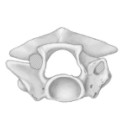
Latest Early-early Middle Eocene deposits of Algeria (Glib Zegdou, HGL50), yield the richest and most diverse fauna of amphibians and squamate reptiles from the Palaeogene of Africa
Published online: 08/02/2021
Keywords:
Africa; Algeria; amphibians; Eocene; squamates
https://doi.org/10.18563/pv.44.1.e1
Abstract
HGL50 is a latest Early-early Middle Eocene vertebrate-bearing locality located in Western Algeria. It has produced the richest and most diverse fauna of amphibians and squamate reptiles reported from the Palaeogene of Africa. Moreover, it is one of the rare faunas including amphibians and squamates known from the period of isolation of Africa. The assemblage comprises 17 to 20 taxa (one gymnophionan, one probable caudate, three to six anurans, seven ‘lizards’, and five snakes). Two new taxa were recovered: the anuran Rocekophryne ornata gen. et sp. nov. and the snake Afrotortrix draaensis gen. et sp. nov. The locality has also yielded the first confirmed anilioid snake, the first Palaeogene gymnophionan, and probably the first caudate from the Palaeogene (and possibly from the Tertiary) of Africa. The presence of a caudate at that time in Africa would be of particular interest; unfortunately, the available material does not permit a definitive identification. The fauna comprises Gondwanan and more specifically West Gondwanan vicariants, probably autochthonous groups and a Eurasian immigrant (assuming that the identification of the caudate is accurate). The fauna from HGL50 is clearly distinguished from the few other Eocene assemblages of Africa. However, if this results largely from differences in geological ages, geographic positions of the localities and mainly differences in environments took a part in the composition of the faunas.
PV article infos
Published in 44-1 (2021)
|
PDF
|
|
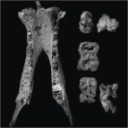
A new species of hippopotamine (Cetartiodactyla, Hippopotamidae) from the late Miocene Baynunah Formation, Abu Dhabi, United Arab Emirates
Published online: 07/04/2017
Keywords:
Arab Peninsula; Hippopotamidae; Hippopotamine event; Systematics
https://doi.org/10.18563/pv.41.1.e2
Abstract
The discovery of new hippopotamid material from the late Miocene Baynunah Formation (Abu Dhabi, United Arab Emirates) has prompted the revision of the existing material of this as yet unnamed fossil taxon. The Baynunah hippopotamid appears to be distinct from all other contemporary and later species in having a relatively more elongate symphysis, a feature similar to the earlier (and more primitive) Kenyapotamus. Yet, the Baynunah hippopotamid presents a dentition typical of the Hippopotaminae. It is therefore a distinct species attributed to the later subfamily, described and named in this contribution. This species provides further evidence for a ca. 8 Ma evolutionary event (termed “Hippopotamine Event”) that initiated the spread and ecological significance of the Hippopotaminae into wet habitats across Africa and Eurasia. The morphological affinities of the new species from Abu Dhabi suggest that the Arabian Peninsula was not a dispersal route from Africa toward southern Asia for the Hippopotamidae at ca. 7.5 Ma to 6.5 Ma.
PV article infos
Published in Vol 41-1 (2018)
|
PDF
S.I. Data
|
|
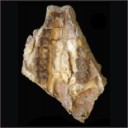
A new species of Propalaeotherium (Palaeotheriidae, Perissodactyla, Mammalia) from the Middle Eocene locality of Aumelas (Hérault, France).
Published online: 24/05/2016
Keywords:
Eocene; new species; Palaeotheriidae; Propalaeotherium
https://doi.org/10.18563/pv.40.2.e1
Abstract
A new Propalaeotherium species, clearly distinct from the genus Eurohippus, is described. It is characterized by having a similar size as P. voigti from the German Geiseltal localities (MP 11 to MP 13 reference-level), but differs in several features suggesting a slighty more derived morphology. It presents indeed less brachyodont crowns with less prominent and less elevated cingula, slightly larger relative surface of premolars, and a more marked metaconid splitting on cheek teeth. This new species is unknown from other European localities except the nearby Saint-Martin de Londres locality which has been considered older than the MP 13 level.
PV article infos
Published in Vol.40-2 (2016)
|
PDF
S.I. Data
|

|
Cricetid rodents from Siwalik deposits near Chinji village. Part I: Megacricetodontinae, Myocricetodontinae and Dendromurinae.
Published online: 15/10/1988
Keywords:
Dendromurinae; Megacricetodontinae; Middle Miocene; Myocricetodontinae; Rodents; Siwalik
https://doi.org/10.18563/pv.18.2.95-154
Abstract
Seventeen species of cricetid rodent are recognized and described from lower and middle Siwalik deposits in the Potwar Plateau of Pakistan. These species are grouped in three categories, characterized as subfamilies (e. g., Megacricetodontinae, Myocricetodontinae, and Dendromurinae); an additional and more abundant category of rodents from these deposits, the Democricetodontinae, is excluded from this study, and will be described in a later study. Fifteen of the species are new, and four new genera are described. The Siwalik cricetid taxa are : Megacricetodon aquilari, n. sp.; Megacricetodon sivalensis, n. sp.; Megacricetodon daamsi, n. sp.; Megacricetodon mythikos, n. sp.; Punjabemys downsi, n. gen. & n. sp.; Punjabemys leptos, n. gen. & n. sp.; Punjabemys mikros, n. gen. & n. sp.; Myocricetodon sivalensis, n. sp.; Myocricetodon sp.; Dakkamyoides lavocati, n. gen. & n. sp.; Dakkamyoides perplexus, n. gen. & n. sp.; Dakkamys asiaticus, n. sp.; Dakkamys barryi, n. sp.; Dakkamys sp.; Paradakkamys chinjiensis, n. gen. & n. sp.; Potwarmus primitivus, n. gen.; and Potwarmus minimus, n. gen. & n. sp. This diverse record of middle Miocene small mammals illuminates a profound radiation of cricetid rodents in southem Asia, the effects of which were felt in Europe and Africa as well as the rest of Asia.
PV article infos
Published in Vol. 18, Fasc. 2 (1988)
|
PDF
|

|
Mammifères de l'Ilerdien Moyen (Eocène inférieur) des Corbières et du Minervois (Bas-Languedoc, France). Systématique, Biostratigraphie, Corrélations.
Published online: 25/01/1991
Keywords:
Biostratigraphy; Corbières; correlations; Early Eocene; Ilerdian; Mammalia; Minervois; Paleobiogeography; Southern France
https://doi.org/10.18563/pv.20.2-3.55-144
Abstract
Mammal-bearing localities have been discovered in the marine and lacustrine series of the middle Ilerdian (Lowermost Eocene) from Southem France (Minervois and Corbières). In the localities of Fordones, Monze, Fournès, and La Gasque, thirty mammal species have been identified. Among others, they include ischyromyid rodents (Microparamys and Pseudoparamys), paromomyid and adapid primates (Arcius and Donrussellia), new insectivores, condylarths, and a dyspternine pantolestid. These faunas provide new informations on the early Eocene Mesogean faunas of Rians and Palette. The assemblages of primates and rodents from Fordones support good correlations with Palette which was recently placed near the standard-level of Dormaal (MP 7). In fact, Palette and Fordones could be even older than Dormaal. Consequently, there seems to be a relatively important temporal gap between the late Paleocene of Cernay and the Sparnacian of Dormaal. This gap could be partly filled with the Mesogean faunas of Palette, Fordones, and Silveirinha. On the basis of these new mammal faunas the marine middle Ilerdian is proved to be older than the Cuisian stage of the Paris Basin. With regards to the position of the Fordones fauna at the top of the NP 10 calcareous nannoplankton biozone, the westem European paleomammalogists Paleocene/Eocene boundary could be situated between the NP 9 and NP 10 biozones.
PV article infos
Published in Vol. 20, Fasc. 2-3 (1991)
|
PDF
|

|
Contributions à l'étude du gisement Miocène supérieur de Montredon (Hérault). Les grands mammifères. 5 - Les périssodactyles Equidae
Published online: 15/11/1988
Keywords:
Equidae; Hipparion; Late Vallesian; Mammalia; Montredon; Perissodactyla
https://doi.org/10.18563/pv.18.ext.65-96
Abstract
Revision of the hipparion material from Montredon, including newly excavated and other unpublished specimens brings evidence of specific heterogeneity.
A fragmentary very small MC III seems very close to H. macedonicum from the upper Vallesian of Ravin de la Pluie, Greece. In that same site was also found a large hipparion.
Most of the Montredon material is referred to H. depereti. This species associates characters usually found in Vallesian hipparions (highly plicated upper cheek teeth, deep vestíbular grooves on the lower cheek teeth, robust metapodials) with characters more frequent in Turolian forms (middle size, lack of confluence in the upper premolar fossettes, lack of ectostylids on the adult lower cheek teeth, well developped keel on the MC III, facette for the 2nd cuneiform present on all MT III). H. depereti shares some of these characters with the Spanish and Portuguese hipparions transítional between the Vallesian and the Turolian (Masia del Barbo, Azambujeira) but is not identícal to any of them. The upper Vallesian hipparion material from Diavata, Greece, probably belongs to H. depereti but not the large hipparion rests from Ravin de la Pluie.
Thus, Montredon and Ravin de la Pluie may well share the same small species, H. macedonicum, but they differ in the associated one: middle-sized H. depereti at Montredon, large-sized H. primigenium at Ravin de la Pluie. Both sites, however, give evidence of small hipparions during the Vallesian, coexisting with other larger species.
The present paper also proposes an adaptation of the Kiesewalter's indices that calculates the height at the withers using the metapodial length, and discusses indices proposed by Gromova and by Sen et al. to express the relative development of the metapodial keel.
PV article infos
Published in Vol. 18, Ext (1988)
|
PDF
|

|
New late Paleocene rodents (Mammalia) from Big Multi Quarry, Washakie Basin,Wyoming.
Published online: 16/12/1996
Keywords:
Clarkforkian; North America; Paleocene; Rodentia
https://doi.org/10.18563/pv.25.2-4.301-321
Abstract
The earliest North American rodents occur in basal Clarkforkian beds of the Fort Union Formation at Big Multi Quarry near Bitter Creek, northern Washakie Basin, Sweetwater County, Wyoming, and in closely correlative Fort Union beds formerly accessible in the Eagle Coal Mine near Bear Creek, northern Clark's Fork Basin, Carbon County, Montana. Two new species of early Clarkforkian rodents, Paramys adamus and Alagomys russelli, are described from Big Multi Quarry. Paramys adamus is represented by virtually complete upper and lower dentitions, which demonstrate that this species is one of the most primitive North American paramyids yet discovered. These specimens form the basis for a reevaluation of the content and stratigraphic range of P. atavus, which is known with certainty only from Bear Creek. Alagomys russelli is the first North American record for the enigmatic rodent family Alagomyidae, otherwise known from ?late Paleocene-early Eocene localities in Mongolia and China. Phylogenetic analysis of dental and gnathic traits suggests that Alagomyidae form the sister group of all other undoubted rodents. At least two rodent clades, alagomyids and basal paramyids, seem to have invaded North America from Asia at the beginning of Clarkforkian time, but only the paramyids persisted to undergo a significant evolutionary radiation in North America.
PV article infos
Published in Vol. 25, Fasc. 2-4 (1996)
|
PDF
|

|
A primitive Emballonurid bat (Chiroptera, Mammalia) from the Earliest Eocene of England
Published online: 16/12/1996
Keywords:
bats; Early Eocene; Emballonuridae; Origins; PHYLOGENY
https://doi.org/10.18563/pv.25.2-4.287-300
Abstract
A new genus, Eppsillycteris, is erected for Adapisorex? allglicus COOPER, 1932, from the earliest Eocene Blackheath Beds of Abbey Wood, London, England. Various derived character states indicate that it belongs to the order Chiroptera (bats) rather than to the extinct "insectivore" family Adapisoricidae. Other derived character states are shared with fossil and modern members of the family Emballonuridae. Placement of the new genus in this family extends the record of the Emballonuridae back in time by about 10 million years. It is the earliest record of a modern bat family and one of the earliest bats. This implies that the differentiation of at least some modern bat families took place in the Palaeocene, where no authenticated records of bats yet exist. The primitive characters of the earliest bats make the family Nyctitheriidae an unlikely stem group for the order Chiroptera. A tentative plausible alternative exists in some unnamed upper molars from the Palaeocene of Walbeck, Germany. Wyollycteris chalix, described as a bat from the Late Palaeocene of Wyoming, U,S.A., fits better in the family Nyctitheriidae.
PV article infos
Published in Vol. 25, Fasc. 2-4 (1996)
|
PDF
|

|
Preliminary evolution of paleosols and implications for interpreting vertebrate fossil assemblages, Kuldana formation, Northern Pakistan
Published online: 16/12/1996
Keywords:
Eocene; Kuldana Formation; Pakistan; Paleosols; Pedogenic Carbonate; taphonomy; Time Averaging; Vertebrate Fossils
https://doi.org/10.18563/pv.25.2-4.261-277
Abstract
Paleosols and the taphonomy of vertebrate fossils in the Eocene Kuldana Formation of northern Pakistan provide important information on the preservation and time-averaging of fossil assemblages. Morphologic, mineralogic, and chemical data as well as comparisons with Quaternary soils suggest that Kuldana paleosols formed under generally dry and oxidizing conditions over time intervals of less than 100 000 years and perhaps as short as 1000 years. The distribution of carbonate in Kuldana paleosols further indicates that the upper half of the profiles were acidic whereas the lower halves were alkaline. Vertebrate fossils are rare in Kuldana paleosols and occur primarily in well-cemented sandstones and conglomerates with abundant micritic and iron-stained nodules that were reworked from floodplain soils. The scarcity of vertebrate remains in Kuldana paleosols probably reflects a combination of acidic, dry, and oxidizing conditions in the upper half of the profiles and rapid floodplain sedimentation. Comparisons between the taphonomic characteristics of Kuldana channel fossil assemblages and bone accumulations in modem rivers provide a basis for estimating the length of time represented by Kuldana fossils from several important localities. Vertebrate fossil assemblages from Barbora Banda are characterized by a low-diversity paleofauna, partially articulated skeletons, and bones that are sorted by size and shape. Comparison with bone accumulations in modern rivers suggests that the fossils from Barbora Banda accumulated in 1 to 10 years. Vertebrate fossils from the Lower Kuldana in the Kala Chitta Hills region, typified by locality H-GSP 62, are characterized by a high-diversity paleofauna and generally random and unsorted fossil bone distributions, which suggest that the fossils from these localities represent longer time intervals than the Barbora Banda fossils. Based on the time estimates for Kuldana paleosol development, fossil assemblages in Kuldana channel deposits in the Kala Chitta Hills region probably represent time intervals of about 1000 years.
PV article infos
Published in Vol. 25, Fasc. 2-4 (1996)
|
PDF
|

|
Second international symposium on Dinosaur, Eggs and Babies (Montpellier-Aix-en-Provence, 25-29 Août 2003).
Published online: 15/12/2003
Keywords:
amniotic eggshells; dinosaurs
https://doi.org/10.18563/pv.32.2-4.71-76
Abstract
Le premier Symposium International sur les ceufs de dinosaures et leurs petits a connu un francs succès, à Isona, en Catalogne (Espagne) en 1999. I1 faisait suite à la publication en 1994 d'un premier ouvrage "Dinosaurs eggs and babies" édité par K. Carpenter, K. Hirsch et J. Homer. Entre 1994 et 1999, les nouvelles découvertes ont augmenté significativement, notamment celles d'ceufs embryonnés, et le nombre de chercheurs impliqués dans ce domaine a accompagné cet accroissement. Jusque là, l'étude de ces objets, les coquilles d'ceufs, est restée longtemps marginale, faute d'une méthodologie scientifique appropriée.
PV article infos
Published in Vol. 32, Fasc. 2-4 (2003)
|
PDF
|

|
Les Ischyrictis de la transition Vindobonien-Vallésien
Published online: 15/09/1972
Keywords:
Ischyrictis; Mustelidae
https://doi.org/10.18563/pv.5.5.253-260
Abstract
Le groupe des Mustélides « Ischyrictoïdes » développe des tendances évolutives qu’engendrent des formes de Carnassiers prédateurs robustes et de grande taille. C’est une évolution comparable à celle que l’on trouve chez Plesiogulo, qui, lui, a une origine énigmatique (Petter, 1963). Chez les Mustélides on peut signaler deux lignées assez nettes : celle du sous-genre nominal des Laphyctis, plus conservatrice, plus mustéliforme, renfermant les espèces Ischyrictis (Laphyctis) mustelinus VIRET et L. zibethoides BLAINVILLE ; celle de type félinoïde caractérisée par L. Ginsburg (1961) avec la forme type Ischyrictis (Hoplicitis) florancei du Vindobonien inférieur de Pontlevoy-Thenay et I. helbingi VIRET, 1951 du Vindobonien supérieur de la Grive Saint-Alban. De plus rappelons que I. vorax DEHM et I. comitans DEHM du Burdigalien de Wintershof-West sont sans rapport avec les espèces du Miocène supérieur (Ginsburg, o.c.).
Récemment G. Petter (o.c.) a montré la difficulté qu’il y avait à envisager que l’Ischyrictis de Can Llobateres qu’elle décrivait puisse être le descendant de Ischyrictis helbingi de La Grive : la forme plus récente est évidemment de plus grande taille, mais le développement très marqué et la position avancée du protocône paraissent constituer un obstacle à une telle filiation.
Donc on signalait jusqu’ici deux lignées de Mustélides « ischyrictoïdes » toutes deux de grande taille : d’une part I. zibethoides de Sansan, d’autre part I. helbingi de la Grive. Or à notre point de vue nous considérons actuellement qu’il existe très probablement trois phyla d’Ischyrictis. Le premier serait représenté par les formes burdigaliennes déjà nommées I. vorax et I. comitans ; il se caractériserait par la perte précoce de la P₁ inférieure et la forme spéciale de la canine inférieure. Ce premier ensemble pourrait être rassemblé dans le sous-genre Laphyctis. Le reste des ischyrictoïdes de type conservateur, pour ce qui est de la région des prémolaires et de la forme de la canine, pourrait être subdivisé en deux sous-genres : le sous-genre Ischyrictis désignant les formes les plus mustéliformes avec I. mustelinus et I. zibethoides d’une part, et le sous-genre Hoplicitis pour les formes félinoïdes avec I. florancei et I. helbingi.
PV article infos
Published in Vol. 05, Fasc. 5 (1972)
|
PDF
|

|
Analyse d'ouvrage : Koobi Fora Research Project, volume 3. The fossil ungulates: geology, fossil artiodactyls, and palaeoenvironments, édité par John Michael HARRIS, 1991. Clarendon Press, Oxford, xvi + 384 p. ISBN 0-19-857399-5.
Published online: 11/02/1993
Keywords:
Artiodactyls; palaeovenvironments; Ungulates
https://doi.org/10.18563/pv.22.2-3.138-139
Abstract
Avec ce volume se clôture l'étude géologique et paléontologique des sites à hominidés de Koobi Fora. Il fait suite aux deux précédents ouvrages, parus respectivement en 1978 et 1983, consacrés également à l'étude des faunes recueillies sur ces gisements dans le cadre du Koobi Fora Research Project.
PV article infos
Published in Vol. 22, Fasc. 2-3 (1993)
|
PDF
|

|
Rongeurs du Miocène supérieur de Chorora, Ethiopie: Murinae, Dendromurinae et conclusions.
Published online: 30/07/2001
Keywords:
Ethiopia; Late Miocene; Muridae; Rodentia
https://doi.org/10.18563/pv.30.1-2.89-109
Abstract
The subfamilies Murinae and "Dendromurinae" both include 4 species at Chorora. Among the former, while Preacomys nov. gen. seems to be a forerunner of Acomys, the affinities of the remaining, poorly known taxa, are more difficult to evaluate. The bulk of the fauna, remarkably, consists of Dendromurines. Their similarities with those of Ngorora tends to pull the site back in time, but the large size and diversity of Murines fit better an age more recent than the very beginning of the Late Miocene.
PV article infos
Published in Vol. 30, Fasc. 1-2 (2001)
|
PDF
|

|
First report of an Eocene reptile fauna from Florida, USA
Published online: 30/07/2001
Keywords:
Eocene; Fauna; Florida; Reptile; USA
https://doi.org/10.18563/pv.30.1-2.1-10
Abstract
Fossils of the Trionychidae, Bataguridae or Emydidae, Palaeophis and Crocodylia from Chattahoochee, NW Florida, USA, represent the first report of an Eocene reptile fauna from Florida.
PV article infos
Published in Vol. 30, Fasc. 1-2 (2001)
|
PDF
|

|
Les mammifères Montiens de Hainin (Paléocène moyen de Belgique) Part II : Les Condylarthres
Published online: 30/12/1982
Keywords:
Belgium; Condylarths; Louisininae; Oxyclaeninae; Paleocene
https://doi.org/10.18563/pv.12.6.173-184
Abstract
The Condylarths from Hainin (Hainault, Belgium) show no affinity at the generic level to those known in other Paleocene localities of Europe and North America ; they are described as new forms : Monshyus praevius n. gen., n. sp. and Prolatidens waudruae n. gen., n. sp. Monshyus praevius, discovered in only one of the levels in the excavation at Hainin, is similar to the genera Microhyus TEILHARD and Louisina RUSSELL ; with them it is included in the subfamily Louisininae (Hyopsodontidae). With respect to Microhyus and Louisina, Monshyus is distinguished by the precociously modern aspect of its upper molars, the only teeth that are referable. Prolatidens waudruae, known only by lower molars, was found in several levels in the pit at Hainin. It is an arctocyonid presenting possible relationships to the North American form Oxyprimus galadrielae ; it therefore has been provisionally attributed to the subfamily Oxyclaeninae. If this attribution is confirmed, this species will constitute the first and only representative of the group in Europe.
PV article infos
Published in Vol. 12, Fasc. 6 (1982)
|
PDF
|

|
The terrestrial environnement and the origin of land vertebrates
Published online: 02/12/1980
Keywords:
environments; Land vertebrates; Terrestrial
https://doi.org/10.18563/pv.11.1.17
Abstract
L'ouvrage rassemble vingt contributions présentées lors d”un colloque organisé par l'éditeur en avril 1979, à Newcastle upon Tyne. Ce sont différents aspects du problème de la << sortie des eaux ›> qui ont été abordés lors de cette réunion. Par son volume, la qualité des communications, l”abondance des illustrations, nul doute que ce livre est appelé à devenir un ouvrage de référence pour les paléontologistes qui s'intéressent de près ou de loin à ce problème : enseignants et cher cheurs y trouveront leur compte. ll est un peu regrettable toutefois qu'aucun tenant de <<l”école suédoise» n'ait eu l`occasion d`y présenter ses thèses.
PV article infos
Published in Vol. 11, Fasc. 1 (1981)
|
PDF
|

|
Sur la présence de dents de mammifères (Creodonta, Perissodactyla) près de la limite Paléocène-Eocène à Hoegaarden, Belgique
Published online: 16/12/1996
Keywords:
Belgium; Creodonta; Landenian; Mammals; Perissodactyla
https://doi.org/10.18563/pv.25.2-4.115-124
Abstract
Amongst a collection of selachian teeth made at Hoegaarden in a marine level of Bruxellian (Lutetian) age, containing a reworked Landenian (Sparnacian) fauna mixed with a contemporaneous one, a few teeth of terrestrial mammals have been discovered. They comprise two rare European taxa: ? Hallensia sp. and Palaeonictis gigantea, both known from the Landenian. Even though the ?Hallensia has not been definitely identified, il differs from the only perissodactyl of this age previously recorded from Belgium (Cymbalophus cuniculus).
PV article infos
Published in Vol. 25, Fasc. 2-4 (1996)
|
PDF
|

|
Evolution des Aplodontidae Oligocènes Européens
Published online: 01/10/1979
Keywords:
Aplodontidae; Europe; Oligocene
https://doi.org/10.18563/pv.9.2.33-82
Abstract
Until now Aplodontidae of the European Oligocene have been documented by four species only. The phylogenetic relations remained obscure. as the distribution of only one species has been known in some detail. New material made it possible to define the stratigraphic range of two of the already existing species (Plesispermophilus angustidens, Sciurodon cadurcense) and to follow their development during the Oligocene beginning with the event of the « Grande Coupure ››. Sciurodon remained nearly without change until the end of the Middle Oligocene. Plesispermophilus angustidens split into two distinct phyletic lines, one of which (P. macrodon n. sp.) reaching considerable size, is represented till the beginning of the Upper Oligocene (Pech de Fraysse, Gaimersheim). The other line leads to Plesispermophilus ernii (basal Upper Oligocene of Burgmagerbein 1. terminal Upper Oligocene of Coderet). Besides the already known forms a new small-sized species (P. atavus n. sp.) is described, which by its primitive features closely resembles the genus Plesispermophilus. Two other small-sized species already known from the Upper Oligocene (? P. argoviensis) and Lower Miocene (? P. descedens) seem to be closely related to the new species. It cannot be decided whether they are descendents of this line or have developed independently, because of their poor fossil record.
Comparison of the evolutionary modalities in the different phylogenetic lines reveals general trends. the most striking of which is the complication of the tooth pattern by the development of additional crests. In the lower molars the cusps diminuate in size and are more and more transformed into ridges. ln addition new connection between the crests appear. in the upper molars, the « selenodont » shape of the teeth becomes more and more dominant, and in the two main evolutionary lines of Plesispermophilus the metaconulus becomes duplicated. A further evolutionary trend is the size increase of the premolars compared to the molars, which is even more pronounced in the Miocene Aplodontidae.
Phylogenetic relations between the primitive Plesispermophilus and certain « prociurines ›› of Northern America as well as between Plesispermophilus (P. angustidens) and more progressive forms of the Upper Oligocene (P. ernii, P. macrodon n. sp.) can be documented. In this light, the taxonomic distinction between Prosciurinae (bunodont) and Allomyinae (selenodont) sensu Rensberger 1976 can be shown to be artificial, because it separates forms from each other, which are evidently closely related. Consequently the separation into two subfamilies has been abolished.
PV article infos
Published in Vol. 09, Fasc. 2 (1979)
|
PDF
|

|
Additions to the elasmobranch fauna from the upper Cretaceous of New Jersey (middle Maastrichtian, Navesink Formation)
Published online: 15/12/2004
Keywords:
Elasmobranchs; New Jersey; new species; Upper Cretaceous; USA
https://doi.org/10.18563/pv.33.1-4.1-16
Abstract
A recently discovered, almost complete specimen of a hybodont tooth, allows us to describe as a new species, fairly common, but usually fragmentary teeth in the Navesink Formation of New Jersey: Hybodus novojerseyensis nov. sp.
Three additional taxa are also described : Heterodontus creamridgensis, Squalicorax sp. and Pseudocorax affinis which is noted for the first time in North America.
The whole elasmobranch fauna of the Early Maastrichtian localities of New Jersey is reevaluated and several generic assignments are changed in comparison to the list previously published in 1975 (Cappetta
& Case).
PV article infos
Published in Vol. 33, Fasc. 1-4 (2004)
|
PDF
|