
Miocene Bovidae (Mammalia) of the Siwaliks: Hypsodontinae and Bovinae
Paléoenvironnement des mammifères des Gour Lazib
Pterosaurs from Coahuila
Les sélaciens du Miocène de la région de Montpellier
Contribution à l'étude des genres Gliravus et Microparamys.
Muridae du Pliocène supérieur d'Espagne et du midi de la France.
Eocene (57) , Quercy Phosphorites (38) , Systematics (32) , Rodents (29) , Mammalia (27) , Rodentia (25) , Miocene (25)
Page 1 of 2, showing 20 record(s) out of 38 total
|
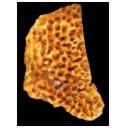
Lissamphibians from Dams (Quercy, SW France): Taxonomic identification and evolution across the Eocene-Oligocene transitionAlfred Lemierre
Published online: 25/06/2025 |
|
|
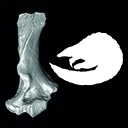
A pangolin (Manidae, Pholidota, Mammalia) from the French Quercy phosphorites (Pech du Fraysse, Saint-Projet, Tarn-et-Garonne, late Oligocene, MP 28)Jean-Yves Crochet, Lionel Hautier
Published online: 14/09/2015 |
|

|
Un nouveau genre de ?Palaeotheriidae (Perissodactyla, Mammalia) décelé dans les phosphorites du Quercy (Eocène supérieur ou Oligocène) d'après un arrière crâne sans dents.Jean-Albert RemyPublished online: 15/06/1999Keywords: endocranial cast; Epitympanic sinus; Palaeotheriidae; Paléogène; Quercy Phosphorites; skull anatomy https://doi.org/10.18563/pv.28.1.75-87 Abstract A rear skull from the Quercy Phosphorites is described. It documents a new perissodactyl genus, likely assignable to the family Palaeotheriidae and probably paleogene of age. Owing to the lack of any tooth, this family assignment remains however somewhat hypothetical. The specimen is firstly characterised by the presence of a wide epitympanic sinus swelling and hollowing the squamosal shell and the post-glenoid process. This cavity might make up a peculiar pattern of improvement for the hearing apparatus by carrying out a kind of drum near the middle ear, whereas the bony tympanic remains barely bulged and forms but a few developed auditory bulla. This pattern appears an outcome of a trend observed with many palaeotheriids, such as Plagiolophus. Furthermore, the endocranial cast shows a rather high degree of gyrencephaly for a paleogene mammal. The prominent lambdoidal crest points out a powerful nape musculature and a lowered head bearing. Consequently, it is assumed that such an animal was probably living in somewhat open places, at the expense of rather tough vegetables. It might have been accordingly provided with a semi-hypsodont, cement covered, "plagiolophoid" dentition. PV article infos Published in Vol. 28, Fasc. 1 (1999) |
|

|
Les gangas (Aves, Columbiformes, Pteroclidae) du Paléocène et du Miocène inférieur de France.Cécile Mourer-Chauviré
Published online: 11/02/1993 |
|

|
Cryptomerix Schlosser, 1886, Tragulidé de l'oligocène d'Europe ; relations du genre et considérations sur l'origine des ruminants.Jean SudrePublished online: 01/06/1984Keywords: Archaic Ruminants; Paleobiogeography; Quercy Phosphorites; Systematics; Tragulids https://doi.org/10.18563/pv.14.1.1-31 Abstract The genus Cryptomeryx SCHLOSSER, 1886, inusited during a long period, has been discovered in Lower and Middle Oligocene localities of the Quercy region (South-West France). This new material, as well as specimens from the old collections referred to Cryptomeryx, are described; their study, allows us precising the definition of the genus, and confirming its allocation to the Tragulidae family. The type species of the genus, Crypmmeryx gaudryi (= Lophiomeryx gaudryi FILHOL, 1877), occurs in several localities at the base of the Middle Oligocene (Itardies, La Plante 2, Roqueprune 2, Soulce, Herrlingen 1). The new species C. matsoui n. sp. has been defined in the older locality of Mas de Got (top of Lower Oligocene). It is possible that the species Pseudamphimeryx decedens STEHLIN, 1910 pertains to the same genus. Also to the Tragulids must be referred the monospecific genus Iberomeryx (I. parvus GABOUNIA, 1964) from Upper Oligocene of Benara (Georgie, URSS), with which Cryptomeryx is related. These genera are not direct ancestors of Miocene tragulids; their occurrence in the Western European Oligocene results from a first immigration wawe of the family. These Tragulids are one of the most archaic groups of Ruminants. They are probably derived from a primitive stock which had acquired in Asia the selenodont condition of the dentition. PV article infos Published in Vol. 14, Fasc. 1 (1984) |
|

|
Les Gruiformes (Aves) des phosphorites du Quercy (France). 1. sous-ordre cariamae (Cariamidae et Phorusrhacidae), systématique et biostratigraphie.Cécile Mourer-Chauviré
Published online: 30/11/1983 |
|

|
Les Dipodidae (Mammalia, Rodentia) d'Europe occidentale au Paléogène et au Néogène inférieur: origine et évolution.Marguerite Hugueney and Monique Vianey-Liaud
Published online: 01/10/1980 |
|

|
La poche à phosphate de Ste-Néboule (Lot) et sa faune de vertebres du Ludien supérieur. 11- CréodontesBrigitte Lange-BadréPublished online: 25/09/1978Keywords: Creodonta; Eocene; Quercy Phosphorites https://doi.org/10.18563/pv.8.2-4.295-299 Abstract The teeth and the astragale of the Creodonta from Ste-Néboule (Lot) are referred to Hyaenodon brachyrhynchus. Isolated teeth fit morphologically the material from La Débruge (Middle Ludian). However, biometric analysis suggests an Upper Ludian age. PV article infos Published in Vol. 08, Fasc. 2-4 (1978) |
|

|
La poche à phosphate de Ste-Néboule (Lot) et sa faune de vertebres du Ludien superieur. 14 - Conclusions généralesJean-Louis HartenbergerPublished online: 25/09/1978Keywords: Eocene; Quercy Phosphorites https://doi.org/10.18563/pv.8.2-4.319-326 Abstract Le matériel provenant de nouvelles fouilles dans les phosphorites du Quercy, soumis aux divers spécialistes, a conduit à la soutenance de plusieurs thèses d'état: sur les rongeurs (Hartenberger, Vianey-Liaud), les Chiroptères et Insectivores (Sigé), les Artiodactyles (Sudre), les Squamates (Rage) et, en partie, les Chéloniens (De Broin). Chacun dans son domaine, à côté des conclusions d'ordre évolutif, paléogéographique ou paléoécologique, a pu établir des successions stratigraphiques des gisements du Quercy qui se sont révélées largement concordantes. Ainsi la succession des faunes du Quercy est actuellement l'une des mieux établies. Dans ce contexte, les différents spécialistes ont décidé de conjuguer leurs efforts dans l'étude monographique de plusieurs gisements repérés le long de cette échelle, afin de rassembler l'information paléontologique sur des faunes bien précises et de tenter d'obtenir des indications d'ordre taphonomique. PV article infos Published in Vol. 08, Fasc. 2-4 (1978) |
|

|
La poche à phosphate de Sainte-Néboule (Lot) et sa faune de vertébrés du Ludien supérieur. 13-RongeursJean-Louis Hartenberger and Monique Vianey-Liaud
Published online: 25/09/1978 |
|

|
La poche à phosphate de Ste-Néboule (Lot) et sa faune de vertebres du Ludien supérieur. 12- Fissipèdes (Carnivores)Louis de Bonis
Published online: 25/09/1978 |
|

|
La poche à phosphate de Ste-Néboule (Lot) et sa faune de vertebres du Ludien supérieur. 10 - Paléothérides (Perissodactyles).Jean-Albert RemyPublished online: 25/09/1978Keywords: Eocene; Quercy Phosphorites https://doi.org/10.18563/pv.8.2-4.291-293 Abstract La poche à phosphorite de Sainte-Néboule (Lot) a livré au cours des récentes campagnes de fouilles effectuées dans le cadre de la RCP 311 une douzaine de dents ou fragments de dents de paléothéridés à rapporter à 3 taxons. PV article infos Published in Vol. 08, Fasc. 2-4 (1978) |
|

|
La poche à phosphate de Ste-Néboule (Lot) et sa faune de vertebres du Ludien supérieur. 9- Primates et ArtiodactylesJean SudrePublished online: 25/09/1978Keywords: Eocene; Quercy Phosphorites https://doi.org/10.18563/pv.8.2-4.269-290 Abstract La faune d'artiodactyles de Ste-Néboule, qui comprend neuf espèces, présente de nombreux PV article infos Published in Vol. 08, Fasc. 2-4 (1978) |
|

|
La poche à phosphate de Ste-Néboule (Lot) et sa faune de vertebres du Ludien supérieur. 8- Insectivores et Chiroptères.Bernard SigéPublished online: 25/09/1978Keywords: Eocene; Quercy Phosphorites https://doi.org/10.18563/pv.8.2-4.243-268 Abstract The small insectivorous placental mammals from Ste-Néboule are poorly varied. Two orders of insectivores are documented : the Proteutheria by Pseudorhyncocyon cayluxi (leptictids), the Lipotyphla by Saturninia gracilis and S. beata (nyctitheriids). The bats are only rhinolophoids and mostly hipposiderids. Sufficient populations allow us to restrict the original definitions of three previous species (Hipposideros schlosseri, Palaeophyllophora quercyi, P. oltina). From now, these species can be regarded as monophyletíc. PV article infos Published in Vol. 08, Fasc. 2-4 (1978) |
|

|
La poche à phosphate de Ste-Néboule (Lot) et sa faune de vertebres du Ludien supérieur. 7- Didelphides (Marsupiaux)Jean-Yves CrochetPublished online: 25/09/1978Keywords: Eocene; Quercy Phosphorites https://doi.org/10.18563/pv.8.2-4.231-242 Abstract The family Didelphidae is represented by three species in the Sainte-Néboule site, phosphorites of Quercy (lower Oligocene, San Cugat's nivel): Amphiperatherium minutum (Aymard), Amphiperatherium sp. and Peratherium cuvieri (Fischer). Only the first and third species are abundant (88 and 97 pieces). This two populations are described. The marsupial fauna of the european lower Oligocene is not recognized in its entirety in this site. PV article infos Published in Vol. 08, Fasc. 2-4 (1978) |
|

|
La poche à Phosphate de Ste-Néboule (Lot) et sa faune de vertebres du Ludien supérieur. 6- OiseauxCécile Mourer-Chauviré
Published online: 25/09/1978 |
|

|
La poche à Phosphate de Ste-Néboule (Lot) et sa faune de vertébres du Ludien supérieur. 5-SquamatesJean-Claude Rage
Published online: 25/09/1978 |
|

|
La poche à phosphate de Ste-Néboule (Lot) et sa faune de vertébres du Ludien supérieur. 4- CrocodiliensEric Buffetaut
Published online: 25/09/1978 |
|

|
La Poche à phosphate de Ste-Neboule (Lot) et sa faune de vertébres du Ludien Supérieur. 3- ChéloniensFrance de Broin
Published online: 25/09/1978 |
|

|
La poche à phosphate de Ste-Néboule (Lot) et sa faune de vertébres du Ludien Supérieur. 2- Amphibiens. Etude PreliminaireJean-Claude Rage
Published online: 25/09/1978 |
|
Page 1 of 2, showing 20 record(s) out of 38 total
