Current issue


2024-06
47-1
<< prev. next >>

Print ISSN: 0031-0247
Online ISSN:
2274-0333
Frequency: biannual

Article Management

You must log in to submit or manage articles.

You do not have an account yet ? Sign up.

Most downloaded articles (last 90 days)


Page 8 of 18, showing 20 record(s) out of 359 total

Revision der Equoidea aus den Eozänen Braunkohlen des Geiseltales bel Halle (DDR).
Jens L. Franzen and Hartmut Haubold
Published online: 4/15/86

Keywords: Eocene; Europe; Mammalia; Perissodactyla; Stratigraphy; taxonomy

  Abstract

    The dentitions as well as one complete and several partial skeletons of Equoids from the Eocene lignite beds of the Geiseltal locality are revised. Instead of 13 species distinguished up to now 3 chronoclines with 5 species and 3 separate species are recognized (text. fig. 1). Propalaeotherium hassiacum HAUPT, 1925 is evolving into Propalaeotherium isselanum (CUVIER, 1824) between the levels of the « obere Unterkohle ›› and the « untere Mittelkohle ›› of the Geiseltal section. Propalaeotherium argentonicum GERVAIS, 1849 is shown to be present in the « untere Unterkohle ››, whereas Lophiotherium pygmaeum (DEPERET,1901) occurs in the « obere Mittelkohle ›› and in the « oberes Hauptmittel ››. Plagiolophus cartieri STEHLIN, 1904 appears during the transition from the « Mittelkohle ›› into the « Oberkohle ›› as the earliest true Palaeothere. Therefore the « Oberkohle ›› is already regarded as Upper Eocene. This is corroborated by the occurrence of a phyletic descendant of Propalaeatherium parvulum (Propalaeotherium n.sp.) in the middle and upper "Oberkohle " because this species appears otherwise for the first time at the mammal level of Lissieu. On the other hand Propachynolophus gaudryz (LEMOINE, 1878) described by Matthes (1977) from the « untere Unterkohle ›› turns out te be in fact a Phenacodont. Thus the decisive argument for classifying the « untere Unterkohle ›› as Lower Eocene has to be dropped. Biostratigraphically the « Unterkohle ›› and the «Basishauptrnittel ›› correspond with the lower Middle Eocene (mammal level of Messel), whereas the «unteres Hauptmittel ›› and the « untere Mittelkohle ›› are equivalent to the middle part of the middle Eocene (mammal level of lssel), and the « obere Mittelkohle ›› together with the « oberes Hauptmittel ›› coincide with the upper Middle Eocene (mammal level of Bouxwiller). 


  PV article infos

Published in Vol. 16, Fasc. 1 (1986)

PDF
Contributions à l'étude du gisement Miocène supérieur de Montredon (Hérault). Les grands mammifères. 4 - Les artiodactyles Suidae.
Léonard Ginsburg
Published online: 11/15/88

Keywords: Artiodactyla; France; Mammalia; Montredon; Upper Miocene

  Abstract

    There is only one suid known in the Upper Miocene of Montredon (Hérault): Microstonyx (Limnostonyx nov. subgen.) antiquus (KAUP). It is differenciated from Microstonyx major by the presence of upper and lower canines which are considerably longer and biger. Its presence at Montredon corroborates the palustrine habitat for the species. 


  PV article infos

Published in Vol. 18, Ext (1988)

PDF
Contributions à l'étude du gisement Miocène supérieur de Montredon (Hérault). Les grands mammifères. 2 - les carnivores
Gérard de Beaumont
Published online: 11/15/88

Keywords: anatomy; Carnivora; France; Montredon; Systematics; Upper Miocene

  Abstract

    The locality of Montredon has provided 8 species of camivores, often little documented, that are discribed and depicted. All the remains are fragmentary and generally badly preserved which lowers very much the possible precision of the taxonomic study; this one has however allowed the creation of a new subspecies. The most richlypdocumented forms are an ursid (Indarctos) and a felid (Machairodus). Issuing often from a westem Europe evolution, the carnivores are well inserted between those of the better known faunas of the "Classical Pontian" and of the lower Vallesian and this situation fits also well with their stratigraphic level, that cannot however be more accurately defined with them alone.


  PV article infos

Published in Vol. 18, Ext (1988)

PDF
Contributions à l'étude du gisement miocène supérieur de Montredon (Hérault). Les grands mammifères. Avant propos.
Bernard Sigé
Published online: 11/15/88

Keywords: Editorial; Mammalia; Montredon; Upper Miocene

  Abstract

    Le Mémoire Extraordinaire 1988 de PALAEOVERTEBRATA regroupe dix articles consacrés au gisement à mammifères du Miocène supérieur de Montredon (Hérault), connu et classique depuis la fin du siècle dernier, et auquel est lié le nom du savant paléontologue lyonnais Charles Depéret.
    Cette monographie vient normalement à la suite de celle parue en 1982 dans PALAEOVERTEBRATA, dont les différents articles traitaient de la stratigraphie du gisement, et faisaient l'étude des différents groupes de micromammifères représentés dans la faune (insectivores, chiroptères, rongeurs). 


  View editorial

Published in Vol. 18, Ext (1988)

PDF
Nouvelles données sur les mammifères du Thanétien et de l'Yprésien du bassin d'Ouarzazate (Maroc) et leur contexte stratigraphique.
Emmanuel Gheerbrant, Jean Sudre, Sevket Sen, Claude Abrial, Bernard Marandat, Bernard Sigé and Monique Vianey-Liaud
Published online: 12/15/98

Keywords: early Paleogene; magnetostratigraphy; Mammals; Morocco; North Africa; Ouarzazatz basin; Systematics

  Abstract

    New faunal and stratigraphical data on the vertebrates localities from the early Paleogene of the Ouarzazate Basin (Adrar Mgorn 1, Adrar Mgorn 1 bis et N'Tagourt 2), Morocco, are presented. A magnetostratigraphical study, the first for such early Paleogene Arabo-African mammal localities, and the discovery of probable remains of the nannofossil Discoaster support the Thanetian age of the Adrar Mgorn 1 site. The magnetostratigraphy suggests a slightly later age than was thought for the Paleogene formations of the local series of Tinerhir and for the vertebrate localities: late or latest Thanetian for Adrar Mgorn 1 and Adrar Mgorn 1 bis, middle Ypresian for N'Tagourt 2. It also indicates a lower position of the KT boundary in the series. Two tons of matrix recovered in the vertebrate sites have vielded new data on the micromammals. A damaged lower molar from N'Tagourt 2 is referable to Khamsaconus bulbosus  and supports the proboscidean affinities of this species and especially possible relationships with bunolophodont taxa such as elephantiforms. A lower molar from Adrar Mgorn 1 bis belongs to a new form which can be identified as a plesiadapiform or an euprimate close to Altiatlasius koulchii though significantly larger. A new material from Adrar Mgorn 1 illustrates a new dilambdodont adapisoriculid species which is referable to Garatherium : ?Garatherium todrae n. sp. Another species referred to Garatherium is known in the locality (?Garatherium n. sp.). Garatherium is a new lineage from the Ouarzazate basin which crosses the Paleocene-Eocene boundary together with Palaeoryctes, Didelphodontinae gen. and sp. 2, Todralestes, and Afrodon, and it is the first Paleocene-Eocene lineage identified outside of this basin (Garatheríum is based on a species from El Kohol, Algeria). Among the Paleocene-Eocene lineages from the Ouarzazate basin, it should be also mentioned a new possible carnassial form (carnivoran or creodont; Adrar Mgorn 1), and an upper molar of Cimolestes cf. incisus (Adrar Mgorn 1 bis). The upper molar THR 168 previously reported as from an indeterminate didelphodontine is here identified as the M1/ of Afrodon chleuhi. The micromammal faunas from the Ouarzazate basin are positioned in the global chronological framework of the mammal localities from the Paleogene of the Arabo-African domain. 


  PV article infos

Published in Vol. 27, Fasc. 3-4 (1998)

PDF
Fossil snakes from the Palaeocene of Sao José de Itaborai, Brazil.Part 1 Madtsoiidae, Aniliidae.
Jean-Claude Rage
Published online: 12/15/98

Keywords: Aniliidae s.l.; Brazil; Coniophis; Hoffstetterella; Madtsoia; Madtsoiidae; middle Palaeocene; New taxa; Snakes

  Abstract

    The middle Palaeocene of São José de Itaboraí (State of Rio de Janeiro, Brazil) has yielded a very rich and diverse snake fauna which includes Madtsoiidae, Aniliidae s.l., Boidae, Tropidophiidae s.l., Booidea incertae sedis, and Russellophiidae. The present article (part I) deals with Madtsoiidae and Aniliidae s.l. Madtsoiidae are represented by many vertebrae and a few skull bones. They comprise one new species assigned to the genus Madtsoia (M. camposi sp. nov.). However, the definition of the genus Madtsoia is unsatisfactory and the generic allocation might be provisional. A few elements, vertebrae only, belong to the Aniliidae s. l. Two taxa are referred to this latter group: Coniophis cf. C. precedens and Hoffstetterella brasiliensis gen. et sp. nov. The forthcoming part II will deal with Boidae.


  PV article infos

Published in Vol. 27, Fasc. 3-4 (1998)

PDF
Un crane de Chalicothere (Mammalia, Perissodactyla) du Miocène supérieur de Macédoine (Grèce) : remarque sur la phylogénie des Chalicotheiinae
Louis de Bonis, Geneviève Bouvrain, George D. Koufos and Pascal Tassy
Published online: 6/14/95

Keywords: Chalicotheriidae; Cladistics; Greece; Miocene; Perissodactyla; PHYLOGENY

  Abstract

    The discovery in the Turolian (Late Miocene) of Dytiko 3 (Macedonia, Greece) of a complete skull with mandibles and cervical vertebrae, atlas and epistropheus, is a very important contribution to the knowledge of the subfarnily Chalicotheríinae. After the description, the comparison with other specimens of Miocene chalicotheres permits the revival of the generic name Macrotherium with a new species M. macedonicum. This genus is mainly characterized by a short snout and an inflated cerebral skull. It coexists during the Miocene with Chalicotherium. A cladistic analysis leads to conclusion that the species which has been described from the Early Middle Miocene of Rusinga must be identified as the type-species of a new genus: Butleria.


  PV article infos

Published in Vol. 24, Fasc. 1-2 (1995)

PDF
A new Ardynomys (Rodentia,Cylindrodontidae) from the Eocene of the eastern Gobi Desert, Mongolia.
Demberelyin Dashzeveg
Published online: 12/16/96

Keywords: Ardynomys; Eocene; Mongolia; Rodentia; Systematics

  Abstract

    A partial skull of Ardynomys russelli sp. nov. (Rodentia, Cylindrodontidae) is described. This was collected in the late Eocene of Alag Tsab locality in the eastem Gobi Desert, Mongolia. Ardynomys russelli sp. nov. is characterized by small size, brachyodont molars, and retention of P3. It represents the earliest record of the genus Ardynomys MATTHEW & GRANGER, 1925, in Asia. 


  PV article infos

Published in Vol. 25, Fasc. 2-4 (1996)

PDF
New late Paleocene rodents (Mammalia) from Big Multi Quarry, Washakie Basin,Wyoming.
Mary R. Dawson and Christopher K. Beard
Published online: 12/16/96

Keywords: Clarkforkian; North America; Paleocene; Rodentia

  Abstract

    The earliest North American rodents occur in basal Clarkforkian beds of the Fort Union Formation at Big Multi Quarry near Bitter Creek, northern Washakie Basin, Sweetwater County, Wyoming, and in closely correlative Fort Union beds formerly accessible in the Eagle Coal Mine near Bear Creek, northern Clark's Fork Basin, Carbon County, Montana. Two new species of early Clarkforkian rodents, Paramys adamus and Alagomys russelli, are described from Big Multi Quarry. Paramys adamus is represented by virtually complete upper and lower dentitions, which demonstrate that this species is one of the most primitive North American paramyids yet discovered. These specimens form the basis for a reevaluation of the content and stratigraphic range of P. atavus, which is known with certainty only from Bear Creek. Alagomys russelli is the first North American record for the enigmatic rodent family Alagomyidae, otherwise known from ?late Paleocene-early Eocene localities in Mongolia and China. Phylogenetic analysis of dental and gnathic traits suggests that Alagomyidae form the sister group of all other undoubted rodents. At least two rodent clades, alagomyids and basal paramyids, seem to have invaded North America from Asia at the beginning of Clarkforkian time, but only the paramyids persisted to undergo a significant evolutionary radiation in North America. 


  PV article infos

Published in Vol. 25, Fasc. 2-4 (1996)

PDF
Historical and new perspectives on the parataxonomyof fossil eggs.
Monique Vianey-Liaud and Darla Zelenitsky
Published online: 12/15/03

Keywords: amniotic eggshells; Parataxonomy

  Abstract

    A critical review on the literature about the parataxonomy of amniote eggshells reasserts the great interest of this systematics tool for the progress of dinosaur eggshell paleontology. However, shedding light on its limits, we propose to give up the use of the basic types - morphotypes key system. 


  PV article infos

Published in Vol. 32, Fasc. 2-4 (2003)

PDF
Etude du crâne de Pachynolophus lavocati n. sp. (Perissodactyla, Palaeotheriidae) des Phosphorites du Quercy
Jean-Albert Remy
Published online: 2/15/72

Keywords: Perissodactyla; Quercy Phosphorites

https://doi.org/10.18563/pv.5.2.45-78

  Abstract

    The genus Pachynolophus, one of the poorest known of the Palaeotheriidae, includes the brachyodont forms with reduced and non-molariform premolars and with upper molars lacking a mesostyle. Quantitative characters (divers surface indications and elongation of the teeth), while demonstrating a close relationship to Hyracotherium, permit a better differentiation of the genus, confirm its specific splitting, and permit the distinction of three lineages. The skull from Memerlein is taken as the type of a new species, P. Iavocati, of which the dentition is extremely characterized by its lophiodonty, the strong reduction of the premolars and the reduction of the cingula. This characterization testifies to a late age which extends the existence of the genus quite near to the Eocene-Oligocene limit. Compared with the only two skulls known of related species (Hyracotheríum vulpiceps and Pachynolophus Iivinierensis), that from Memerlein is distinguished by progressive characters affecting diferent regions but most particularly the braincase; it is not possible, however, to isolate within this evolution the part which leads to a systematic differentiation. Modernization is translated by a considerable increase in size of the braincase, principally in the frontal region, a development of the facial region with anterior displacement of the dental series and a greater specialization of the masticatory apparatus. This evolution parallels the history of the Equidae of the North American early Tertiary, but certain particularities, the form of the alisphenoid, the presence of an anterior frontal foramen, and the structure of the paroccipital apophysis, testifies to the independance of the European forms. 


  PV article infos

Published in Vol. 05, Fasc. 2 (1972)

PDF
La plus ancienne faune de mammifères du Quercy : Le Bretou
Jean-Louis Hartenberger, Bernard Sigé and Jean Sudre
Published online: 12/1/74

Keywords: Le Bretou; Quercy Phosphorites

  Abstract

    Abstract not available 


  PV article infos

Published in Vol. 06, Fasc. 3-4 (1975)

PDF
Table ronde sur les phosphorites du Quercy Montauban 15-16 Décembre 1972
Louis Thaler and Jean-Louis Hartenberger
Published online: 11/15/74

Keywords: Quercy Phosphorites

  Abstract

    Voici une centaine d'années débutait sur les Causses du Quercy l'exploitation des phosphorites qui devait permettre d'amasser des collections de Vertébrés fossiles uniques au monde. Ces fossiles firent l'objet de nombreuses publications et les noms de Filhol, Gaudry, Schlosser, Stehlin, Teilhard de Chardin sont attachés à ces premières études.

    Après quelques années de prospection, les fouilles dans le Quercy ont repris en 1965, organisées par les laboratoires montpelliérains et parisiens. Ces premières recherches ont été aidées par le Centre National de la Recherche Scientifique qui a organisé une « table ronde» pour faire le point des premiers résultats obtenus. Ceux-ci ont été jugés suffisamment prometteurs pour que le C.N.R.S, ait décidé de poursuivre son effort par l'intermédiaire d'une Recherche Coopérative sur Programme.


  PV article infos

Published in Vol. 06, Fasc. 1-2 (1974)

PDF
First record of dinosaur eggshells and teeth from the north-west african Maastrichtian (Morocco).
Géraldine Garcia, Rodolphe Tabuce, Henri Cappetta, Bernard Marandat, Ilhem Bentaleb, Aziza Benabdallah and Monique Vianey-Liaud
Published online: 12/15/03

Keywords: Africa; amniotic eggshells; Maastrichtian; Morocco; theropod teeth

  Abstract

    We report the discovery of amniotic eggshells and theropod teeth from the Late Cretaccous  period in Morocco.The megaloolithid family represents the only known dinosaur egg remains in the north part of Africa and attests indirectly to the occurrence of sauropod dinosaurs (titanosaurids) in the Maastrichtian of Africa.


  PV article infos

Published in Vol. 32, Fasc. 2-4 (2003)

PDF
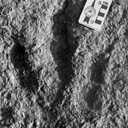
Les traces de pas de Dinosaures et autres Archosaures du Lias inférieur des grands Causses, Sud de la France
Georges Demathieu, Georges Gand, Jacques Sciau, Pierre Freytet and Jacques Garric
Published online: 12/15/02

Keywords: Dinosauroid footprints; France; Grands-Causses; Hettangian; ichnostratigraphy; paleoenvironments; Sinemurian; statistical results

https://doi.org/10.18563/pv.31.1-4.1-143

  Abstract

    The Causses" is a near 3400 km2 large plateau located in the south of France. Here the first dinosaur footprints where found in 1935. After this, this area has yielded an ever-increasing number of ichnites now in excess of 500 specimens. These latter, 15 to 50 cm long, tridactyl or tetradactyl footprints of generally biped animals, were discovered at the surface of Hettangian to lower Sinemurian dolomite layers within 4 distinct stratigraphic units. The 35 sites bearing ichnites are located on the plateau margin. For the first time, morphologic characters studied through descriptive statistic methods with the usual parameters and classical Student and Snédecor tests, allowed us, to divide the whole set of biped traces into 6 ichnospecies. Their definitions are further constrained by multivariate statistical results using Principal Component Analysis (PCA), Factor Analysis of correspondances (FAC) and Discriminant Analysis (DA). All have confirmed the morphologic observations. So that now, the following taxa are identified : Grallator variabilis, G. lescurei, G. sauclierensis, G. minusculus, Eubrontes giganteus, Dilophosauripus williamsi, cf. Moraesichnium, Orníthopus fabrei nov ichnosp. The more immediately visible differences relate to the interdigital II-IV divarication and the digit length ratio. To this panel, we must add Batrachopus deweyi and shapes suggesting Trisauropodichnus and/or Anomoepus. Among all ichnite associations described in the lower Liasic, the New England assemblage presents the most affinities with ours. It shows the ichnotaxa Grallator, Dilophosauripus, Eubrontes, Batrachopus without forgetting Ornithopus fabrei nov. ichnosp. which is close to Ornithopus gallinaceus from the Massachusetts and Connecticut basins. On comparing the present early Jurassic ichnofauna of the Causses with the ones of the Middle and Upper Triassic formations of the eastem border of the Massif Central (France), it appears that tridactyl footprints become more and more numerous and large from Triassic to Early Jurassic. In the Causses, these latest are prevalent but in Quercy (France), Poland, Italy, USA, they are also associated with Omithopoda, Thyreophora and Sauropoda ichnites. Footprint areas considered here were generaly under an arid climate. Animals that passed by were heavy and bulky possible Megalosaur trackmakers, and lighter and slender Coelophysids or Ceratosaurs. For all, these areas were pathways as the orientations of the trackways seem point out. The directions followed by these reptiles were without any important variation during the Hettango-Sinemurian stages. These areas were also used from time to time by Crocodilomorpha and may be tetradactyl (I-IV) bipedal avian Theropods. However, the number of such trackways in sites, sometimes substantial, should not lead us to overestimate the trackmakers populations. These last were probably relatively moderately abondant in this inter-supratidal swamp environment. In the Causses, ichnites are connected with former algo-laminated deposits (Algal mats) which were rapidly hardened by means of calcitisation of cyanobacteria. The result has been a moderate depth of footprints; autopodia disturbing only a few cm of the carbonate substrate. Other fossils have been discovered : invertebrates with thin bivalve and gastropod shells, crustaceans tests and plants. These latter suggest the existence of paleomangroves like environments but also continental vegetation periodically overruning the swamp environment during regression/transgression cycles. At these times, wooded parts of it, could become protecting, feeding, resting and nesting places.


  PV article infos

Published in Vol. 31, Fasc. 1-4 (2002)

PDF
Mammoths, mastodonts & elephants. biology, behavior and the fossil record

Gary HAYNES, 1992. Cambridge University Press, New York, xii + 413 p., ISBN 0-521-38435-4
Jean-Loup Welcomme
Published online: 2/11/93

Keywords: Elephants; Mammoths; Mastodonts

  Abstract

    L'ouvrage est divisé en trois grandes parties traitant successivement: I. l'anatomie ("Proboscidean flesh and bones"), en abordant la taxonomie, l'allure générale et l'éco-éthologie des proboscidiens actuels et fossiles; II. les causes de mortalité collective naturelle et provoquée chez les actuels; III. les documents fossiles et l'extinction des formes anciennes d'Amérique du Nord. 


  PV article infos

Published in Vol. 22, Fasc. 2-3 (1993)

PDF
Deux nouveaux primates dans l'Oligocène inférieur de Taqah (Sultanat d'Oman): premiers Adapiformes (?Anchomomyini) de la péninsule arabique?
Emmanuel Gheerbrant, Herbert Thomas, Jack . Roger, Sevket Sen and Zaher Al-Sulaimani
Published online: 11/15/93

Keywords: Adapids; Afro-Arabian plate; Early Oligocene; New taxa; Primates; Trans-Tethyan dispersals

  Abstract

    Two new species, Omanodon minor n. g., n. sp. and Shizarodon dhofarensis n. g., n. sp., known from fifteen isolated teeth, are described here as the first adapiform primates (?Anchomomyini) recognizable to date in the Taqah material (early Oligocene of Sultanate of Oman).

    Omanodon minor n. g., n. sp. displays special morphological similarity to the adapid tribe Anchomomyini from the Eocene of Europe, and especially to the Anchomomys lineage. Resemblances with the extant lemurifonn Microcebus are also noticeable and could be regarded as supporting Schwartz & Tattersall (1983) hypothesis of special relationships between the anchomomyine adapids and the cheirogaleid lemuriformes. However, these morphological affmities can be interpreted, altematively, as the results of parallelisms: important differences in upper molars indicate that the resemblances of cheirogaleids and Omanodon minor n. g., n. sp. are indeed probably due to parallelisms. Phyletic relationship of O. minor n. g., n. sp. to Anchomomyini is finally the most likely hypothesis.

    Shizarodon dhofarensis n. g., n. sp., although much more poorly known, is closely related to Omanodon minor n. g., n. sp., at least at a familial level. The general morphology of this species suggests
    also a close link with adapid Anchomomyini, although precise relationships within this tribe remain obscure. Interesting resemblances of Shizarodon dhofarensis n. g., n. sp. to Djebelemur martinezi lower molars (early Eocene of Tunisia) are also noticeable. These resemblances are even stronger than those betwen Omanodon minor and Djebelemur martinezi. However the very bunodont upper molars referred to D. martinezi are unusual for adapids, and there are moreover some notable differences in their lower molars. Thus resemblances in Djebelemur and Shizarodon are probably due to paralellisms.

    Because of the fragmentary nature of the material and of possible parallelisms, the systematic position of Omanodon and Shizarodon within adapiformes cannot however yet be established definitively. 


  PV article infos

Published in Vol. 22, Fasc. 4 (1993)

PDF
Nouveaux gisements à rongeurs dans les molasses oligo-miocènes de la région toulousaine
Francis Duranthon
Published online: 2/11/93

Keywords: Cricetidae; Eomyidae; GIiridae; Miocene; Oligocene; Rodents; Sciuridae; Southern France

  Abstract

    The fauna from three new rodent localities (Castelmaurou, Grépiac-carrière et Grépiac-rive gauche) from Oligo-Miocene molasses of the Toulouse area is described. The one from Colomiers is completed. 11 species belonging to 4 families (Cricetidae, Eomyidae, Gliridae, Sciuridae) are present. The Miocene localities of Grépiac-carrière and Colomiers are correlated with Balizac, La Brète, Lambert and Lespignan. Grépiac-rive gauche is just a little older than these sites. Castelmaurou is somewhat younger than La Milloque and belongs to Oligocene. 


  PV article infos

Published in Vol. 22, Fasc. 2-3 (1993)

PDF
Revision of the family Cephalomyidae (Rodentia, Caviomorpha) and new cephalomyids from the early Miocene of Patagonia.
Alejandro Kramarz
Published online: 7/30/01

Keywords: Cephalomyidae; Lower Miocene; Patagonia; Rodentia; Soriamys; Systematics

  Abstract

     A new genus of hystricognath rodent with two new species, Soriamys gaimanensis and Soriamys ganganensis, from the Colhuehuapian Age (Early Miocene), Sarmiento Formation, of Patagonia is described. The first species comes from the south barranca of the valley of Rio Chubut, near Gaiman locality (Chubut Province). It is known through a great number of dental remains in different stages of wear. The teeth are protohypsodont, with cement in the principal valleys. P4 are simpler, more oval inoutline and without a differentiated hypocone-hypoflexus. Upper molars are pentalophodont in early stages of wear and become bilobated in middle and advanced stages; M3 have a temporary third posterior lobe due to the maintenance of the braquiflexus on the posterior wall of the tooth. Lower teeth have a completely asymrnetrical pattern in relation to the uppers. The molars are trilophodont, with only one complex crest in the trigonid composed of the fusion of the anterolophid and mesolophid. The dp4 have a derived pentalophodont pattern due to the loss or fusion of the mesolophid and the development of an accessory transverse crest between the anterolophid and metalophid. The second species is known through a complete skull and jaw and other skull fragments with the dentition, proceeding from Pampa de Gan Gan, Chubut province. Respect to the first species, the teeth are higher crowned, with an earlier occlusal simplification and a third posterior lobe of M3 more developed and persistent. The skull and jaws show many chinchilloid characters, such as jugal bone with an ascending process, concave palate, very prominent dorsal shelf of the masseteric fossa, nasolachrymal duct opened laterally on the maxillary and very developed lateral mandibular fossa. Moreover, Soriamys is closely related to Cephalomys by sharing a similar asymmetric dental pattern and other dental and mandibular characters. These two genera constitute a natural group, the Cephalomyidae, with peculiar dental characters, like the asymmetric pattem of the upper and lower teeth; Cephalomyopsis, and probably Litadontomys, can be considered part of this group. Scotamys and Perimys constitute a distinct lineage (the Neopiblemidae or Perimyidae), more closely related to the chinchillids. Many characters shared by cephalomyids, eocardiids and caviids suggest a closer affinity between the Chinchilloidea and the Cavioiidea as a whole. Abrocoma shows also an asymmetric dental pattern and other chinchilloid features that suggest some degree of relationship with the cephalomyids, still not well determined. 


  PV article infos

Published in Vol. 30, Fasc. 1-2 (2001)

PDF
Mammals and stratigraphy of the continental mammal-bearing Quarternary of South America
Larry G. Marshall, Annalisa Berta, Robert Hoffstetter, Rosendo Pascual, Osvaldo A. Reig, Miguel Bombin and Alvaro Mones
Published online: 12/16/84

Keywords: Geochronology; Mammalia; Quaternary; South America; Stratigraphy

  Abstract

    Previous chronological arrangements of South American Quaternary land mammal faunas are appraised on the basis of current geological and paleontological data. Three South American late Pliocene-Pleistocene land mammal ages are conventionally recognized, from oldest to youngest, the Uquian, Ensenadan, and Lujanian ; all are defined on Argentine faunas.

         The Uquian is based fundamentally and historically on the fauna from the Uquía Formation in Jujuy Province, northwestern Argentina. Important known formations in Argentina yielding Uquian Age faunas include the sub-surface Puelche Formation (or Puelchense) near the city of Buenos Aires, and the Barranca de Los Lobos and Vorohué Formations between Mar del Plata and Miramar, Buenos Aires Province. A tentative subdivision is propos-ed for the Uquian into three subages based on knowledge of the Mar del Plata-Miramar sequence, from oldest to youngest, the Barrancalobian, Vorohuean, and Sanandresian. In Argentina the Uquian is presently marked by the first known record of Scelidodon, Hydrochoeropsis, Ctenomys, Canidae, Ursidae, Gomphotheriidae, Equidae, Tapiridae, Camelidae, Cervidae, and the last known record of Thylatheridium, Thylophorops, Dankomys, Eumysops, Pithanotomys, Eucoelophorus, Hegetotheriidae, Sparassocynidae, and Microtragulidae.

    The Ensenadan Age is based on the fauna from the Ensenada Formation near the city of Ensenada, Buenos Aires Province. In Argentina the Ensenadan is marked by the first known record of Lomaphorus, Neothoracophorus, Plaxhaplous, Cavia, Lyncodon, Lutra, Galera, Smilodon, Dicotyles, Lama, Vicugna, the last known record of Orthomyctera, and the only known record of Brachynasua.

         Typícal beds of late Lujanian Age in Argentina consist of fluvial deposits occupying stream channels, and shallow basins, often incised into beds of early Lujanian (i.e. Bonaerian of early workers) and Ensenadan Age. The Lujanian Age is based on a fauna from beds along the Rio Luján, about 65 km west of the city of Buenos Aires, Buenos Aires Province. The Lujanian in Argentina is marked by the first record of Equus, Chlamyphorus, and Holochilus, and the last record of Megatherioidea, Glyptodontoidea, Arctodus (=Arctotherium), Smilodon, Litopterna, Notoungulata, Proboscidea, Equidae, Morenelaphus, and Palaeolama.

       These land mammal ages are often difficult to recognize in other South American countries. The compositions of South American Pleistocene faunas vary with the environment. Some taxa were widely distributed in fossil deposits throughout the continent, but their occurrences need not reflect synchroneity. This is a result of changing climates and habitats in time. Consequently, proposed intracontinental correlations need confirmation based on magnetostratigraphy and a radioisotope time scale. Paleontologic characterizations of these land mammal ages (i.e. first and last record, and guide fossils) are useful for much of Argentina, but extensions to most of the other parts of South America are at best tenuous.

    The majority of known non-Argentine Pleistocene faunas are believed to be Lujanian in age. Possible non Argentine early Pleistocene (Uquian) faunas include Ayo Ayo and Anzaldo in Bolivia, and Cocha Verde in southern Columbia. A possible middle Pleistocene (Ensenadan or early Lujanian) fauna is the Chichense of Ecuador. Paleomagnetic and radioisotopic date (MacFadden et al., 1983) clearly indicate that the greater part of the Tarija fauna (Bolivia) is Ensenadan in age.

      The end of the Pleistocene and beginning of the Holocene in South America is marked by extinction of nearly all large mammalian herbivores and their specialized large predators. Radiocarbon age determinations suggest that large scale extinctions of megafauna occurred between 15,000 and 8,000 yrs. B.P. (years before present). 


  PV article infos

Published in Vol. 14, Ext (1984)

PDF

Page 8 of 18, showing 20 record(s) out of 359 total