|
Nouveaux Mammifères Eocènes du Sahara Occidental
Published online: 01/11/1979
Keywords:
Eocene; Mammals; Occidental Sahara
https://doi.org/10.18563/pv.9.3.83-115
Abstract
The fossil mammals collected from the Eocene of Hammada du Dra (northwest Sahara. Algeria) and two fragmentary teeth from the Lutetian of M'Bodione Dadere (Senegal) are described.
The fossils from the northwest Sahara come from a lacustrian deposit dated by charophytes (Raskyella aff. pecki, Raskyella n. sp.. Maedleriella lavocati, Maedleriella sp. et ? Peckichara sp.) as Middle Eocene or perhaps Lower Eocene (Gevin, Feist and Mongereau, 1974). Several hyracoids (3 or 4) identified from this formation extends the age of the family Pliohyracidae Osborn in Africa. Three forms appear to belong in the genera Megalohyrax, Titanohyrax and perhaps Bunohyrax which have been know until now only from the lower Oligocene of the Fayum (M. gevini n. sp. ; T. mongereaui n. sp.. ? Bunohyrax or Megalohyrax indet.). Another hyracoidof small size is referred to a new genus, Microhyrax (M. lavocati n. sp.).
Helioseus insolitus n. g. n. sp. is described without ordinal assignment. Azibius (Sudre, 1975) which has been the subject of questions and interpretations is reviewed.
Only one tooth from the Lutetian of M'Bodione Dadere is complete enough to interpret. lt probably belongs to a condylarth and demonstrates for the first time, the presence of the order in Africa. The second tooth is too fragmentary for comment.
In conclusion., the paleobiogeographic role of Africa at the end of the cretaceous and the beginning of the Cenozoic is discussed.
PV article infos
Published in Vol. 09, Fasc. 3 (1979)
|
PDF
|
|
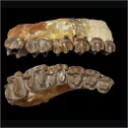
Les Périssodactyles (Mammalia) du gisement Bartonien supérieur de Robiac (Éocène moyen du Gard, Sud de la France)
Published online: 04/05/2015
Keywords:
Chasmotherium; new species; Palaeotheriidae; paleoenvironments
https://doi.org/10.18563/pv.39.1.e3
Abstract
We present here a new updated counting of the perissodactyls of Robiac, the type locality of the MP 16 level of the biochronological scale of paleogene mammals and that of the Robiacian stage of Eocene Land Mammals Ages in Western Europe.
The outcrop of Robiac consists actually of two 500m apart loci, Robiac-Nord and Robiac-Sud, considered of the same age according to the current discriminating power, and is dated from -38,7 MA after the last faunal, magnetostratigraphic and climatic calibrations.
It has yielded a very abundant and rich of 21 taxa perissodactyl fauna, topped by the giant Lophiodon lautricense, last representative of the family Lophiodontidae, of which it is the last proved deposit. The Palaeotheriidae are much diversified with 5 genera and 9 species of "Pachynolophinae", 3 genera and 10 species of Palaeotheriinae. Nine taxa have been defined from Robiac: Chasmotherium depereti n. sp., Palaeotherium castrense robiacense Franzen, 1968, the genus Leptolophus Remy, 1965 with the species L. stehlini Remy, 1965 and L. magnus Remy, 1998, Anchilophus (Paranchilophus) jeanteti Remy, 2012, Metanchilophus chaubeti Remy, 2012, Lophiotherium robiacense Depéret, 1917 and Pachynolophus gaytei n. sp.
The faunal Robiac cenogram with the associated flora testify to a hot, wet and forestal environment, likely corresponding to a short warming climatic phase; the broken up fossil bones should have been carried away and then gathered in swamp areas along the banks of a meandering river.
The swarm of mammals of Robiac, the richest of contemporaneous deposits, has been followed by a drastic drop in perissodactyl diversity at the MP 17A level; a crisis which could have originated in a renewal of the global Eocene cooling. Fons 4, the type-locality of this level, is largely scarcer in perissodactyls and its cenogram testifies to a less diversified fauna, with on the whole smaller species, that likely means a cooler and drier climatic environment; a new perissodactyl diversification occurred but later.
PV article infos
Published in Vol.39-1 (2015)
|
PDF
|
|
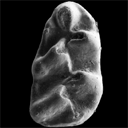
New datation of the Tafna Basin (Algeria): A combination between biochronological and magnetostratigraphical data
Published online: 11/03/2015
Keywords:
correlations; Late Miocene; North Africa; Rodentia
https://doi.org/10.18563/pv.39.1.e1
Abstract
The Tafna Basin corresponds to the lowlands, which are located in front of Tessala and Traras ranges, below the Tlemcen mountains, Algeria. This basin displays a complete sedimentary cycle dominated by lagoonal-fluvial and marine deposits. The continental formations located at the base of these deposits are mainly composed of alternating sandstones and clays. An early late Miocene age has been previously attributed to them, based on direct correlations with marine deposits. Search for micromammal fossils led to the discovery of three different rodent species from a single level of the Djebel Guetaf section, located at the bottom of these deposits. The rodent assemblage indicates a late Miocene age. Combined magnetostratigraphical and biostratigraphical investigations were carried out to provide a more accurate age control of these continental deposits. Sixty-four oriented rock samples were collected for a magnetostratigraphic study along a 92 meters thick section including the fossiliferous layer. Rock magnetic investigations indicate the presence of both high and low coercivity minerals. Specimens subjected to progressive thermal demagnetization procedures show that the samples exhibit a high temperature magnetization component and display a normal polarity. Based on biostratigraphic constraints, the Guetaf section is correlated with Chron C4An, indicating an age ranging from
9.1 to 8.7 Myr.
PV article infos
Published in Vol.39-1 (2015)
|
PDF
|
|
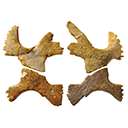
New material of “Eurysternidae” (Thalassochelydia, Pan-Cryptodira) from the Kimmeridgian of the Swiss Jura Mountains
Published online: 25/06/2020
Keywords:
Eurysternidae; Late Jurassic; morphology; Switzerland; Testudines; Thalassochelydia
https://doi.org/10.18563/pv.43.1.e2
Abstract
The region of Porrentruy (Swiss Jura Mountains) is known for its rich and diverse assemblage of Late Jurassic coastal marine turtles (Thalassochelydia). Dominated by the “Plesiochelyidae”, this assemblage also includes representatives of the two other thalassochelydian groups, the “Thalassemydidae” and “Eurysternidae.” In this study, we present new shell-based material from Porrentruy referable to eurysternids. One specimen represents a juvenile individual or a relatively small taxon, and is notably characterized by a well fenestrated plastron exhibiting a wider than long central plastral fontanelle. Two other specimens are much larger and possibly represent the largest eurysternids known to date. The fourth specimen is characterized by a unique plastral morphology otherwise only known in very small juveniles. This is the first time this unique plastral morphology is known to persist in an adult or subadult. The new material described herein represents at least three distinct taxa, all of them probably new. However, we refrain from naming new species based on this incomplete material in order to avoid adding confusion to an already complex taxonomical situation. This study provides new insights into the great diversity of eurysternids during the Late Jurassic.
PV article infos
Published in Vol 43-1 (2020)
|
PDF
|
|
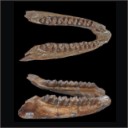
A mandible of the hyracoid mammal Titanohyrax andrewsi in the collections of the Muséum National d'Histoire Naturelle, Paris (France) with a reassessment of the species
Published online: 18/04/2016
Keywords:
Afro-Arabia; Fayum; Oligocene; Titanohyracidae
https://doi.org/10.18563/pv.40.1.e4
Abstract
An unpublished mandible of the large hyracoid Titanohyrax andrewsi from the early Oligocene Jebel Qatrani Formation, Fayum Depression, Egypt is described. This specimen has a twofold importance. Firstly, it opens an unexpected window on early paleontological research in the Fayum because it was discovered as early as 1904 by the French paleontologist René Fourtau during an expedition to the Fayum organized by the Muséum National d’Histoire Naturelle, Paris (MNHN). This expedition has remarkably never been mentioned in the literature. Secondly, the mandible documents the best-preserved specimen of T. andrewsi, permitting a revision of one of the very rare Paleogene hyracoids. Interestingly, the new mandible was discovered two years before the first report of the species by Charles W. Andrews. The hypodigm of T. andrewsi is reviewed and the dentition as a whole is compared in detail, notably with other Titanohyrax species from the Fayum. The validity of the large Titanohyrax “schlosseri” species is discussed, but a pronounced sexual size dimorphism for T. andrewsi is favoured.
PV article infos
Published in Vol.40-1 (2016)
|
PDF
|

|
La variabilité morphologique dentaire du Landenodon (Condylarthra) de Dormaal, (Eocène,Belgique)
Published online: 01/10/1980
Keywords:
Condylarths; Dormaal; Early Eocene; Landenodon
https://doi.org/10.18563/pv.9.ext.167-196
Abstract
The study of dental variations in Landenodon from Dormaal (early Eocene, Belgium) shows that only one
species is present in this locality : L. woutersi QUINET, 1968 (Condylarthra, Arctocyonidae, Arctocyoninae). A high morphological variability is described, especially concerning the metaconid of P/4, the paraconid of M/2, and some characters of M1/ which have been found to be independant of each other. This variability is discussed.
PV article infos
Published in Vol. 9, Ext (1980)
|
PDF
|

|
Fossil snakes from the Palaeocene of Sao José de Itaborai, Brazil.Part 1 Madtsoiidae, Aniliidae.
Published online: 15/12/1998
Keywords:
Aniliidae s.l.; Brazil; Coniophis; Hoffstetterella; Madtsoia; Madtsoiidae; middle Palaeocene; New taxa; Snakes
https://doi.org/10.18563/pv.27.3-4.109-144
Abstract
The middle Palaeocene of São José de Itaboraí (State of Rio de Janeiro, Brazil) has yielded a very rich and diverse snake fauna which includes Madtsoiidae, Aniliidae s.l., Boidae, Tropidophiidae s.l., Booidea incertae sedis, and Russellophiidae. The present article (part I) deals with Madtsoiidae and Aniliidae s.l. Madtsoiidae are represented by many vertebrae and a few skull bones. They comprise one new species assigned to the genus Madtsoia (M. camposi sp. nov.). However, the definition of the genus Madtsoia is unsatisfactory and the generic allocation might be provisional. A few elements, vertebrae only, belong to the Aniliidae s. l. Two taxa are referred to this latter group: Coniophis cf. C. precedens and Hoffstetterella brasiliensis gen. et sp. nov. The forthcoming part II will deal with Boidae.
PV article infos
Published in Vol. 27, Fasc. 3-4 (1998)
|
PDF
|

|
La morphologie dentaire des Thalattosuchia (Crocodylia, Mesosuchia).
Published online: 15/12/1997
Keywords:
Dental morphology; Dental types; feeding habits.; Jurassic; Metriorhynchidae; Systematics; Teleosauridae; Thalattosuchia
https://doi.org/10.18563/pv.26.1-4.35-59
Abstract
The tooth morphology of the Thalattosuchia (marine crocodilians from the Jurassic and the Early Cretaceous) is analysed. The Callovian from Poitou and the Kimmeridgian from Quercy have yielded many remains of Metriorhynchus, Steneosaurus and Machimosaurus. These remains allow us to study the variations of tooth morphology during ontogenic growth, tooth replacement and the location of the teeth. We have defined different tooth types for these genera. In Metriorhynchus, the two tooth types defined do not coincide with the two groups recognized in the Callovian (broad-skulled and narrow-skulled metriorhynchids) but reflect the prey preferences of these forms. In Steneosaurus and Machimosaurus the five tooth types deñned are in agreement with the main taxa known from the Bathonian to the Early Cretaceous. This study allows to precise the function and the prey preference of the Thalattosuchia during the Jurassic and the Early Cretaceous.
PV article infos
Published in Vol. 26, Fasc. 1-4 (1997)
|
PDF
|

|
Un crane de Chalicothere (Mammalia, Perissodactyla) du Miocène supérieur de Macédoine (Grèce) : remarque sur la phylogénie des Chalicotheiinae
Published online: 14/06/1995
Keywords:
Chalicotheriidae; Cladistics; Greece; Miocene; Perissodactyla; PHYLOGENY
https://doi.org/10.18563/pv.24.1-2.135-176
Abstract
The discovery in the Turolian (Late Miocene) of Dytiko 3 (Macedonia, Greece) of a complete skull with mandibles and cervical vertebrae, atlas and epistropheus, is a very important contribution to the knowledge of the subfarnily Chalicotheríinae. After the description, the comparison with other specimens of Miocene chalicotheres permits the revival of the generic name Macrotherium with a new species M. macedonicum. This genus is mainly characterized by a short snout and an inflated cerebral skull. It coexists during the Miocene with Chalicotherium. A cladistic analysis leads to conclusion that the species which has been described from the Early Middle Miocene of Rusinga must be identified as the type-species of a new genus: Butleria.
PV article infos
Published in Vol. 24, Fasc. 1-2 (1995)
|
PDF
|

|
Artiodactyla from the early Eocene of Kyrgyzstan
Published online: 16/12/1996
Keywords:
Artiodactyla; Asia; Diacodexeidae; Eocene; Kyrgyzstan
https://doi.org/10.18563/pv.25.2-4.359-369
Abstract
Isolated upper cheek teeth of the primitive artiodactyl Diacodexis sp., upper molars of Eolantianius russelli gen. et sp. nov. (Diacodexeidae), two lower molars tentatively referred to Eolantianius russelli gen. et sp. nov., and astragali of Diacodexeidae indet. are described from the early Eocene (late Ypresian) of locality Andarak 2 in Kyrgyzstan.
PV article infos
Published in Vol. 25, Fasc. 2-4 (1996)
|
PDF
|

|
Rates of evolution in divergent species lineages as a test of character displacement in the fossil record : tooth size in Paleocene Plesiadapis (Mammalia, Proprimates)
Published online: 16/12/1996
Keywords:
character displacement; character divergence; fractal time series; Plesiadapis; Rates of evolution
https://doi.org/10.18563/pv.25.2-4.193-204
Abstract
Two species lineages of North American late Paleocene Plesiadapis exhibit a pattern of size divergence from a common ancestral lineage. Time series of fossils in each of these lineages are analyzed to test the idea that size divergence represents competitive character displacement. The critical factor in a test of character divergence is showing that divergent lineages evolved directionally rather than randomly (multifactorially). Analysis of evolutionary rates and their temporal scaling in Plesiadapis shows that both divergent species lineages have the scaling slope expected for lineages evolving randomly rather than directionally, and size divergence in Plesíadapis does not represent character displacement. Rates of evolution commonly observed on a per-generation time scale are high enough to produce character displacement within a few generations. Thus character displacement is not likely to be visible on scales of time that can be studied in the fossil record.
PV article infos
Published in Vol. 25, Fasc. 2-4 (1996)
|
PDF
|

|
Pseudorhyncocyon cayluxi Filhol, 1892 insectivore géant des phosphorites du Quercy
Published online: 15/11/1974
Keywords:
Insectivores; Leptictidae; Quercy Phosphorites
https://doi.org/10.18563/pv.6.1-2.33-46
Abstract
Une hémimandibule et une molaire supérieure recueillies dans le gisement oligocène inférieur d'Escamps (phosphorites du Quercy) fournissent de nouvelles informations sur le genre Pseudorhyncocyon FllHOL, grand insectivore longirostre du Paléogène d'Europe, fossile très mal connu jusqu'ici. Des comparaisons avec les macroscélididés africains, géolabididés nord-américains, et leptictidés euraméricains permettent de rattacher cet amimal aux leptictidés, et de le rapprocher du genre Lepticidium TOBIEN, au sein de la sous-famille européenne nouvelle des pseudorhyncocyoninés.
PV article infos
Published in Vol. 06, Fasc. 1-2 (1974)
|
PDF
|

|
Contributions à l'étude des micromammifères du gisement Miocène supérieur de Montredon (Hérault). 3- Les insectivores
Published online: 30/06/1982
Keywords:
Hérault; Insectivora; Late Miocene; Micromammals; Montredon
https://doi.org/10.18563/pv.12.3.119-131
Abstract
This paper presents a preliminary list of insectivores from the Vallesian beds at Montredon (France). The associated rodent fauna has established a Vallesian age for the fauna. Eleven species belonging to the Soricidae, Talpidae, Erinaceidae, and Dimylidae are identified of which four only are referred with certainty to forms already named.
PV article infos
Published in Vol. 12, Fasc. 3 (1982)
|
PDF
|

|
Rongeurs muroidés du Néogène supérieur d'Afghanistan, évolution, biogéographie, corrélations
Published online: 30/09/1981
Keywords:
Afghanistan; Muroidea; Neogene
https://doi.org/10.18563/pv.11.4.133-179
Abstract
The rodent faunas of five afghan localities found in 1976 and 1977 (Sherullah, Ghazgay, Pul-e Charkhi, Dawrankhel 14 and 15) are studied.
The rodents (Muridae, Cricetidae and Rhizomyidae) represent 8 genera and 10 species. The detailed description of the 2 new genera and 7 species diagnosed in 1979 is given. An other species is created : Pseudomeriones crapouilloti n. sp. These faunas precise the origin and diversification of Muridae and Cricetidae. A phyletic lineage known in Afghanistan is represented in East Africa by a ramus or a collateral lineage. The five localities are dated from Lower Turolian to Ruscinian. They constitute the frame of a chronologie scale for the Upper Continental Neogene of Afghanistan.
The study of afghan material brings new data to the biogeography of Old Word's rodents during the Upper Neogene; from Pakistan to Europe and Africa, a rather warm and damp province would have existed till Upper Miocene; after which (in the mio-pliocene epoch) it would have divided into 3 parts, by aridification of the central area.
PV article infos
Published in Vol. 11, Fasc. 4 (1981)
|
PDF
|

|
Une nouvelle espèce d'Hipparion du Miocène terminal d'Espagne.
Published online: 31/01/1971
Keywords:
Hipparion; Late Miocene; Spain; Villafranchian
https://doi.org/10.18563/pv.4.2.59-66
Abstract
The recently discovered, very rich, Pliocene locality of Layna (Soria, Spain), has already yielded 30 species of mammals. Hipparion fissurae, described here is more dolichopodic than other Hipparion. It is related to Hipparion crusafonti from Villaroya (Villafranchian), but more slender between other characters.
PV article infos
Published in Vol. 04, Fasc. 2 (1971)
|
PDF
|

|
Un gisement à mammifères dans la formation lacustre d'âge Miocène moyen du Collet Redon près de St-Cannat (Bouches-du-Rhone). Implications stratigaphiques
Published online: 10/04/1979
Keywords:
France; Neogene; Rodentia
https://doi.org/10.18563/pv.8.5.327-341
Abstract
The new fauna of Collet Redon (Bouches-du-Rhône, France) is dated by three rodents: Megacricetodon aff. bavaricus, Democricetodon affinis mutilus and Peridyromys cf. hamadryas. They correlate this locality with Oggenhof and Ohningen in Bavaria (Western Germany). As the radiometric age of Ohningen is estimated between 14 and 13 M.Y., these three localities are of Serravallian age. This datation brings a complete readjusment of the stratigraphy of the section of Collet Redon formerly described by Collot and Combaluzier. The marine deposits with underly the continental formation with the mammal fauna, are Burdigalian. The angular unconformity between the marine and the continental deposits gives evidence of an episode of emersion on the margin of a sedimentary basin, with deformation and erosion. Owing to the newly discovered fauna, this geodynamical event is clearly settled within the regional geographical and chronological context. Lacustrine and continental deposits of such an age were up to now unsuspected in this area.
PV article infos
Published in Vol. 08, Fasc. 5 (1979)
|
PDF
|

|
The stratigraphic sequence of North American rodent faunas
Published online: 01/10/1980
Keywords:
North America; Rodents; Stratigraphic sequence
https://doi.org/10.18563/pv.9.ext.273-283
Abstract
Rodents first appear in the latest Paleocene or earliest Eocene as very fragmentary specimens (Family Paramyidae) known largely from a single locality. After this sparse beginning, rodents are usually abundant in the North American record if proper recovery methods are used. Utilization of rodents for biostratigraphic purposes depends on 1/ extinction, and 2/ replacement by evolution of endemic groups and/or incursions of Old World rodents, and rarely and late by South American kinds. These incursions are separated by relatively long periods of isolation in the Paleogene, but more episodic in the Neogene. At least 10 rodent zones can be characterized by major distinctions, and these zones can be amplified into as many as 16 with little trouble. In general, rodent genera permit as refined a zonation as do genera of large mammals. Distinction at a specific level has not been attempted herein except in the Blancan and Post-Blancan.
PV article infos
Published in Vol. 9, Ext (1980)
|
PDF
|

|
Le genre Microstonyx en Espagne et ses relations avec les autres espèces du même genre hors d'Espagne
Published online: 01/10/1980
Keywords:
Microstonyx; Spain; Suidae
https://doi.org/10.18563/pv.9.ext.213-231
Abstract
The genus Microstonyx was found only in the north eastern part of Spain : M. antiquus, referable to the
Eppelsheim type, from the pyrenean basins ; M. antiquus, more progresive, from the Vallès Basin : M. major-erymanthius group, from the Teruel-Ademuz Area and from Pieru (Penedès Basin).
PV article infos
Published in Vol. 9, Ext (1980)
|
PDF
|

|
Carolocoutoia ferigoloi nov. and sp. (Protodidelphidae), a new Paleocene "opossum-like" marsupial from Brazil.
Published online: 15/12/1998
Keywords:
Brazil; Didelphimorphia; Itaborai; Marsupialia; New taxa; Paleocene; Protodidelphidae; South America
https://doi.org/10.18563/pv.27.3-4.145-154
Abstract
Carolocoutoia ferigoloi gen. et sp. nov. is the largest of protodidelphid marsupials, known from Middle Paleocene levels at Itaboraí Formation, southeastern Brazil. It differs from other members of this family in having molars with low cusps which are basally inflated, rounded crests without cutting edges, and a thick enamel layer which is wrinkled, specially at the labial half. A comparative analysis among representatives of this family led us to recognize only three genera undoubtely assignable to it: Protodidelphis PAULA COUTO, 1952, Robertbutleria MARSHALL, 1987, and Carolocoutoia gen. nov. Protodidelphids lack the basic derived features diagnostic of Polydolopimorphian marsupials, while most of its derived features agree with its belonging to the Didelphimorphia. Protodidelphids comprise a specialized clade of opossum-like marsupials adapted to frugivorous or frugivore-omnivorous feeding habits. They differ from other didelphimorphians in having very large, spire-like entoconids, reduced and antero-posteriorly compressed paraconids, absence of stylar cusp C and of para- and metaconules, large stylar cusps B and D which are proximate to each other, short postmetacristae, eccentric protocones, and molars that increase rapidly in size from M/ml to M/m3.
PV article infos
Published in Vol. 27, Fasc. 3-4 (1998)
|
PDF
|

|
Otolithes de poissons du Pliocène inférieur de Papiol, près de Barcelone.
Published online: 15/09/1998
Keywords:
Catalonia; otoliths; Pliocene; Spain; teleosts
https://doi.org/10.18563/pv.27.1-2.1-17
Abstract
The Zanclian marls from Papiol provided otoliths belonging to 53 teleost taxa; nine of those are new for the Mediterranean Pliocene. The association reflects a bathymetry between 150 and 350 m, but it is likely that such depths only existed at the initial stage of flooding of the Llobregat bay. A compilation of the available data for the whole Mediterranean realm at Zanclian time provided a list of 163 taxa, of which 105 could be identified at species level. This last group provides the most useful data for evaluating the composition and affinities of the Mediterranean Zanclian fauna, which appears to be significantly different from the Recent Mediterranean fauna. The Zanclian fauna counts 68 % of Recent species: 12,5 % were already represented in the Mediterranean Miocene, 37 % appeared there at the Zanclian, and 18 % are extra-Mediterranean today. This last group is essentially composed by oceanic fishes, living in the warm parts of the Atlantic and Indo-Pacific Oceans. It is evident that a non neglectable number of Recent species only penetrated very recently in the Mediterranean, which stresses the differences between the more oceanic Zanclian Mediterranean fauna and the present one.
PV article infos
Published in Vol. 27, Fasc. 1-2 (1998)
|
PDF
|