|
The terrestrial environnement and the origin of land vertebrates
Published online: 02/12/1980
Keywords:
environments; Land vertebrates; Terrestrial
https://doi.org/10.18563/pv.11.1.17
Abstract
L'ouvrage rassemble vingt contributions présentées lors d”un colloque organisé par l'éditeur en avril 1979, à Newcastle upon Tyne. Ce sont différents aspects du problème de la << sortie des eaux ›> qui ont été abordés lors de cette réunion. Par son volume, la qualité des communications, l”abondance des illustrations, nul doute que ce livre est appelé à devenir un ouvrage de référence pour les paléontologistes qui s'intéressent de près ou de loin à ce problème : enseignants et cher cheurs y trouveront leur compte. ll est un peu regrettable toutefois qu'aucun tenant de <<l”école suédoise» n'ait eu l`occasion d`y présenter ses thèses.
PV article infos
Published in Vol. 11, Fasc. 1 (1981)
|
PDF
|

|
Introduction à l'oeuvre scientifique de Donald E. Russell, "gentleman paleontologist"
Published online: 16/12/1996
Keywords:
D.E.Russell; Eocene; Mammals; Paleocene; Paleontology; synthesis
https://doi.org/10.18563/pv.25.2-4.63-74
Abstract
The scientific career of D.E. Russell began with a Pliocene fauna from Oregon, and then turned in the direction of European Paleogene mammals. Field work followed by study of the mammals that were collected, firstly in the Paleocene and later in the early Eocene, greatly rejuvenated learning in this field. Syntheses on the Northwest European Tertiary basin and on European marnmals and stratigraphy came next. Research on the Eocene of Asia was carried out jointly with Gingerich on Pakistan and with Dashzeveg on the faunas of Mongolia. An important synthesis on the entire Paleogene of Asia, joint with Zhai, followed. Field work in Africa with Sigogneau-Russell led to the discovery of Mesozoic mammals there. A synthesis of mammalian paleofaunas of the world was written with Savage, and a similar synthesis of Cenozoic vertebrate faunas is currently being prepared. These achievements reflect the perennial importance of field work, numerous collaborations with both amateurs and professionals, and the human qualities of this author.
PV article infos
Published in Vol. 25, Fasc. 2-4 (1996)
|
PDF
|
|
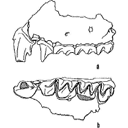
Les Chiroptères du Miocène inférieur de Bouzigues. 1- Etude systématique.
Published online: 17/04/1968
Keywords:
bats
https://doi.org/10.18563/pv.1.3.65-133
Abstract
In recent years, the techniques of chemical preparing have permitted a rich paleontologic material to be obtained from the phosporitic sediment of Bouzigues (Hérault, France). The fauna of this locality is comprised of quite varied microvertebrates, amphibians, reptiles, birds, mammals. Twenty five species of the latter, belonging to seven orders, are today known from the site. Among them, the numerous rodents have allowed L. Thaler to chronologically situate this fauna in the Zone of Laugnac (<< late Aquitanian ›> of some authors).
The chiropterans are, with the rodents, the best represented of the locality's mammals. Three families comprise the bat fauna, with nearly complete dominance by one of them (Hippoxideridae) over the two others (Megadermatidae and Vespertílionidae)
Six forms are described, of which three are new species and one a new sub-genus.
Megaderma braillomi n. sp., an animal of rather large size, shows like the Miocene megaderms several evolved dental characters, translating the adaptation of these animals to a partially carnivorous regime. The Bouzigues species seems, however, to represent a particular lineage.
Hipposideros (Brachipposideros n. subgen.) dechaseauxi n. sp. and Hípposideros (Brachipposideros) cf. collongenris Depéret, small sized forms, belong to a group rather well represented in the late Oligocene and early Miocene of Europe, and not distinguished until now within the genus Hipposideros.
Hipposideros (Pseudorhinolophus) bouziguensis n. sp., is the most abundant mammal in the locality and, occuring at the Oligocene-Miocene limit, the last representative known of the subgenus Pseudorhínolophus, common in Europe from the middle Eocene.
However, beyond Neogene and Quaternary times, certain among the numerous living species of Hipposideros are close to Pseudorhinolophus and others to Brachipposíderos. 'This fact would in the future justify a global revision of the genus, on the basis of comparative anatomy of the squeleton and of the teeth.
The bat fauna of Bouzigues is completed by two small Vespertilionidae, rare forms, Myoris sp. I and sp. II.
PV article infos
Published in Vol. 01, Fasc. 3 (1968)
|
PDF
|
|
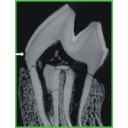
Enamel hypoplasia on rhinocerotoid teeth: Does CT-scan imaging detect the defects better than the naked eye?
Published online: 03/01/2022
Keywords:
fossil teeth; method; micro-CT imaging; Rhinocerotoidea
https://doi.org/10.18563/pv.45.1.e2
Abstract
Micro-CT imaging is an increasingly popular method in paleontology giving access to internal structures with a high resolution and without destroying precious specimens. However, its potential for the study of hypoplasia defects has only recently been investigated. Here, we propose a preliminary study to test whether hypoplastic defects can be detected with micro-CT (μCT) scan and we assess the costs and benefits of using this method instead of naked eye. To do so, we studied 13 fossil rhinocerotid teeth bearing hypoplasia from Béon 1 (late early Miocene, Southwestern France) as positive control and 11 teeth of the amynodontid Cadurcotherium (Oligocene, Phosphorites du Quercy, Southwestern France), for which enamel was partly or totally obscured by cement. We showed that all macroscopically-spotted defects were retrieved on 3D reconstructions and selected virtual slices. We also detected additional defects using μCT scan compared to naked eye identification. The number of defects detected using μCT was greater in the Cadurcotherium dataset (paired-sample Wilcoxon test, p-value = 0.02724) but not for our control sample (paired-sample Wilcoxon test, p-value = 0.1171). Moreover, it allowed for measuring width and depth of the defects on virtual slices (sometimes linked to stress duration and severity, respectively), which we could not do macroscopically. As μCT imaging is both expensive and time consuming while not drastically improving the results, we recommend a moderate and thoughtful use of this method for hypoplasia investigations, restricted for instance to teeth for which enamel surface is obscured (presence of cement, uncomplete preparation, or unerupted germs).
PV article infos
Published in 45-1 (2022)
|
PDF
S.I. Data
|

|
La poche à phosphate de Ste-Néboule (Lot) et sa faune de vertébres du Ludien Supérieur. Résumé.
Published online: 15/09/1978
Keywords:
Eocene; Quercy Phosphorites
https://doi.org/10.18563/pv.8.2-4.167-170
Abstract
Le Quercy est aujourd 'hui un vaste plateau calcaire, parcouru par un réseau karstique actif, profondément
entaillé par des vallées aux falaises abruptes, comme celles du Lot ou du Célé. Sur un sol peu épais domine la forêt de chênes, accompagnés de cornouillers, érables, genévriers. La faune est pauvre, peu diverse, et les nombreux chasseurs se satisfont de gibier d'élevage ...
Il y a trente cinq millions d'années environ, le paysage était bien différent. La période de l'Eocène supérieur, qui s'achevait, avait été chaude et humide, si l'on se réfère à la fois aux paléotempératures (calculées à partir de sédiments marins extra·européens) et aux restes fossilisés de végétaux typiquement tropicaux.
View editorial
Published in Vol. 08, Fasc. 2-4 (1978)
|
PDF
|

|
Mammifères de l'Ilerdien Moyen (Eocène inférieur) des Corbières et du Minervois (Bas-Languedoc, France). Systématique, Biostratigraphie, Corrélations.
Published online: 25/01/1991
Keywords:
Biostratigraphy; Corbières; correlations; Early Eocene; Ilerdian; Mammalia; Minervois; Paleobiogeography; Southern France
https://doi.org/10.18563/pv.20.2-3.55-144
Abstract
Mammal-bearing localities have been discovered in the marine and lacustrine series of the middle Ilerdian (Lowermost Eocene) from Southem France (Minervois and Corbières). In the localities of Fordones, Monze, Fournès, and La Gasque, thirty mammal species have been identified. Among others, they include ischyromyid rodents (Microparamys and Pseudoparamys), paromomyid and adapid primates (Arcius and Donrussellia), new insectivores, condylarths, and a dyspternine pantolestid. These faunas provide new informations on the early Eocene Mesogean faunas of Rians and Palette. The assemblages of primates and rodents from Fordones support good correlations with Palette which was recently placed near the standard-level of Dormaal (MP 7). In fact, Palette and Fordones could be even older than Dormaal. Consequently, there seems to be a relatively important temporal gap between the late Paleocene of Cernay and the Sparnacian of Dormaal. This gap could be partly filled with the Mesogean faunas of Palette, Fordones, and Silveirinha. On the basis of these new mammal faunas the marine middle Ilerdian is proved to be older than the Cuisian stage of the Paris Basin. With regards to the position of the Fordones fauna at the top of the NP 10 calcareous nannoplankton biozone, the westem European paleomammalogists Paleocene/Eocene boundary could be situated between the NP 9 and NP 10 biozones.
PV article infos
Published in Vol. 20, Fasc. 2-3 (1991)
|
PDF
|

|
Première occurrence d'un mégachiroptère ptéropodidé dans le Miocène moyen d'Europe (Gisement de Lo Fournas-II, Pyrénées-Orientales, France).
Published online: 31/10/1986
Keywords:
Europe; First occurence; Megachiroptera; Middle Miocene; Teeth
https://doi.org/10.18563/pv.16.3.173-184
Abstract
A lot of isolated teeth of a pteropodid fruit bat has been recently found within an assemblage of micromammals recovered from a karstic fissure filling named Lo Fournas-Il near the locality of Baixas (Pyrénées-Orientales, France). The fauna is Middle Miocene Serravallian age. The fossil fruit bat appears morphologically close to Rousettus; its size is that of a recent medium-sized fruit bat. While the fruit bats are very poorly known as fossils, this discovery shows that one of their recent types of dentitions was perfectly established by Middle Miocene times, and supports the presumed long geologic story of the suborder. One of the major invasions of the Old World fruit bats, supposed originated from SE Asia, reached up to Europe. A suborder unit is added to the miocene fauna of this continent.
PV article infos
Published in Vol. 16, Fasc. 3 (1986)
|
PDF
|

|
Cricetid and arvicolid rodents of the California wash local fauna, late Blancan of the san Pedro Valley, Arizona.
Published online: 15/12/1997
Keywords:
Arvicolidae; Blancan; Cenozoic; Cricetidae; Mammals
https://doi.org/10.18563/pv.26.1-4.189-218
Abstract
An assemblage of micromammals is reported from California Wash, a fossil bearing continental deposit in the San Pedro Valley, Arizona, late Blancan in age. Cricetid and Arvicolid rodents are richly represented, including four and two species, respectively. This study mainly focuses on Sígmodon, the most abundant form. The sample of Sigmodon is compared to samples of the same genus from other localities of the San Pedro Valley of comparable age, and some inferences on the taxonomy of the genus are attempted. The specimens are referred to Sigmodon minor and Sigmodon cf. S. curtisi. Other cricetids (Onychomys pedroensis and Baiomys brachygnathus) and arvicolids (Mictomys vetus and Ondatra ídahoensis) are also recognized and described.
PV article infos
Published in Vol. 26, Fasc. 1-4 (1997)
|
PDF
|

|
Origins of avian reproduction: answers and questionsfrom dinosaurs.
Published online: 15/12/2003
Keywords:
Avian reproduction; clutch; dinosaurs; egg size; nests; oviducts; parental care
https://doi.org/10.18563/pv.32.2-4.149-169
Abstract
The reproductive biology of living birds differs dramatically from that of other extant vertebrates. Distinctive features common to most birds include a single ovary and oviduct, production of one egg at daily or greater intervals, incubation by brooding and extensive parental care. The prevalence of male parental care is most exceptional among living amniotes. A variety of hypotheses exist to explain the origin of avian reproduction. Central to these models are proposed transitions from a condition of no care to maternal, paternal or biparental care systems. These evolutionary models incorporate a number of features potentially preservable or inferable from the fossil record (integument, skeletal adaptations for flight, egg and clutch size, nest form, hatchling developmental stage, the number and function of oviducts, and the mode of egg incubation). Increasing availability of data on dinosaur reproduction provides a means of assessing these hypotheses with fossil evidence. We compare dinosaur data to a selection of models that emphasize maternal, paternal or biparental care. Despite some congruence with dinosaur features, no single model on the evolution of avian reproduction conforms fully to the fossil record, and the ancestral parental care system of birds remains ambiguous. Further investigation into dinosaur parental care, nest structures, clutch geometry, egg-pairing, eggshell porosity, and embryo identification may eventually resolve these issues.
PV article infos
Published in Vol. 32, Fasc. 2-4 (2003)
|
PDF
|

|
Les insectivores des phosphorites du Quercy
Published online: 15/11/1974
Keywords:
Insectivores; Quercy Phosphorites
https://doi.org/10.18563/pv.6.1-2.109-159
Abstract
Many types of insectivores have been described from specimens found in the Quercy phosphorites. These remains very often were not dated because they came from old collections. Recent excavations have permitted the situation of Amphidozotherium cayluxi FILHOL in the late Eocene. Two new genera are descrlbed based on material both from the old collections (Cryplotopos nov. g.) and from that recently recovered (Darbonetus nov. g., beginning of the middle Oligocene). Their systematic positions are revised and comparisons with American faunas are made. Amphidozotherium is not a talpid, but an erinaceoid belonging to an indeterminate family. Saturninia gracilis STHELIN is classified among the Nyctitheriinae, Myxomygale antiqua FILHOL among the Urotrichini Talpinae, and the genus Geotypus POMEL among the Scaptonichini Talpinae. A new study of the talpids from Auvergne has been rendered necessary. During the late Eocene and Oligocene precise morphology relationships existed between certain insectivores of Europe and North America.
PV article infos
Published in Vol. 06, Fasc. 1-2 (1974)
|
PDF
|

|
Nouveaux gisements à rongeurs dans les molasses oligo-miocènes de la région toulousaine
Published online: 11/02/1993
Keywords:
Cricetidae; Eomyidae; GIiridae; Miocene; Oligocene; Rodents; Sciuridae; Southern France
https://doi.org/10.18563/pv.22.2-3.113-136
Abstract
The fauna from three new rodent localities (Castelmaurou, Grépiac-carrière et Grépiac-rive gauche) from Oligo-Miocene molasses of the Toulouse area is described. The one from Colomiers is completed. 11 species belonging to 4 families (Cricetidae, Eomyidae, Gliridae, Sciuridae) are present. The Miocene localities of Grépiac-carrière and Colomiers are correlated with Balizac, La Brète, Lambert and Lespignan. Grépiac-rive gauche is just a little older than these sites. Castelmaurou is somewhat younger than La Milloque and belongs to Oligocene.
PV article infos
Published in Vol. 22, Fasc. 2-3 (1993)
|
PDF
|

|
Neolicaphrium recens Frenguelli,1921,the only surviving proterotheriidae (Litopterna, Mammalia) into the south american Pleistocene.
Published online: 30/07/2001
Keywords:
Litopterna; Neolicaphrium recens; Pleistocene; Proterotheriidae; South America
https://doi.org/10.18563/pv.30.1-2.37-50
Abstract
The litoptem Proterotheriidae are extinct endemic South American ungulates frequently used as an example of evolutionary convergence with the horses. They were considered to be exclusively Tertiary representatives with the youngest record being in the late Pliocene, before the appearence of the equids and cervids during the Great American Interchange. Two undoubted Pleistocene records in Argentina and the specimen here described from Uruguay, confirm the persistence of the proterotherids into that period. In the Quaternary, these ungulates are found outside the typical pampean region and probably were confined to a few northern and warmer more forested relictual microhabitats.
PV article infos
Published in Vol. 30, Fasc. 1-2 (2001)
|
PDF
|

|
Morphotypes dentaires actuels et fossiles des Chiroptères Vespertilioninés. 1e partie: Etude des morphologies dentaires
Published online: 30/09/1985
Keywords:
bats; Dental morphology; fossils; PHYLOGENY; recent; Systematics
https://doi.org/10.18563/pv.15.2.71-128
Abstract
The classifications of the recent vespertilionine bats were made wihtout taking in account the teeth morphology; this resulted in a reduction of the possibilities of comparison with the available fossils. The generalized use of dental formulae was abusive: this contributed to the admission of artificial genera. These conditions have long delayed the consideration of characters able to frame the phylogeny of the sub-family. In the first part of the study, the teeth morphologies are described and analysed. morphological reference types are established for each upper and lower tooth: they should make an easier elaboration of criteria for the differentiation at generic level. The position of the species in view of these criteria allows one to group them into homogeneous genera, and to appreciate the degree of relationship that the latter have between them. The second part of the study (next publicationà will develop inferences dealing with systematics and phylogeny
PV article infos
Published in Vol. 15, Fasc. 2 (1985)
|
PDF
|
|
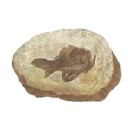
Designating a lectotype for Mesacanthus pusillus (Gnathostomata: Acanthodii)
Published online: 03/03/2021
Keywords:
acanthodians; Chordata; Devonian; Midland Valley; Orcadian Basin
https://doi.org/10.18563/pv.44.1.e2
Abstract
The early gnathostome genus Mesacanthus is well represented in both Lower Old Red Sandstone and Middle Old Red Sandstone assemblages of northern and central Scotland. This ‘acanthodian’ taxon is currently thought to comprise two valid species: M. mitchelli and M. pusillus. Although the whereabouts of the holotype of M. mitchelli (NHMUK PV P560) is known, the syntype material for M. pusillus has long been thought lost. Here we identify at least one specimen that formed part of the original syntype material for M. pusillus, albeit in a slightly different condition than when it was originally figured. This specimen is ROM 25872, which is here designated as the lectotype. A second specimen – ELGNM 1978.191.1 – could represent another of the syntype specimens, but poor preservation quality makes it impossible to be certain.
PV article infos
Published in 44-1 (2021)
|
PDF
S.I. Data
|
|
A new species of Propalaeotherium (Palaeotheriidae, Perissodactyla, Mammalia) from the Middle Eocene locality of Aumelas (Hérault, France).
Published online: 24/05/2016
Keywords:
Eocene; new species; Palaeotheriidae; Propalaeotherium
https://doi.org/10.18563/pv.40.2.e1
Abstract
A new Propalaeotherium species, clearly distinct from the genus Eurohippus, is described. It is characterized by having a similar size as P. voigti from the German Geiseltal localities (MP 11 to MP 13 reference-level), but differs in several features suggesting a slighty more derived morphology. It presents indeed less brachyodont crowns with less prominent and less elevated cingula, slightly larger relative surface of premolars, and a more marked metaconid splitting on cheek teeth. This new species is unknown from other European localities except the nearby Saint-Martin de Londres locality which has been considered older than the MP 13 level.
PV article infos
Published in Vol.40-2 (2016)
|
PDF
S.I. Data
|

|
Rongeurs caviomorphes de l'Oligocène de Bolivie. 1 Introduction au deseadien de Bolivie
Published online: 01/08/1976
Keywords:
Rodentia; South America
https://doi.org/10.18563/pv.7.3.1-16
Abstract
The Tertiary of the Salla-Luribay basin consists of red beds affected by the second period of the andine compression, of Miocene ending age. The Tertiary layers are exposed at an approximate elevation of 3.500 to 4.000 meters. Two stratigraphic units can be distinguished in them: the Luribay conglomerates, in which vertical clifts result from erosion, and the Salla layers consisting mostly of consolidated clays. These clays are very fossiliferous and have furnished a rich vertebrate fauna which gave to R. Hoffstetter the possibility to establish the Oligocene age of these beds. Sediments of same age has been reported to be present in several other places of Bolivia, particularly near Lacayani, where have been collected highly hypsodont Rodents, different from those found in Salla-Luribay basin.
PV article infos
Published in Vol. 07, Fasc. 3 (1976)
|
PDF
|

|
Relations phylétiques de Bachitherium filhol, ruminant de l'Oligocène d'Europe Occidentale.
Published online: 20/06/1987
Keywords:
Artiodactyla; Bachitherium; Cladistic analysis; France; Mammalia; Oligocene; Ruminantia
https://doi.org/10.18563/pv.17.2.43-73
Abstract
A detailed comparative study of a complete skeleton of Bachitherium and a cladistic analysis of the sub-order Neoselenodontia lead us to propose a cladogram and a new classification of this group. The Tylopoda are the sister-group of the Ruminantia, which are chiefly defined by the fusion of the cuboid and navicular. Within this infra-order, Amphimeryx is the sister genus of a tetraselenodont group, in which the Hypertragulidae are well-separated group from a monophyletic group defined by the loss of trapezium, fusion of capitatum and trapezoid, and the isolation of the hypoconid on lower molars. The most primitive genera of this group, Lophiomeryx and Iberomeryx still have an open trigonid on the lower molars, but this is lingually closed in Archaeomeryx, sister-genus of the higher Ruminantia which have fused metatarsals and more evolved milk teeth. We divide them into two pan/orders : Tragulina (including the recent and miocene Tragulidae, and the North-American Leptomerycidae), and Pecora, with reduced lateral metacarpals and a new crest (telocristid) on the lower premolars. Within the Pecora, the upper molars of Gelocus are more primitive than those of Bachitherium (a genus with many autapomorphies in the dentition) itself more primitive than the group Prodremotherium + Eupecora, with fused metacarpals. We consider the Eupecora (including several genera without frontal appendages) to be monophyletic.
PV article infos
Published in Vol. 17, Fasc. 2 (1987)
|
PDF
|

|
Nouvelles espèces de Dendromus (Rongeurs,Muriodea) à Langebaanweg (Pliocène,Afrique du Sud) conséquences stratigraphiques et Paléoecologiques
Published online: 20/05/1994
Keywords:
Dendromurinae; Paleoecology; Pliocene; Rodents; South Africa; Stratigraphy
https://doi.org/10.18563/pv.23.1-4.153-176
Abstract
New Dendromus species (Rodentia, Muroídea) from Langebaanweg (Pliocene, South Africa). Stratigraphical and paleoecological consequences.
Two new species of Dendromus are described from the Langebaanweg site which precises the evolutionary trend among this genus in South Africa and gives further paleoenvironmental indications. Two evolutionary stages are described: D. darti nov. sp. shows low-crowned molars with bunodont cusps and its more closest relative would be D. melanozis from the Cape region. On the contrary, D. averyi nov. sp. is more lophodont and is better related with the modem D. melanotis. Both species are at a less evolved stage than the Dendromus sp. from Laetolil Beds at Laetoli. The Langebaanweg deposits cannot still be dated by biostratigraphy but they clearly cannot be older than the basis of Pliocene times. The association of Dendromus and Mystromys in the same levels indicates a grassland environment with woodland patches as well as probable swamps.
PV article infos
Published in Vol. 23, Fasc. 1-4 (1994)
|
PDF
|

|
Archosauriform teeth from the upper Triassic of Saint Nicolas-de-Port (Northeastern France).
Published online: 15/12/1997
Keywords:
Archosauriforms; Graoullyodon hacheti; Saint-Nicolas-de-port; Teeth; Upper Triassic
https://doi.org/10.18563/pv.26.1-4.1-34
Abstract
The Late Triassic locality of Saint-Nicolas-de-Port (Meurthe-et-Moselle, France) has yielded numerous isolated teeth belonging to archosauriform reptiles. The following tooth groups can be identified: heterodont phytosaurs, the pterosaur Eudimorphodon, the prosauropod dinosaur Plateosaurus, three types of putative ornithischian teeth and 13 types of carnivorous Archosauriformes indet. Apparent venom-conducting teeth belonging to a new taxon of ?Archosauriformes (Graoullyodon hacheti nov. gen. nov. sp.) are also described. From a palaeogeographical point of view, the ornithischian teeth from Saint-Nicolas-de-Port (if their attribution is confirmed) are the oldest fossils of this group in Europe. The biostratigraphic distribution of the tooth forms mostly suggests a Late Norian or Early Rhaetian (depending on current interpretations) age of the deposits, but do not provide more precisions than fossils previously described from the area. The dietary habits and, consequently, the palaeoecological relationships of the different vertebrate groups discovered at Saint-Nicolas-de-Port are tentatively established: the ornithischian and prosauropod teeth reflect a herbivorous diet, whereas the other archosauriform teeth are probably from camivores or omnivores.
PV article infos
Published in Vol. 26, Fasc. 1-4 (1997)
|
PDF
|

|
First record of the genus Megaderma Geoffroy (Microchiroptera: Megadermatidae) from Australia.
Published online: 14/06/1995
Keywords:
Australia; Chiroptera; Megaderma; Megadermatidae; Pliocene; Rackham's Roost Site; Riversleigh
https://doi.org/10.18563/pv.24.1-2.47-66
Abstract
A new Tertiary megadermatid is described from Rackham's Roost Site, a Pliocene limestone cave deposit on Riversleigh Station, northwestern Queensland, Australia. It appears to represent the first Australian record of Megaderma GEOFFROY, 1810, a genus otherwise known from Tertiary African and European taxa and the living Asian species M. spasma (LINNAEUS, 1758) and M. (Lyroderma) lyra PETERS, 1872. Megademza richardsi n. sp. is one of the smallest megademiatids known. It exhibits a mixture of plesiomorphic and autapomorphic features, the latter appearing to exclude it from being ancestral to any living megadermatid. The new species is one of eight megadermatids identified from the Australian fossil record, most of which are referable to Macroderma MILLER, 1906.
PV article infos
Published in Vol. 24, Fasc. 1-2 (1995)
|
PDF
|