|
Ostéologie de la tête de Richardus excavans Lavocat,1988
Published online: 30/10/1989
Keywords:
Africa; anatomy; Bathyergidae; Miocene; Rodents
https://doi.org/10.18563/pv.19.2.73-80
Abstract
Remarkable association of a small infraorbital foramen, similar to that in recent Heterocephalus, and of a strong muscular print on the dorsal anterior part of the zygomatic plate and on the premaxillary. Several anatomical structures to be compared with those of Heterocephalus suggest relationships with this genus. Richardus supports the ancestrality of the hystricomorph character in the bathyergids
PV article infos
Published in Vol. 19, Fasc. 2 (1989)
|
PDF
|

|
Die Referenzfauna des Geiseltalium, MP levels 11 bis 13 (Mitteleozan, Lutetium)
Published online: 04/12/1989
Keywords:
Eocene; Geiseltal; Land mammal ages; Mammalian reference levels
https://doi.org/10.18563/pv.19.3.81-93
Abstract
The Middle Eocene Fossillägerstätte of the Geiseltal lignite beds near Halle/S. (German Democratic Republic) is the reference locality of the European land mammal age Geiseltalian and of the Mammalian Paleogene reference levels MP 11 - MP 13. Due to this importance a reinvestigation is given of the lithostratigraphical development of the Geiseltal beds and of their vertebrate sites. The last are genetically related to the southwest border of the Geiseltal depression and the influx of carbonate-rich waters. The geographical distribution and stratigraphical position of the fossiliferous sites depends on subrosive and tectonically controlled distribution of coal seams. The geological factors and the known stratigraphical guide of some mammalian species suggest corrections of the age of some sites. Four of the alltogether five coal bearing phases contain the 35 sites with mammalian remains. By the distribution of the around 69 mammal species are characterized, with 5 faunal steps ranging from MP 11 to MP 14 or over the Geiseltalian up to the Lower Robiacian. Well distant are the faunas of MP 11 and MP 12. Beginning with MP 12 up to MP 13/14, the fossil record is very frequent by 27 sites. This evidence coincides somewhat more with the concept of land mammal ages compared to that of the punctual mammalian reference levels.
PV article infos
Published in Vol. 19, Fasc. 3 (1989)
|
PDF
|

|
Les Dipodidae (Mammalia, Rodentia) d'Europe occidentale au Paléogène et au Néogène inférieur: origine et évolution.
Published online: 01/10/1980
Keywords:
Dipodidae; Late Oligocene; Quercy Phosphorites
https://doi.org/10.18563/pv.9.ext.302-342
Abstract
The study of three new populations of Plesiosminthuspromyarion from the "phosphorites du Quercy" and of material from "Auvergne" brings new data on european oligocene Dipodidae. They appear in Western Europe at the beginning of late Oligocene. Evolutionary trends of the group are drawn and particularly the emergence of morphotypes announcing P. schaubi, from the Coderet level, is revealed among the most recent populations of P. promyarion. Differences are attempted to be drawn between the three species : P. promyarion, P. myarion and P. schaubi by restudying the type-population of P. myarion from the aquitanian deposits of Chavroches (Allier) in comparison with two other populations from the same age and the same region. Relationships between early european, american and asiatic Dipodidae are discussed.
PV article infos
Published in Vol. 9, Ext (1980)
|
PDF
|

|
Les Issiodoromyinae (Rodentia, Theridomyidae) de l'Eocène supérieur à l'Oligocène supérieur en Europe occidentale
Published online: 15/05/1976
Keywords:
climate; Faunal turnover; Paléogène
https://doi.org/10.18563/pv.7.1-2.1-115
Abstract
Based on material from 30 localities, morphologic dental, cranial and biometric analyses have permitted the characterization of two parallel Issiodoromyine lineages, and also the definition of diverse species representing several evolutive stages. Thus it is that new lineages complete the contribution made by the Theridomyinae and Cricetidae and permit, for the Quercy in particular, additional precision in the biochronologic succession of the localities. One of the lineages is limited to the genus Pseudoltinomys LAVOCAT; the other evolves from the genus Elfomys HARTENBERGER to the genus Issiodoromys BRAVARD in GERVAIS. The latter is affected by profound anatomical changes due to a functional modification of the mastication apparatus. These changes seem to be able to be put in relation with the aridification and cooling of the climate at the end of the Eocene. At the end of the middle Oligocene, a new chewing structure is achieved. It is found in diverse living rodents that inhabit a rather arid steppe environment (Cavia, Pedetes, Ctenodactylus). To these supposed nearby ecologic conditions, these rodents have responded in a convergent fashion. It is possible to attribute to the extreme specialization of Issiodoromys its incapacity to adapt to the new climatic crisis of the end of the Oligocene. The arrival of immigrants may be considered as another cause of its disappearance at this time, complementary or not with the first.
PV article infos
Published in Vol. 07, Fasc. 1-2 (1976)
|
PDF
|

|
La poche à phosphate de Ste-Néboule (Lot) et sa faune de vertebres du Ludien supérieur. 10 - Paléothérides (Perissodactyles).
Published online: 25/09/1978
Keywords:
Eocene; Quercy Phosphorites
https://doi.org/10.18563/pv.8.2-4.291-293
Abstract
La poche à phosphorite de Sainte-Néboule (Lot) a livré au cours des récentes campagnes de fouilles effectuées dans le cadre de la RCP 311 une douzaine de dents ou fragments de dents de paléothéridés à rapporter à 3 taxons.
PV article infos
Published in Vol. 08, Fasc. 2-4 (1978)
|
PDF
|

|
La poche à phosphate de Ste-Néboule (Lot) et sa faune de vertebres du Ludien supérieur. 12- Fissipèdes (Carnivores)
Published online: 25/09/1978
Keywords:
Carnivora; Eocene; Quercy Phosphorites
https://doi.org/10.18563/pv.8.2-4.301-311
Abstract
Les Carnivores Fissipèdes de Sainte-Néboule appartiennent tous au genre Cynodictis et semblent constituer une population homogène. Celle-ci se distingue suffisamment des espèces déjà décrites pour constituer un taxon particulier : Cynodictis lacustris neboulensis n. s. sp. . L'étude des variations à l'intérieur de cette population nous a conduit à reconsidérer les critères utilisés pour définir les espèces existantes et à regrouper certaines d'entre elles. Il semble qu'il demeure cependant trois lignées distinctes dans le genre Cynodictis mais le matériel nous paraît encore insuffisant pour traduire cette remarque en termes de systématique.
PV article infos
Published in Vol. 08, Fasc. 2-4 (1978)
|
PDF
|

|
La poche à phosphate de Ste-Néboule (Lot) et sa faune de vertébres du Ludien Supérieur. Résumé.
Published online: 15/09/1978
Keywords:
Eocene; Quercy Phosphorites
https://doi.org/10.18563/pv.8.2-4.167-170
Abstract
Le Quercy est aujourd 'hui un vaste plateau calcaire, parcouru par un réseau karstique actif, profondément
entaillé par des vallées aux falaises abruptes, comme celles du Lot ou du Célé. Sur un sol peu épais domine la forêt de chênes, accompagnés de cornouillers, érables, genévriers. La faune est pauvre, peu diverse, et les nombreux chasseurs se satisfont de gibier d'élevage ...
Il y a trente cinq millions d'années environ, le paysage était bien différent. La période de l'Eocène supérieur, qui s'achevait, avait été chaude et humide, si l'on se réfère à la fois aux paléotempératures (calculées à partir de sédiments marins extra·européens) et aux restes fossilisés de végétaux typiquement tropicaux.
View editorial
Published in Vol. 08, Fasc. 2-4 (1978)
|
PDF
|
|
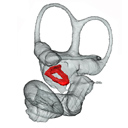
Fallen in a dead ear: intralabyrinthine preservation of stapes in fossil artiodactyls
Published online: 09/03/2016
Keywords:
allometry; bony labyrinth; inner ear; middle ear ossicles
https://doi.org/10.18563/pv.40.1.e3
Abstract
The stapes is the last of the middle ear ossicle chain and the smallest bone of the mammalian skeleton. Because it rests on the membrane of the fenestra vestibuli during life, the stapes may often fall within the bony labyrinth cavity when soft structures decay after death. In this work, we highlight the unexpected role that the bony labyrinth plays in the preservation of the stapes. Systematic investigation of the bony labyrinth of 50 petrosal bones of extinct and extant artiodactyls led to the discovery of eight cases of “intralabyrinthine” stapes. Three dimensional reconstructions of these stapes allow documenting stapes morphology of four extinct artiodactyl taxa: Microstonyx erymanthius (Suidae), Elomeryx borbonicus (Hippopotamoidea), ?Helohyus plicodon (Helohyidae), and an undetermined Cainotheriidae; and four extant ones Choeropsis and Hippopotamus (Hippopotamidae), and Tayassu and Phacochoerus (Suoidea). ?Helohyus plicodon from the Middle Eocene documents the oldest stapes known for the order Artiodactyla. Morphological study and metric analyses of our sample of artiodactylan stapes show that stapes are likely to carry relevant phylogenetic characters/signal within artiodactyls, and a potential Euungulata signature.
PV article infos
Published in Vol.40-1 (2016)
|
PDF
S.I. Data
|
|
A classic in the making : VERTEBRATE PALAEONTOLOGY (4th edition). By Michael J. Benton.
Published online: 27/01/2016
Keywords:
Book review; Vertebrate Palaeontology
https://doi.org/10.18563/pv.40.1.e1
Abstract
When the first edition of Mike Benton’s Vertebrate Palaeontology came out in 1990, sauropods still dragged their tails on the ground, the closest relatives of whales were mesonychids, and Mesozoic birds consisted essentially of Archaeopteryx, Ichthyornis and Hesperornis. Twenty-five years later, the book, now in its fourth edition, is a third longer, in a larger format and sports fine colour plates – in addition to a companion website.
PV article infos
Published in Vol.40-1 (2016)
|
PDF
|
|
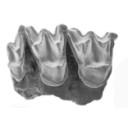
New Late Miocene plecotine bats (Chiroptera, Vespertilionidae: Plecotini) from Gritsev, Ukraine
Published online: 07/03/2019
Keywords:
Barbastella; bats; late Neogene; Mammalia; Plecotus
https://doi.org/10.18563/pv.42.1.e2
Abstract
The Late Miocene site of Gritsev (MN 9, Ukraine) has yielded a very rich bat fauna, the remains of which are well preserved. Compared to other Neogene bat assemblages of Europe, the Gritsev bat community is unique in preserving plecotine bats, which are rare from Neogene sites. Some peculiar and new bat species, including a large plecotin Otonycteris, already were described from the Gritsev mammal site. Here we report new records of small plecotin bats from Gritsev, including a new taxon, Barbastella maxima nov. sp. This is the earliest reliable fossil record of this genus and it differs from more recent species of Barbastella in being considerably larger. The evolutionary patterns in the odontology within the tribe Plecotini, supported by biostratigraphical distribution of fossil records of Plecotus are discussed. The morphological peculiarities of the new fossils of plecotine bats from Gritsev are discussed in connection with its possible taxonomical affinity.
PV article infos
Published in Vol 42-1 (2019)
|
PDF
|
|
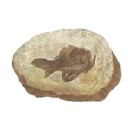
Designating a lectotype for Mesacanthus pusillus (Gnathostomata: Acanthodii)
Published online: 03/03/2021
Keywords:
acanthodians; Chordata; Devonian; Midland Valley; Orcadian Basin
https://doi.org/10.18563/pv.44.1.e2
Abstract
The early gnathostome genus Mesacanthus is well represented in both Lower Old Red Sandstone and Middle Old Red Sandstone assemblages of northern and central Scotland. This ‘acanthodian’ taxon is currently thought to comprise two valid species: M. mitchelli and M. pusillus. Although the whereabouts of the holotype of M. mitchelli (NHMUK PV P560) is known, the syntype material for M. pusillus has long been thought lost. Here we identify at least one specimen that formed part of the original syntype material for M. pusillus, albeit in a slightly different condition than when it was originally figured. This specimen is ROM 25872, which is here designated as the lectotype. A second specimen – ELGNM 1978.191.1 – could represent another of the syntype specimens, but poor preservation quality makes it impossible to be certain.
PV article infos
Published in 44-1 (2021)
|
PDF
S.I. Data
|
|
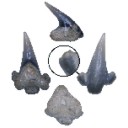
Preliminary report on the fishes (Chondrichthyes & Teleostei) from the lower Oligocene (Rupelian) Red Bluff Clay at site AMo-9, Monroe County, Alabama, USA
Published online: 26/06/2024
Keywords:
Batomorphii; Elasmobranchii; Galeomorphi; Gulf Coastal Plain; Vicksburg Group
https://doi.org/10.18563/pv.47.2.e2
Abstract
Herein we describe a small but relatively diverse assemblage of fossil fishes derived from the lower Oligocene (Rupelian) Red Bluff Clay at site AMo-9 in Monroe County, Alabama, USA. Identified amongst the remains are 15 unequivocal taxa representing 11 families within five orders, and one additional taxon represents an unknown order and family. Taxa identified include Eostegostoma sp., Otodus (Carcharocles) sp., Mitsukurinidae/Carchariidae indet., Macrorhizodus praecursor, Galeorhinus sp., Negaprion gilmorei, Physogaleus sp., “Sphyrna” sp., Galeocerdo sp., cf. “Aetobatus” sp., Sphyraena sp., Xiphiorhynchus kimblalocki, Xiphiorhynchus sp., Cylindracanthus ornatus, and C. rectus. Several additional fossils could not be identified beyond Lamniformes, Carcharhiniformes, and Teleostei, but they likely belong to one of the identified taxa within this paleofauna. All of the fishes previously reported from the Red Bluff Clay within the entirety of the Gulf Coastal Plain of the USA are otolith-based, and each of the 15 unequivocal taxa reported herein are important new records for this lithostratigraphic unit. In particular, the Eostegostoma sp. and Xiphiorhynchus spp. specimens represent the first occurrences of these taxa in Alabama. The specimens of C. ornatus, Eostegostoma sp., and X. kimblalocki are stratigraphic and temporal range extensions from the middle and late Eocene into the Rupelian Stage of the Oligocene. Other described taxa may represent transitional forms between those described from the late Eocene and late Oligocene within the region. This study provides a tantalizing preliminary view into faunal transitions that occurred amongst marine fishes across the Eocene/Oligocene boundary within the Gulf Coastal Plain of the USA.
PV article infos
Published in 47-2 (2024)
|
PDF
|

|
Rongeurs de l'Oligocène moyen provenant de nouvelles fouilles dans les phosphorites du Quercy
Published online: 15/09/1969
Keywords:
Oligocene; Quercy Phosphorites; Rodents; Theridomys
https://doi.org/10.18563/pv.2.5.209-239
Abstract
A recent campaign of excavations (1965-68) undertaken by the Laboratoire de Paléontologie of Montpellier in pockets of the Quercy phosphorites, has permitted the dating of several localities thanks to the analysis of their micromammalian fauna.
The rodents of localities belonging to the middle Oligocene (La Sauvetat zone) are the object of this study. This rodent fauna has been compared to the forms coming from three stratified localities belonging to the biochronologic zone of La Sauvetat : Balm, Montalban and Lovagny.
The abundance of material, notably of theridomyids and cricetids, permitted a summary statistical study to be effected and gave some precise details on the variability of the species (Theridomys varians in particular). Other details were provided on certain groups, notably on the upper teeth of Scíuromys cayluxi and on the milk teeth of theridomyids. Some specimens of «Sciurus» sp. and of Plesispermophilus angustidens were collected. By this means, it has been possible to establish, for the first time, a precise upper limit to the epoch of their appearance in Europe.
PV article infos
Published in Vol. 02, Fasc. 5 (1969)
|
PDF
|

|
Une nouvelle espèce d'Hipparion du Miocène terminal d'Espagne.
Published online: 31/01/1971
Keywords:
Hipparion; Late Miocene; Spain; Villafranchian
https://doi.org/10.18563/pv.4.2.59-66
Abstract
The recently discovered, very rich, Pliocene locality of Layna (Soria, Spain), has already yielded 30 species of mammals. Hipparion fissurae, described here is more dolichopodic than other Hipparion. It is related to Hipparion crusafonti from Villaroya (Villafranchian), but more slender between other characters.
PV article infos
Published in Vol. 04, Fasc. 2 (1971)
|
PDF
|

|
Long-term fidelity of megaoolithid dinosaurs to a large breeding-ground in the Upper Cretaceous of Aix-en-Provence (southern France).
Published online: 15/12/2003
Keywords:
Large nesting ground; megaloolithid eggs; Southern France; Upper Cretaceous
https://doi.org/10.18563/pv.32.2-4.109-120
Abstract
We present here the preliminary results from a new nesting site "Sextius-Mirabeau", discovered close to the historical centre of Aix-en-Provence in Upper Cretaceous deposits. This extensive megaloolithid nesting ground, the first large scale excavation (3225 m²) in France, yielded more than 530 eggs, some organized in clusters. Their study reveals the reproductive strategy of the megaloolithid egglayer group which indicates nesting fidelity and gregarious behaviour.
PV article infos
Published in Vol. 32, Fasc. 2-4 (2003)
|
PDF
|

|
New murids and gerbillids (Rodentia, Mammalia) from Pliocene Siwalik sediments of India.
Published online: 15/12/1997
Keywords:
Dental morphology; evolution; new species of murids and gerbillids; phylogenetic relationships; Systematics
https://doi.org/10.18563/pv.26.1-4.129-165
Abstract
Murids and gerbillids (Rodentia, Mammalia) recovered from four Upper Siwalik localities; Moginand (around 3.5-4.5 m.y.), Kanthro (around 2.5 m.y.), Ghaggar (around 2 m.y.) and Nadah (around 1.8-2 m.y.) are described herein. A comparison of Mus linnaeusi sp. nov. reveals its close relationship towards the house mouse Mus musculus. In contradiction to earlier proposals that Golunda migrated to the Indian subcontinent from Africa sometime during Late Pliocene, it is suggested here that Golunda (in the form of Golunda tatroticus sp. nov.) evolved from Parapelomys robertsí of Late Miocene deposits of Siwaliks. Golunda tatroticus sp. nov. exhibits a progressive relationship to the extant Indian Bush Rat Golunda ellioti through Golunda kelleri and Golunda sp. Tatera pinjoricus sp. nov. is considered here to be a link between the extinct Abudhabia kabulense and the extant Tatera indica.
PV article infos
Published in Vol. 26, Fasc. 1-4 (1997)
|
PDF
|

|
Saturnin Garimond (1914-1987)
Published online: 15/11/1987
Keywords:
biography
https://doi.org/10.18563/pv.17.3.151-154
Abstract
Saturnin Garimond (1914-1987), naturaliste autodidacte né à Fons-outre-Gardon dans le Gard, a marqué la paléontologie et l'archéologie régionale par sa passion précoce pour les sciences naturelles. Quittant l'école à 10 ans, il s'instruit seul et explore inlassablement la garrigue, découvrant des sites préhistoriques dès 1930. Collaborant avec Camille Hugues, il fouille de nombreux gisements, dont la grotte de la Verrerie à Montmirat, révélant un outillage moustérien et des restes de néandertaliens. En 1961, il rejoint le Laboratoire de Paléontologie de Montpellier dirigé par Louis Thaler, contribuant à des fouilles majeures comme celle du gisement de Fons 4. En 1965, il permet la découverte du premier mammifère mésozoïque de France au gisement de Champ-Garimond. Membre de la Société Géologique de France, son érudition et sa collaboration ont enrichi de nombreuses recherches. Homme simple et affable, il a marqué tous ceux qui l'ont connu par son enthousiasme et ses connaissances encyclopédiques.
PV article infos
Published in Vol. 17, Fasc. 3 (1987)
|
PDF
|

|
The Quaternary avifauna of Crete, Greece.
Published online: 01/09/1988
Keywords:
Avifauna; Crete; Quaternary; Systematics
https://doi.org/10.18563/pv.18.1.1-94
Abstract
Pleistocene bird fossils have been studied from nine localities on Crete. Part of this material was described earlier by the author (Weesie, 1982) and will not be treated here in extenso, the results will be incorporated. More than one third of the over 10,000 fossil bird bones available could be identified ; they were found to represent at least 65 bird species. The following species of the Pleistocene Cretan avifauna are new to the fauna of Crete : Branta ruficollis, Haliaeetus albicilla, Gyps melitensis, Aquila chrysaetos simurgh n. ssp., Ketupa zeylomensis, Aegolius funereus, Dendrocopos leucotos, Zoothera dauma, Turdus iliacus and Pyrrhula pyrrhula. The Pleistocene Cretan avifauna differs less from comparable mainland avifaunas than (fossil) avifaunas from oceanic islands do. Still, the Pleistocene Cretan avifauna has two qualities that are characteristic of island avifaunas : the almost complete absence of a group of birds (the Galliformes) and the presence of two endemic (sub)species : the giant eagle Aquila chrysaetos simurgh n. ssp. and the long-legged owl Athene cretensis (Weesie, 1982). The new subspecies is described in the present study.
These endemic birds of prey were found in association with their supposedly principal prey species (now extinct as well) : endemic mice for the owl and endemic deer for the eagle. Endemic mammals have been found in association with endemic birds of prey on many islands, not only in the Mediterranean. There is evidence that the size of endemic birds of prey becomes optimally adapted to their feeding on certain endemic mammals, especially rodents. Another characteristic of the Pleistocene Cretan avifauna is the great number of species of birds of prey. This appears to be a common characteristic of fossil avifaunas from caves on Mediterranean islands as well as from caves on the European mainland. However, we think that ecological conditions on Pleistocene Crete (especially the abundant presence of mice) helped to account for the high representation of birds of prey. Furthemore, the fossil avifauna enables us to draw some conclusions about the climate and vegetation on Pleistocene Crete : it is concluded that the climate was cooler than today and that Crete was largely covered with forests. Finally, the reasons for the extinction or disappearance from Crete of some bird species of the Pleistocene Cretan avifauna are discussed.
PV article infos
Published in Vol. 18, Fasc. 1 (1988)
|
PDF
|

|
La poche à phosphate de Ste-Néboule (Lot) et sa faune de vertébres du Ludien Supérieur. 2- Amphibiens. Etude Preliminaire
Published online: 25/09/1978
Keywords:
Eocene; Quercy Phosphorites
https://doi.org/10.18563/pv.8.2-4.175-179
Abstract
The Caudata are known by two Salamandridae ; one of them is attributed to the genus Megalotriton. The Pelobatidae form the major part of the Anura ; a few bones indicate also the presence of Neobatrachia.
PV article infos
Published in Vol. 08, Fasc. 2-4 (1978)
|
PDF
|

|
Les rongeurs de l'Oligocène inférieur d'Escamps
Published online: 01/12/1974
Keywords:
Escamps; Quercy Phosphorites; Rodents; Theridomyidae
https://doi.org/10.18563/pv.6.3-4.197-241
Abstract
La faune de Rongeurs d'Escamps (Lot) bien que relativement pauvre en espèces (dix) s'avère riche d'enseignement pour les Rongeurs de l'Oligocène inférieur d'Europe Occidentale. Cette periode semble caracterisée par une cladogenèse des Théridomyines. A Escamps, un nouveau genre (Patriotheridomys) est décrit ainsi qu'une nouvelle espèce de Theridomys. Avec Oltmamys platyceps, décrit ici plus complètement et désormais bien situé stratigraphiquement, les deux espèces précédentes constituent un ensemble original du Sud de la France. A la même époque, en Angleterre, Allemagne et Espagne, des espèces «régionales» de Théridomyinés se dersifient. A côté de ces formes qui ne semblent pas franchir la «Grande Coupure» sont représentées deux lignées d'Issiodoromyinés (Elfomys sp et Pseudoltmomys cuvieri), une de Théridomyiné (T. (Blainvillimys) rotundidens) ainsi qu'un Gliridé, Gliravus priscus (que l'on différencie nettement de la deuxième lignée des Gliravus oligocènes : G. meridionalis -> G. majori). On retrouve ces formes dans les gisements plus récents du niveau de Hoogbutsel où elles sont à peine plus évoluées. Le fait que les degrés évolutifs de ces lignées soient très proches laisse supposer que le laps de temps séparant les niveaux d'Ecamps et Hoogbutsel fut relativement court.
PV article infos
Published in Vol. 06, Fasc. 3-4 (1975)
|
PDF
|