
Abstract book of the 18th Conference of the EAVP
Pterosaurs from Coahuila
Miocene Bovidae (Mammalia) of the Siwaliks: Hypsodontinae and Bovinae
Les sélaciens du Miocène de la région de Montpellier
Contribution à l'étude des genres Gliravus et Microparamys.
Muridae du Pliocène supérieur d'Espagne et du midi de la France.
Eocene (57) , Quercy Phosphorites (38) , Systematics (32) , Rodents (29) , Mammalia (27) , Rodentia (25) , Miocene (25)
Page 17 of 19, showing 20 record(s) out of 367 total
|
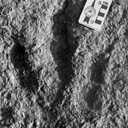
Nouvelles données sur les Ichnites de dinosaures d'El Bayadh (Crétacé Inférieur, Algérie)Mostefa Bessedik
Published online: 16/12/2008 |
|

|
Les Gliridés (Rodentia) de l'Oligocène supérieur de Saint-Victor-la-Coste (Gard).Marguerite HugueneyPublished online: 28/10/1968Keywords: Gliridae; Late Oligocene https://doi.org/10.18563/pv.2.1.1-16 Abstract The locality of St.-Victor-la-Coste (Gard) has yielded, rather abundantly, teeth of two glirids hitherto very poorly known: Glirudinus praemurinus (Freudenberg) and Glirudinus glirulus (DEHM). It has permitted, moreover, new views on the evolution of Peridyromys murinus (POMEL). Study of these forms confirms the late Oligocene age of the fauna, without allowing, however, further precision. PV article infos Published in Vol. 02, Fasc. 1 (1968) |
|

|
Le genre Plagiolophus (Palaeotheriidae, Perissodactyla, Mammalia): révision systématique, morphologie et histologie dentaires, anatomie crânienne, essai d'interprétation fonctionnelleJean-Albert RemyPublished online: 15/12/2004Keywords: New taxa; Paléogène; perissodactyls; skull anatomy; tooth histology https://doi.org/10.18563/pv.33.1-4.17-281 Abstract The genus Plagiolophus is documented, almost solely in Western Europe, from the middle Eocene up to the mid Oligocene (MP 12 to MP 25), i.e. more than for 15 MY. Seventeen species are now recorded whose two of them are new, P. ringeadei nov. sp. and P. mamertensis nov. sp. Some anatomical variations and the deflection of certain evolutionary trends justify the distinction of three subgenera, Paloplotherium, Fraasiolophus nov. and Plagiolophus s.s. The genus displays a wide range in size and weight (between 10 and 150 kg). The detailed description of the skull of several species is here given for the first time. PV article infos Published in Vol. 33, Fasc. 1-4 (2004) |
|

|
Anatomie du membre antérieur chez un chiroptère Molossidé (Tadarida sp.) du Stampien de Cereste (Alpes-de-Haute-Provence).Bernard SigéPublished online: 01/01/1971Keywords: Chiroptera; Molossidae; Oligocene https://doi.org/10.18563/pv.4.1.1-38 Abstract The present study describes in detail the anterior limb osteology of a molossid chiropteran of the genus Tadarida, from Céreste, a Stampian locality in the Apt-Forcalquier Oligocene basin already known for its fishes, plants and insects. PV article infos Published in Vol. 04, Fasc. 1 (1971) |
|

|
Nouveaux Mammifères Eocènes du Sahara OccidentalJean SudrePublished online: 01/11/1979Keywords: Eocene; Mammals; Occidental Sahara https://doi.org/10.18563/pv.9.3.83-115 Abstract The fossil mammals collected from the Eocene of Hammada du Dra (northwest Sahara. Algeria) and two fragmentary teeth from the Lutetian of M'Bodione Dadere (Senegal) are described. PV article infos Published in Vol. 09, Fasc. 3 (1979) |
|

|
Rongeurs du Miocène inférieur et moyen en Languedoc. Leur apport pour les correlations Marin-Continental et la Stratigraphie.Jean-Pierre AguilarPublished online: 31/03/1980Keywords: Languedoc; Miocene; Rodents; Southern France https://doi.org/10.18563/pv.9.6.155-203 Abstract The rodents (Cricetidae, Gliridae, Sciuridae) found in lacustrine, brackish marine and karstic sediments of Miocene age in Languedoc, assign the position of the different localities in the scale of "niveaux repères" used by mammalogists. Some detailed stratigraphical studies bring several correlations between this continental biochronological scale and the marine scale ; the most important results are the Aquitanian age of the "niveaux repères" of Coderet and Paulhiac, the Burdigalian age of Laugnac, Estrepouy, Vieux-Collonges, La Romieu and Sansan and the Langhian or Lower Serravallian age of La Grive M. The correlations between the Tethys and the Central Paratethys for the Lower Neogene profit also of these results, since the locality of Neudorf Spalte 1, 2 (Czechoslovakia) is shown to be younger than Sansan (France). The paleontological study has also several geological inferences for the Miocene of Languedoc ; with the calibration of this Miocene, we know quite precisely that the Lower Miocene is chiefly a time lacustrine sedimentation, and also that the marine Miocene sedimentation ends early in the Miocene Period, in Langhian or lower Serravallian times. PV article infos Published in Vol. 09, Fasc. 6 (1980) |
|

|
Rongeurs muroidés du Néogène supérieur d'Afghanistan, évolution, biogéographie, corrélationsLouis D. BrandyPublished online: 30/09/1981Keywords: Afghanistan; Muroidea; Neogene https://doi.org/10.18563/pv.11.4.133-179 Abstract The rodent faunas of five afghan localities found in 1976 and 1977 (Sherullah, Ghazgay, Pul-e Charkhi, Dawrankhel 14 and 15) are studied. PV article infos Published in Vol. 11, Fasc. 4 (1981) |
|

|
Un nouveau type de coquille d'oeuf présumé Dinosaurien dans la Campanien et le Maestrichtien continental de Provence.Philippe KerourioPublished online: 04/10/1982Keywords: Campanian/Maastrichtian; eggshell microstructure; Provence https://doi.org/10.18563/pv.12.4.141-147 Abstract The discovery of eggshells of ornithoid type is signaled for the first time in the continental Campanian and Maastrichtían of Provence. The taxonomie relationship of these eggshells and their interest in the biostratigraphical study of Upper Cretaceous of Provence are discussed. PV article infos Published in Vol. 12, Fasc. 4 (1982) |
|

|
Un nouveau chiroptère vespertilionide de l'Oligocène d'EuropeBernard Sigé and Henri MenuPublished online: 17/12/1992Keywords: bats; Europe; nov. sp.; Oligocene; Vespertilionid https://doi.org/10.18563/pv.22.1.45-48 Abstract A fossil species of the extant genus Leuconoe, L. lavocati n. sp. from Le Garouillas Oligocene locality, Quercy phosphorites, SW-France, is established in nomenclatural standards. PV article infos Published in Vol. 22, Fasc. 1 (1992) |
|

|
Un nouveau genre de ?Palaeotheriidae (Perissodactyla, Mammalia) décelé dans les phosphorites du Quercy (Eocène supérieur ou Oligocène) d'après un arrière crâne sans dents.Jean-Albert RemyPublished online: 15/06/1999Keywords: endocranial cast; Epitympanic sinus; Palaeotheriidae; Paléogène; Quercy Phosphorites; skull anatomy https://doi.org/10.18563/pv.28.1.75-87 Abstract A rear skull from the Quercy Phosphorites is described. It documents a new perissodactyl genus, likely assignable to the family Palaeotheriidae and probably paleogene of age. Owing to the lack of any tooth, this family assignment remains however somewhat hypothetical. The specimen is firstly characterised by the presence of a wide epitympanic sinus swelling and hollowing the squamosal shell and the post-glenoid process. This cavity might make up a peculiar pattern of improvement for the hearing apparatus by carrying out a kind of drum near the middle ear, whereas the bony tympanic remains barely bulged and forms but a few developed auditory bulla. This pattern appears an outcome of a trend observed with many palaeotheriids, such as Plagiolophus. Furthermore, the endocranial cast shows a rather high degree of gyrencephaly for a paleogene mammal. The prominent lambdoidal crest points out a powerful nape musculature and a lowered head bearing. Consequently, it is assumed that such an animal was probably living in somewhat open places, at the expense of rather tough vegetables. It might have been accordingly provided with a semi-hypsodont, cement covered, "plagiolophoid" dentition. PV article infos Published in Vol. 28, Fasc. 1 (1999) |
|

|
La palichnofaune de vertébrés tétrapodes du permien supérieur du Bassin de Lodève (Languedoc-France).Georges Gand, Jacques Garric, Georges Demathieu and Paul EllenbergerPublished online: 15/09/2000Keywords: Footprints; France; Languedoc; Lodève basin; new ichnotypus; Saxonian; Upper Permian https://doi.org/10.18563/pv.29.1.1-82 Abstract Near "la Lieude", in the Lodève basin, more than a thousand of footprints are distributed in a twenty of trackways which amounts to 220 m length. They have been found on calcareous siltstone level in the B site named also "Réserve Naturelle Volontaire". This last is located in the Saxonian summit dated Upper Permian. "La Lieude" tracks are described by using statistical methods then they are compared with others from the world Permian. What allows to distinguish 4 following ichnotaxa: Lunaepes ollierorum nov.ichnosp., Merifontichnus thalerius nov. ichnogen. and nov. ichnosp., Planipes brachydactylus nov.ichnosp. and Brontopus circagiganteus nov. ichnosp. All these traces are attributed with possibility or probability to Therapsida or to Therosauria, except Brontopus circagiganteus nov. ichnosp. that could be due to Caseamorpha. All these animals whose sizes have been estimated between l and 5 m lived probably in a playa environment.The biological and sedimentological data from "la Lieude" footprints levels compared with informations provided by the tracks orientations, suggest the following scenario. Animals coming from the North have crossed a sandy channel bank with plants zones by directing to the South for the majority. Maybe, they were going to the lacustrine part of the playa, close to "la Lieude" footprints that they have just trampled on. PV article infos Published in Vol. 29, Fasc. 1 (2000) |
|

|
Rythme et modalités de l'évolution chez les rongeurs à la fin de l'Oligocène-leurs relations avec les changements de l'environnement.Bernard ComtePublished online: 15/12/2000Keywords: Environment; evolution; Oligocene; Rodents; Systematics https://doi.org/10.18563/pv.29.2-4.83-360 Abstract The analysis of oxygene isotope variations as well as paleobotanical data suggest that the Oligocene/Miocene boundary corresponds to a transitional period marked by floristical and climatic variations. During this period, the pyreneo-alpine tectonics has contribued to modify the geography and western Europe landscapes. Faunal changes (appearances, extinctions, migrations) are observed in different mammalian groups, notably in the rodents. A study of the evolutionary trends and patterns in paleogene rodents is involved for the period ranging from level MP 28 of the Late Oligocene to the Early Miocene, including the Oligo-Miocene boundary. PV article infos Published in Vol. 29, Fasc. 2-4 (2000) |
|

|
Pseudorhyncocyon cayluxi Filhol, 1892 insectivore géant des phosphorites du QuercyBernard SigéPublished online: 15/11/1974Keywords: Insectivores; Leptictidae; Quercy Phosphorites https://doi.org/10.18563/pv.6.1-2.33-46 Abstract Une hémimandibule et une molaire supérieure recueillies dans le gisement oligocène inférieur d'Escamps (phosphorites du Quercy) fournissent de nouvelles informations sur le genre Pseudorhyncocyon FllHOL, grand insectivore longirostre du Paléogène d'Europe, fossile très mal connu jusqu'ici. Des comparaisons avec les macroscélididés africains, géolabididés nord-américains, et leptictidés euraméricains permettent de rattacher cet amimal aux leptictidés, et de le rapprocher du genre Lepticidium TOBIEN, au sein de la sous-famille européenne nouvelle des pseudorhyncocyoninés. PV article infos Published in Vol. 06, Fasc. 1-2 (1974) |
|

|
Historical and new perspectives on the parataxonomyof fossil eggs.Monique Vianey-Liaud
Published online: 15/12/2003 |
|

|
Revision des faunes de vertébrés du site de Provenchères-sur-Meuse (Trias terminal, Nord-Est de la France)Gilles Cuny
Published online: 14/06/1995 |
|

|
Une nouvelle espèce de Steneosaurus (Thalattosuchia, Teleosauridae) dans le Callovien du Poitou (France) et la systématique des Steneosaurus longirostres du Jurassique moyen d'Europe Occidentale.Patrick Vignaud
Published online: 15/09/1998 |
|

|
Rongeurs du Miocène supérieur de Chorora (Ethiopie): Cricetidae, Rhizomyidae,Phiomyidae, Thryonomyidae,Sciuridae.Denis Geraads
Published online: 15/12/1998 |
|

|
Première occurrence d'un mégachiroptère ptéropodidé dans le Miocène moyen d'Europe (Gisement de Lo Fournas-II, Pyrénées-Orientales, France).Jean-Pierre Aguilar, Marc Calvet
Published online: 31/10/1986 |
|

|
Nouvelles espèces de Dendromus (Rongeurs,Muriodea) à Langebaanweg (Pliocène,Afrique du Sud) conséquences stratigraphiques et PaléoecologiquesChristiane Denys
Published online: 20/05/1994 |
|

|
Neue Beobachtungen zum Schädel-und Gebiss-Bau der Paulchoffatiidae (Multituberculata,Ober-Jura).Gerhard HahnPublished online: 15/12/1987Keywords: Dentition; Paulchoffatiidae; Portugal; Skull structure; Upper Jurassic https://doi.org/10.18563/pv.17.4.155-196 Abstract The ventral face of the Paulchoffatiinae skull (Multituberculata, Lower Kimmeridgian, Portugal) is new reconstructed. Some details hitherto unknown are added, as the presence of jugals, the structure of the palatine and the extension of the pterygoids. The situation of the m2/ is discussed. Kielanodon hopsoni n. g., n. sp. is erected, known by its upper p3-5/. From Guimarotodon leiriensis the mandible with its dentition is made known. New informations concerning the milk-dentition and the replacement of teeth are also added. PV article infos Published in Vol. 17, Fasc. 4 (1987) |
|
