
Abstract book of the 18th Conference of the EAVP
Pterosaurs from Coahuila
Miocene Bovidae (Mammalia) of the Siwaliks: Hypsodontinae and Bovinae
Les sélaciens du Miocène de la région de Montpellier
Contribution à l'étude des genres Gliravus et Microparamys.
Muridae du Pliocène supérieur d'Espagne et du midi de la France.
Eocene (57) , Quercy Phosphorites (38) , Systematics (32) , Rodents (29) , Mammalia (27) , Rodentia (25) , Miocene (25)
Page 12 of 19, showing 20 record(s) out of 367 total

|
Paleobiology of Messel ErinaceomorphsGerhard StorchPublished online: 16/12/1996Keywords: Erinaceomorpha; Germany; Grube Messel; Lipotyphla; Middle Eocene; Paleobiology https://doi.org/10.18563/pv.25.2-4.215-224 Abstract Three erinaceomorph species are known from the early Middle Eocene of Grube Messel near Darmstadt, Germany, which are referred to the family Amphilemuridae. Pholidocercus hassiacus, Macrocranion tupaiodon, and Macrocranion tenerum showed extraordinary adaptations to their different life strategies, and several of their specializations are unknown among living insectivores. Pholídocercus was a well-defended robust animal with an opportunistic feeding strategy. Macrocraníon zupaiodon was a slender forest floor-dweller with saltatorial specializations to escape from predators; fishes were the preferred component of its omnivorous diet. Macrocranion tenerum exhibited a combination of both survival strategies, extremely elongated hind limbs for rapid and even ricochetal flight and a spiny exterior as an effective protective device; it was probably specialized for feeding on ants. Thus, closely related, omnivorous-insectivorous forest floor-dwellers could exploit the Messel ecosystem. PV article infos Published in Vol. 25, Fasc. 2-4 (1996) |
|

|
A primitive Emballonurid bat (Chiroptera, Mammalia) from the Earliest Eocene of EnglandJerry J. HookerPublished online: 16/12/1996Keywords: bats; Early Eocene; Emballonuridae; Origins; PHYLOGENY https://doi.org/10.18563/pv.25.2-4.287-300 Abstract A new genus, Eppsillycteris, is erected for Adapisorex? allglicus COOPER, 1932, from the earliest Eocene Blackheath Beds of Abbey Wood, London, England. Various derived character states indicate that it belongs to the order Chiroptera (bats) rather than to the extinct "insectivore" family Adapisoricidae. Other derived character states are shared with fossil and modern members of the family Emballonuridae. Placement of the new genus in this family extends the record of the Emballonuridae back in time by about 10 million years. It is the earliest record of a modern bat family and one of the earliest bats. This implies that the differentiation of at least some modern bat families took place in the Palaeocene, where no authenticated records of bats yet exist. The primitive characters of the earliest bats make the family Nyctitheriidae an unlikely stem group for the order Chiroptera. A tentative plausible alternative exists in some unnamed upper molars from the Palaeocene of Walbeck, Germany. Wyollycteris chalix, described as a bat from the Late Palaeocene of Wyoming, U,S.A., fits better in the family Nyctitheriidae. PV article infos Published in Vol. 25, Fasc. 2-4 (1996) |
|

|
A new hypothesis for the origin of African Anomaluridae and Graphiuridae (Rodentia)Monique Vianey-Liaud
Published online: 16/12/1996 |
|

|
Les artiodactyles du gisement yprésien terminal de Premontre (Aisne, France)Jean Sudre and Jorg ErfurtPublished online: 16/12/1996Keywords: Artiodactyls; France; Mammals; new species; Ypresian https://doi.org/10.18563/pv.25.2-4.391-414 Abstract The artiodactyls (Mammalia) from the latest Ypresian locality of Prémontré from the Paris Basin (niveau repère MP 10 in the lower Eocene of the Paris Basin) are described in this paper. Three species have been identified: 1) Diacodexis cf. varleti SUDRE et al., 1983; 2) a new species of Eurodexis ERFURT & SUDRE (E. russelli nov. sp.) defined after the revision of the species Messelobunodon? ceciliensis from the Lutetian beds of Geiseltal (Germany); and 3) Eurodexeinae indet., a probable ancestor of another form from the Geiseltal which was previously recorded as Homacodon? sp. (Erfurt 1993) and now named Parahexacodus germanicus. The two later forms are referred to the new subfamily Eurodexeinae (Erfurt & Sudre 1996). The analysis of these forms as weIl as comparative studies have led us to reconsider our previous conclusions regarding the content of the species Protodichobune oweni LEMOINE 1878 and some aspects of Ypresian diacodexid evolution. One can postulate that the divergence of E. russelli nov. sp. occurred during the first radiation of these primitive artiodactyls. Some other stem form with bunodont teeth such as Protodichobune and Aumelasia have also differentiated from Diacodexis. Like Eurodexis, these two genera persist during the middle Eocene. The absence of Protodichobune and Aumelasia at Prémontré is probably due to particular ecological conditions. PV article infos Published in Vol. 25, Fasc. 2-4 (1996) |
|

|
Le genre Leptolophus (Perissodactyla, Mammalia): morphologie et histologie dentaires, anatomie cranienne, implications fonctionnelles.Jean-Albert RemyPublished online: 15/09/1998Keywords: dental histology; Eocene; functional anatomy; Palaeotheriidae; skull anatomy; Southern France; Systematics https://doi.org/10.18563/pv.27.1-2.45-108 Abstract A strong lophodonty, an extreme heterodonty, some hypsodonty and regular overlayings of coronal cement are prominent features of the genus Leptolophus (Palaeotheriinae = Palaeotheriidae s.s.). The histological pattern of the teeth unusually joins type II enamel prisms, characteristic of advanced ungulates, together with archaic features, such as an almost complete lack of Hunter-Schreger zonation and a weak expanse of peritubular dentine. The skull is narrow and slender, with an elongated ante-orbital facial region, a moderately notched nasal aperture, a rather elongated post-canine diastem, parallel zygornatic arches and a fairly dorsally located squamoso-mandibular joint.The functional analysis brings to light "ectolophodont" masticatory cycles with two phases, in which maximum power was applied, contrary to equíds, on hindmost teeth; likewise, skull accomodations to increasing height of the teeth are quite different. This study leads to the assumption that Leptolophus may have been light mammals, living in rather open surroundings, browsing on herbaceous plants or leaves cropped close to the ground. Moreover, it appears that it could have been some inadequacy of dental structures to the dietary, which leaded to quick wear of the teeth and to many enamel notches, but had been somewhat balanced by the early increase of hypsodonty, not induced in such a case by a biotop deterioration (as it will happen at the end of the Eocene). This ínadaptation might account for the short duration of the genus Leptolophus, whose the 3 species, L. stehlini, L. nouletí and L. magnus n. sp. are indeed confined in the level MP 16. Its geographical spreading (as far as known, South of western Europe) and the morphological pattern of its dentition suggest that this genus would have been related to early upper Eocene endemic spanish forms. PV article infos Published in Vol. 27, Fasc. 1-2 (1998) |
|

|
Contributions à l'étude du gisement Miocène supérieur de Montredon (Hérault). Les grands mammifères. 1 - Les LagomorphesNieves Lopez-MartinezPublished online: 15/11/1988Keywords: Lagomorpha; Montredon; Prolagus; Upper Miocene https://doi.org/10.18563/pv.18.ext.3-14 Abstract A sample of 231 isolated teeth of lagomorphs from the upper Miocene of Montredon (southern France), identified as the ochotonid Prolagus crusafonii DOPEZ, 1975, is studied, comparing it with other populations of the same species as well as with its closest species P. oeningensis (KÖNIG, 1825). PV article infos Published in Vol. 18, Ext (1988) |
|

|
Les Amphibiens et les reptiles du Pliocène supérieur de Balaruc II (Herault, France)Salvador Bailon
Published online: 15/09/1989 |
|

|
Les mammifères post-glaciaires de Corse. Etude Archéozoologique.Jacques MichauxPublished online: 15/09/1989Keywords: Book review https://doi.org/10.18563/pv.19.1.45-46 Abstract Les Mammifères post-glaciaires de Corse de Jean-Denis Vigne, étudie l'évolution des mammifères en Corse depuis 7000 av. J.-C. jusqu'à aujourd'hui, en explorant leur adaptation insulaire, l'impact de l'homme sur leur extinction ou leur introduction, et les pratiques de chasse et d'élevage à travers l'analyse des ossements. PV article infos Published in Vol. 19, Fasc. 1 (1989) |
|

|
Révision des Rhombodontidae (Neoselachii Batomorphii) des bassins à phosphate du MarocAbdelmajid Noubhani and Henri Cappetta
Published online: 20/05/1994 |
|

|
Les rongeurs de l'Eocène d'Afrique Nord-Occidentale [Glib Zegdou ( Algérie) et Chambi (Tunisie)] et l'origine des anomaluridae.Monique Vianey-Liaud
Published online: 20/05/1994 |
|

|
The lower Miocene artiodactyls of Tagai bay, Olhon island, lake Baikal (Russia)Inesa Vislobokova
Published online: 20/05/1994 |
|

|
Les nouvelles faunes de rongeurs proches de la limite mio-pliocène en Roussillon. Implications biostratigraphiques et biogéographiquesJean-Pierre Aguilar, Jacques Michaux, Bernadette Bachelet, Marc Calvet
Published online: 29/04/1991 |
|

|
Hyracodontids and rhinocerotids (Mammalia, Perissodactyla, Rhinocerotoidea) from the Paleogene of MongoliaDemberelyin DashzevegPublished online: 29/10/1991Keywords: Hyracodontidae; Mongolia; Paléogène; Perissodactyla; Rhinocerotidae https://doi.org/10.18563/pv.21.1-2.1-84 Abstract Two families are reviewed (Hyracodontidae and Rhinocerotidae) from the Paleogene of Mongolia. The following taxa are described from the former family: Triplopus? mergenensis sp. nov., Prohyracodon meridionale CHOW, Prohyracodon? parvus sp. nov., Forstercooperia ergiliinensis GABUNIA & DASHZEVEG, Ardynia praecox MATTHEW & GRANGER, A. mongoliensis (BELIAYEVA), Ardynia sp., Urtinotheríum sp. (or Indricotherium) and Armania asiana GABUNIA & DASHZEVEG. All of them are from the Paleogene of the eastem Gobi Desert The hyracodontid Pataecops parvus RADINSKY is described from a new locality, Menkhen-Teg (Middle Eocene), in the Valley of Lakes. PV article infos Published in Vol. 21, Fasc. 1-2 (1991) |
|

|
On the genus Dikkomys (Geomyoidea, Mammalia)Morton Green and Philip R. BjorkPublished online: 01/10/1980Keywords: Dikkomys; Geomyoidae; North America https://doi.org/10.18563/pv.9.ext.343-353 Abstract The geomyoid genus Dikkomys is well represented in a sample from the Black Bear Quarry Il local fauna of Early Hemingfordian age in Bennett County, South Dakota. Isolated unworn P/4's of Dikkomys matthewi WOOD have a prominent median cristid (sagicristid) with a connection to the metaconid and the hypolophid. With wear, P/4 does not become as molariform as P/4 because of this cristid. PV article infos Published in Vol. 9, Ext (1980) |
|

|
Rongeurs Caviomorphes de l'Oligocène de Bolivie. 2 Rongeurs du Bassin Deseadien de Salla-Luribat.René LavocatPublished online: 01/08/1976Keywords: cranium; Paleobiogeography; Rodentia https://doi.org/10.18563/pv.7.3.15-71 Abstract The fauna studied in the following work involves the dentitions and skulls more or less complete of 5 genera, among which only Cephalomys was previously known by its skull. One must notice that the Salla's species of this genus is a new one. Sallamys, rather small, shows a dentition rather similar to that of Platypittamys Wood from Patagonia. The upper molars, more primitive than those of this last genus, according to the smaller dimensions of the hypocone, retain a distinct metaloph. This metaloph tends to be reduced in a way which may give us a possibility to understand how it disappeared in Platypittamys. The upper P4 can be compared as well to that of Platypittamys as to that of Gaudeamus from the African Oligocene. The lower P4, more molarized than that of Platypittamys, is already moving towards the miocene type of structure. The infraorbital foramen is wide and the insertion of the masseter on the muzzle is spacious. Branisamys, genus of a great size, shows an auditory region partly preserved, peculiarly the promontorium with the fenestra rotunda, entirely of the Hystricognathi type. Upper molars are very clearly pentalophodont. A new reconstruction is proposed for the tooth called Villarroelomys by Hartenberger. This tooth is shown to be a lower D4, perhaps of Branisamys , certainly of a rather nearly allied form, and Hartenberger does agree with the essential part of this new conclusion. Of Incamys, two incomplete skulls are known, each one being admitted to be the type of a distinct species, the first one being I. bolivianus, I. pretiosus the second. The infraorbital foramen is of a great size and the impression of the masseter on the muzzle is spacious. The sphenopalatine foramen is widely developed and of a really very uncommon great size. Only Thryonomys from Africa shows a similar tendency to the enlargement of this foramen, but not so extreme. The main basicranial foramina can be observed. The upper teeth, hemi-hypsodont, show, either a vestigial metaloph, similar to that of recent Thryonomys from Africa, associated with a well developed mesoloph, either a well developed metaloph, while the mesoloph is reduced or absent. Cephalomys was previously known by anterior parts of the skull showing a wide infraorbital foramen and a spacious facial insertion of the masseter. Its lacrymal is of the phiomorph type and the spheno-palatine foramen is seemingly of great size, like in Incamys. The species is new. The varied peculiarities of the upper teeth of these genera can be easily understood if we refer to the plan of the teeth of Phiomys andrewsi from the Oligocene and Miocene of Africa. The structure of this genus, clearly more primitive, still typically brachyodont, shows and clearly explains the fundamental coherence of the varied realisations arised from such a structure. Luribayomys n.g. is known only by an anterior half of a skull without teeth. It is remarquable by the great development of the masseter's insertions on the muzzle and by the lacrymal region, well preserved, typically phiomorphid. The classification previously published by A.E. Wood and B. Patterson is granted in its essential parts, provisionally, but not as a definitive solution. Nevertheless the Dasyproctidae are integrated within the Cavioidea, following the conclusions of Bugge and of Vucetich, reached independently. The conclusion emphasizes the exceptional meaning of the fauna of Salla-Luribay. This shows that Platypittamys, while interesting, can no more be supposed certainly representative of the normal structure of the Oligocene Caviomorph, and not even of their ancestors. The anatomical peculiarities exhibited in these new samples, auditory region, lacrymal, spheno-palatine foramen, reinforce the primitive structural identity with the Phiomorpha. Similarly, the new lower D4 favour very close relationships, ever if the affinities of the D4 has been questioned or minimized by Wood and Patterson. It is certainly possible to admit that parallelism could explain limited similarities, like the presence in North America of Rodents with an hystricomorph type of infraorbital foramen and an hystricognath mandible. But if the parallelism could be a sufficient explanation of the identical association of multiple and complete structures observed in the Caviomorpha and Phiomorpha, all the Zoological systematic would have to be questioned. The last positions of A.E. Wood on the subject (1975) are revised and criticised, and the recent publications studying the problems of distance between Africa and South America in Eocene time, as a consequence of the drift, are quoted; the possibility of transportation by rafts is shown. A new hypothesis is proposed about the interrelationships of Pentalophodont Rodents, with interesting paleobiogeographic implications. PV article infos Published in Vol. 07, Fasc. 3 (1976) |
|

|
Description des restes d'Elasmobranches (Pisces) du Dévonien moyen de BoliviePhilippe Janvier
Published online: 01/02/1977 |
|

|
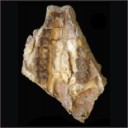
La poche à Phosphate de Ste-Néboule (Lot) et sa faune de vertébres du Ludien supérieur. 5-SquamatesJean-Claude Rage
Published online: 25/09/1978 |
|
|
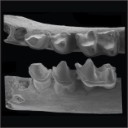
A new species of Propalaeotherium (Palaeotheriidae, Perissodactyla, Mammalia) from the Middle Eocene locality of Aumelas (Hérault, France).Jean-Albert Remy, Gabriel Krasovec
Published online: 24/05/2016 |
S.I. Data |
|
An evening bat (Chiroptera: Vespertilionidae) from the late Early Eocene of France, with comments on the antiquity of modern batsSuzanne J. Hand
Published online: 01/08/2016 |
|
|
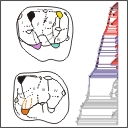
Autopsie d’une radiation adaptative : Phylogénie des Theridomorpha, rongeurs endémiques du Paléogène d’Europe - histoire, dynamique évolutive et intérêt biochronologiqueMonique Vianey-Liaud
Published online: 15/12/2016 |
S.I. Data |
