
Abstract book of the 18th Conference of the EAVP
Pterosaurs from Coahuila
Miocene Bovidae (Mammalia) of the Siwaliks: Hypsodontinae and Bovinae
Les sélaciens du Miocène de la région de Montpellier
Contribution à l'étude des genres Gliravus et Microparamys.
Muridae du Pliocène supérieur d'Espagne et du midi de la France.
Eocene (57) , Quercy Phosphorites (38) , Systematics (32) , Rodents (29) , Mammalia (27) , Rodentia (25) , Miocene (25)
Page 16 of 19, showing 20 record(s) out of 367 total

|
Premières données sur les rongeurs de la formation de Ch'orora (Ethiopie) d'âge Miocène supérieur. I: ThryonomyidésJean-Jacques Jaeger
Published online: 01/10/1980 |
|

|
Une faunule de vertébrés sous la base de grès de Celas (Eocène supérieur) à ST Dresery (Gard)Jean-Albert RemyPublished online: 20/05/1994Keywords: Artiodactyla; Biostratigraphy; Eocene; Mammals https://doi.org/10.18563/pv.23.1-4.211-216 Abstract The St-Dézéry local fauna (3 reptile-, 4 mammal species) is approximately of the same age as the La Débruge or the Ste-Néboule faunas. It conduces to a better dating of the limestones underlying the Célas sandstones. A large part of a mandible of Amphimeryx was found there, which documents the record of this family of small artiodactyls PV article infos Published in Vol. 23, Fasc. 1-4 (1994) |
|

|
Palaecarcharodon orientalis (Sinzow) (Neoselachii : Cretoxyrhinidae), from the Paleocene of maryland, USA.Gerard R. CasePublished online: 15/09/1989Keywords: Maryland; Palaeocarcharodon; Paleocene; Selachian; Systematics; U.S.A. https://doi.org/10.18563/pv.19.1.1-6 Abstract Recent collecting of fossil vertebrate remains from the lowermost member of the Aquia Formation (Paleocene), has enabled me to report here for the very fIrst time, the earliest occurrence for the teeth of Palaeocarcharodon in the fossil record of the New World. PV article infos Published in Vol. 19, Fasc. 1 (1989) |
|

|
Contributions à l'étude du gisement Miocène supérieur de Montredon (Hérault). Les grands mammifères. 5 - Les périssodactyles EquidaeVéra EisenmannPublished online: 15/11/1988Keywords: Equidae; Hipparion; Late Vallesian; Mammalia; Montredon; Perissodactyla https://doi.org/10.18563/pv.18.ext.65-96 Abstract Revision of the hipparion material from Montredon, including newly excavated and other unpublished specimens brings evidence of specific heterogeneity. PV article infos Published in Vol. 18, Ext (1988) |
|

|
Contributions à l'étude du gisement Miocène supérieur de Montredon (Hérault). Les grands mammifères. 1 - Les LagomorphesNieves Lopez-MartinezPublished online: 15/11/1988Keywords: Lagomorpha; Montredon; Prolagus; Upper Miocene https://doi.org/10.18563/pv.18.ext.3-14 Abstract A sample of 231 isolated teeth of lagomorphs from the upper Miocene of Montredon (southern France), identified as the ochotonid Prolagus crusafonii DOPEZ, 1975, is studied, comparing it with other populations of the same species as well as with its closest species P. oeningensis (KÖNIG, 1825). PV article infos Published in Vol. 18, Ext (1988) |
|

|
Dating dinosaur oodiversity: chronostratigraphic control of LateCretaceous oospecies succession.Nieves Lopez-MartinezPublished online: 15/12/2003Keywords: Biostratigraphy; Chronology; dinosaur eggshells; Late Cretaceous https://doi.org/10.18563/pv.32.2-4.121-148 Abstract An increasing fossil record of dinosaur eggs and eggshells allows putting ootaxa within a chronostratigraphic framework, in order to study their distribution pattern leading eventually to their use as biochronological markers. For these purposes, high-quality data exists in four major regions; North America, South America, Europe and Asia (Central Asia and India). Most of the highly diverse dinosaur egg record has been dated as Latest Cretaceous in age (Campanian-Maastrichtian), reaching the Cretaceous-Tertiary boundary closer than the dinosaur bone record. However, dating continental sections is problematic and need to be carefully verified, as it appears when comparing the European dinosaur eggshell record from two well-studied areas. Ootaxa distribution in both sides of the Pyrenees (Tremp and Aix basins) shows comparable oospecies successions, but different chronology. This disagreement probably indicates that one or both successions have a wrong chronostratigraphic calibration. PV article infos Published in Vol. 32, Fasc. 2-4 (2003) |
|

|
Un nouveau genre de ?Palaeotheriidae (Perissodactyla, Mammalia) décelé dans les phosphorites du Quercy (Eocène supérieur ou Oligocène) d'après un arrière crâne sans dents.Jean-Albert RemyPublished online: 15/06/1999Keywords: endocranial cast; Epitympanic sinus; Palaeotheriidae; Paléogène; Quercy Phosphorites; skull anatomy https://doi.org/10.18563/pv.28.1.75-87 Abstract A rear skull from the Quercy Phosphorites is described. It documents a new perissodactyl genus, likely assignable to the family Palaeotheriidae and probably paleogene of age. Owing to the lack of any tooth, this family assignment remains however somewhat hypothetical. The specimen is firstly characterised by the presence of a wide epitympanic sinus swelling and hollowing the squamosal shell and the post-glenoid process. This cavity might make up a peculiar pattern of improvement for the hearing apparatus by carrying out a kind of drum near the middle ear, whereas the bony tympanic remains barely bulged and forms but a few developed auditory bulla. This pattern appears an outcome of a trend observed with many palaeotheriids, such as Plagiolophus. Furthermore, the endocranial cast shows a rather high degree of gyrencephaly for a paleogene mammal. The prominent lambdoidal crest points out a powerful nape musculature and a lowered head bearing. Consequently, it is assumed that such an animal was probably living in somewhat open places, at the expense of rather tough vegetables. It might have been accordingly provided with a semi-hypsodont, cement covered, "plagiolophoid" dentition. PV article infos Published in Vol. 28, Fasc. 1 (1999) |
|

|
New records of the pantodont Archaeolambda from the Paléocène of southern ChinaSuyin Ting, Judith A. Schiebout and Jianjian ZhengPublished online: 16/12/1996Keywords: Archaeolambda; China; Paleocene; Pantodont https://doi.org/10.18563/pv.25.2-4.125-132 Abstract Two new finds of pantodont materials from southern China, assigned to Archaeolambda, are described in this paper. One, a new species from the Nanxiong Basin, Guangdong Province, is similar to Alcidedorbignya inopinata from the early Paleocene of Tiupampa, Bolivia in size. It provides reliable evidence of the occurrence of Archaeolambda in the early-middle Paleocene of southern China. The second find includes specimens of Archaeolambda sp. cf. A. planicanina from the ?late Paleocene of Hengyang Basin, Hunan Province, which are the first record of a fossil mammal from the area near Hengyang city. The only vertebrate fossils previously found here were two genera of crocodiles discovered in 1938. This find sheds new light on the local biostratigraphy. PV article infos Published in Vol. 25, Fasc. 2-4 (1996) |
|
|
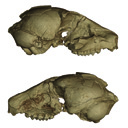
The digital endocast of Necrolemur antiquusArianna Harrington
Published online: 24/07/2020 |
|
|
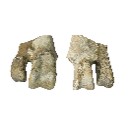
A reassessment of the giant birds Liornis floweri Ameghino, 1895 and Callornis giganteus Ameghino, 1895, from the Santacrucian (late Early Miocene) of Argentina.Eric Buffetaut
Published online: 13/12/2016 |
|

|
Long-term fidelity of megaoolithid dinosaurs to a large breeding-ground in the Upper Cretaceous of Aix-en-Provence (southern France).Géraldine Garcia
Published online: 15/12/2003 |
|

|
New records of terrestrial Mammals from the upper Eocene Qasr el Sagha Formation, Fayum Depression, EgyptPatricia A. Holroyd
Published online: 16/12/1996 |
|

|
Analyse d'ouvrage: Jean-Claude Rage, Handbuch der Paläeoherpetologie Teil 11: SerpentesJacques MichauxPublished online: 15/11/1984Keywords: Book review https://doi.org/10.18563/pv.14.3.199 Abstract Le volume 11 du «Handbuch der Paläeoherpetologie», consacré aux «Serpellles» et redigé par Jean-Claude Rage, apporte une remarquable information sur ce groupe particulier de reptiles dont on ne pouvait guere se faire une idée très précise à partir, par exemple, des seuls chapitres des traités classiques de Paléontologie et de Zoologie. PV article infos Published in Vol. 14, Fasc. 3 (1984) |
|

|
Osteology of Prolagus sardus, a Quaternary Ochotonid (Mammalia, Lagomorpha).Mary R. DawsonPublished online: 21/06/1969Keywords: Lagomorpha; Ochotonidae; Prolagus https://doi.org/10.18563/pv.2.4.157-190 Abstract Prolagus sardus is the last representative of the diverse lineages of European endemic ochotonids. It is also the most abundant in the collections. The previous studies made of this species have established rather well its dental morphology, its phylogenetic position, its geographic and temporal distribution, and its intraspecific individual variation. On the other hand, no osteologic study has fully utilized the superb material from Corsica and Sardinia collected by Forsyth Major. PV article infos Published in Vol. 02, Fasc. 4 (1969) |
|

|
Les vertébrés fossiles de Colombie et les problèmes posés par l'isolement du Continent sud-Américain.Jaime de PortaPublished online: 20/01/1969Keywords: Columbia; Cretaceous; Fauna; Quaternary; South America https://doi.org/10.18563/pv.2.2.77-94 Abstract A general view is given of the vertebrate faunas, Cretaceous to Quaternary of age, found in Columbia and of their principal characteristics. This view leads to the discussion of the isolation of the South American continent and of the role played by the Bolivar syncline with respect to North American immigrants during the Oligocene. The absence of marine deposits of Oligocene age in the north and northwest of Columbia suggests the possibility of a communication with Central America. This communication would have permitted the passage of hystricomorph rodents, of platyrrhine monkeys, and of colubrids. The non-occupation, until then, of the ecologie niches of these groups would have favored their installation beside the indigenous fauna. In this hypothesis it would no longer be necessary to admit that these vertebrates arrived as «island hoppers ››. The eco-biologic conditions would explain the absence of large-sized forms of North American origin. PV article infos Published in Vol. 02, Fasc. 2 (1969) |
|

|
La poche à phosphate de Ste-Néboule (Lot) et sa faune de vertebres du Ludien superieur. 14 - Conclusions généralesJean-Louis HartenbergerPublished online: 25/09/1978Keywords: Eocene; Quercy Phosphorites https://doi.org/10.18563/pv.8.2-4.319-326 Abstract Le matériel provenant de nouvelles fouilles dans les phosphorites du Quercy, soumis aux divers spécialistes, a conduit à la soutenance de plusieurs thèses d'état: sur les rongeurs (Hartenberger, Vianey-Liaud), les Chiroptères et Insectivores (Sigé), les Artiodactyles (Sudre), les Squamates (Rage) et, en partie, les Chéloniens (De Broin). Chacun dans son domaine, à côté des conclusions d'ordre évolutif, paléogéographique ou paléoécologique, a pu établir des successions stratigraphiques des gisements du Quercy qui se sont révélées largement concordantes. Ainsi la succession des faunes du Quercy est actuellement l'une des mieux établies. Dans ce contexte, les différents spécialistes ont décidé de conjuguer leurs efforts dans l'étude monographique de plusieurs gisements repérés le long de cette échelle, afin de rassembler l'information paléontologique sur des faunes bien précises et de tenter d'obtenir des indications d'ordre taphonomique. PV article infos Published in Vol. 08, Fasc. 2-4 (1978) |
|

|
New late Paleocene rodents (Mammalia) from Big Multi Quarry, Washakie Basin,Wyoming.Mary R. Dawson and Christopher K. Beard
Published online: 16/12/1996 |
|

|
Les mammifères Montiens de Hainin (Paléocène moyen de Belgique) Part II : Les CondylarthresJean Sudre and Donald E. RussellPublished online: 30/12/1982Keywords: Belgium; Condylarths; Louisininae; Oxyclaeninae; Paleocene https://doi.org/10.18563/pv.12.6.173-184 Abstract The Condylarths from Hainin (Hainault, Belgium) show no affinity at the generic level to those known in other Paleocene localities of Europe and North America ; they are described as new forms : Monshyus praevius n. gen., n. sp. and Prolatidens waudruae n. gen., n. sp. Monshyus praevius, discovered in only one of the levels in the excavation at Hainin, is similar to the genera Microhyus TEILHARD and Louisina RUSSELL ; with them it is included in the subfamily Louisininae (Hyopsodontidae). With respect to Microhyus and Louisina, Monshyus is distinguished by the precociously modern aspect of its upper molars, the only teeth that are referable. Prolatidens waudruae, known only by lower molars, was found in several levels in the pit at Hainin. It is an arctocyonid presenting possible relationships to the North American form Oxyprimus galadrielae ; it therefore has been provisionally attributed to the subfamily Oxyclaeninae. If this attribution is confirmed, this species will constitute the first and only representative of the group in Europe. PV article infos Published in Vol. 12, Fasc. 6 (1982) |
|

|
Premier signalement du Monachinae (Phocidae, Mammalia) dans le Sahélien (Miocène supérieur) d'Oran (Algérie)Christian de Muizon
Published online: 15/10/1981 |
|

|
Les Gliridés (Rodentia) de l'Oligocène supérieur de Saint-Victor-la-Coste (Gard).Marguerite HugueneyPublished online: 28/10/1968Keywords: Gliridae; Late Oligocene https://doi.org/10.18563/pv.2.1.1-16 Abstract The locality of St.-Victor-la-Coste (Gard) has yielded, rather abundantly, teeth of two glirids hitherto very poorly known: Glirudinus praemurinus (Freudenberg) and Glirudinus glirulus (DEHM). It has permitted, moreover, new views on the evolution of Peridyromys murinus (POMEL). Study of these forms confirms the late Oligocene age of the fauna, without allowing, however, further precision. PV article infos Published in Vol. 02, Fasc. 1 (1968) |
|
