|
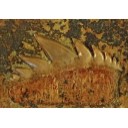
Discovery of the most ancient Notidanodon tooth (Neoselachii: Hexanchiformes) in the Late Jurassic of New Zealand. New considerations on the systematics and range of the genus
Published online: 21/09/2018
Keywords:
Chondrichthyes; Hexanchiformes; new genus; New Zealand; Tithonian
https://doi.org/10.18563/pv.42.1.e1
Abstract
This paper describes the first hexanchid tooth from the Tithonian (Late Jurassic) of New Zealand. For the moment, this tooth represents the earliest representative of the fossil genus Notidanodon in the world and one of the most ancient neoselachians in the Southern Hemisphere. Despite the perfect state of preservation of the unique tooth, the species is left in open nomenclature, pending the discovery of additional specimens. Few nominal species have been assigned to the genus Notidanodon. Four from Cretaceous deposits: N. antarcti Grande & Chatterjee, 1987, Notidanodon dentatus (Woodward, 1886), Notidanodon lanceolatus (Woodward, 1886), Notidanodon pectinatus (Agassiz, 1843) and only two from Paleocene: Notidanodon brotzeni Siverson, 1995, and Notidanodon loozi (Vincent, 1876). Considering the important morphological variations observed between some of these species, it seems obvious that the genus Notidanodon is not monophyletic and will need a revision in the future.
PV article infos
|
PDF
|
|
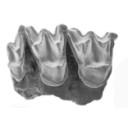
New Late Miocene plecotine bats (Chiroptera, Vespertilionidae: Plecotini) from Gritsev, Ukraine
Published online: 07/03/2019
Keywords:
Barbastella; bats; late Neogene; Mammalia; Plecotus
https://doi.org/10.18563/pv.42.1.e2
Abstract
The Late Miocene site of Gritsev (MN 9, Ukraine) has yielded a very rich bat fauna, the remains of which are well preserved. Compared to other Neogene bat assemblages of Europe, the Gritsev bat community is unique in preserving plecotine bats, which are rare from Neogene sites. Some peculiar and new bat species, including a large plecotin Otonycteris, already were described from the Gritsev mammal site. Here we report new records of small plecotin bats from Gritsev, including a new taxon, Barbastella maxima nov. sp. This is the earliest reliable fossil record of this genus and it differs from more recent species of Barbastella in being considerably larger. The evolutionary patterns in the odontology within the tribe Plecotini, supported by biostratigraphical distribution of fossil records of Plecotus are discussed. The morphological peculiarities of the new fossils of plecotine bats from Gritsev are discussed in connection with its possible taxonomical affinity.
PV article infos
|
PDF
|
|
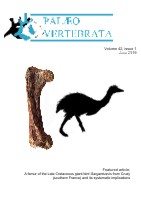
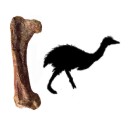
A femur of the Late Cretaceous giant bird Gargantuavis from Cruzy (southern France) and its systematic implications
Published online: 27/06/2019
Keywords:
Aves; femur; France; Gargantuavis; Late Cretaceous
https://doi.org/10.18563/pv.42.1.e3
Abstract
A large avian femur recently discovered at the Late Cretaceous Montplo-Nord locality at Cruzy (Hérault, southern France) is referred to the giant bird Gargantuavis philoinos. The estimated mass of the bird is 57 kg, within the range of living cassowaries. The specimen provides new evidence about the anatomy of G. philoinos, notably showing that the distal end of the femur was similar to that of modern birds in having a condylus lateralis subdivided into two semicondyles. A new diagnosis of Gargantuavis philoinos is provided and the taxon is placed in a new family of basal ornithurines.
PV article infos
|
PDF
|