|
Les rongeurs du site Pliocène à Hominidés de Hadar (Ethiope)
Published online: 15/02/1982
Keywords:
Ethiopia; hominids; Muridae; Pliocene
https://doi.org/10.18563/pv.12.1.1-56
Abstract
The intensive exploration of the Pliocene Hadar Formation, rich in hominid remains, led us to the discovery of several micromammals levels. ln some of them, rodents are very abundant. The stratigraphic repartition of these levels do not cover the whole fossiliferous series of the formation but takes place only in the sedimentary members from Sidi Hakoma and Denen-Dora (rancing from 3.1 - 3.2 MY to 2.8 - 2.9 MY, according to the recent geochronological data). During this gap of time, the species do not show morphological changes, what allowed us to gather, in the same taxa, forms of slighty different ages.
Two striking facts, giving a lot of indications, characterize these small rodents'faunas. First, we notice the domination of the Muridae, as well on a qualitative way (number of species) as on a quantitative one (number of individuals). Then, it appears that, until now, two genera of these murids were known only in the south-western asiatic regions. So, we can suppose continuous biotops between Africa and Indian Subcontinent before 3 MY. In this hypothesis, the hominids had already the possibility to leave their african « cradle ››. Finally, almost all studied genera are still represented at the present time. This fact, previously observed in Laetolil, Omo, Olduvai contributes to remove hope of establishing a biochronological scale based on rodents, in tropical zone. Nethertheless, that allows to try a reconstruction of the palaeoenvironnement, by using the principle of actualism.
PV article infos
Published in Vol. 12, Fasc. 1 (1982)
|
PDF
|
|
Rodent paleocommunities from the Oligocene of Ulantatal (Inner Mongolia, China)
Published online: 10/06/2014
Keywords:
late Paleogene; Mammalia; Mongolian Plateau; Rodentia; Systematics
https://doi.org/10.18563/pv.38.1.e3
Abstract
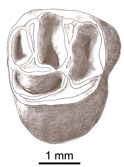
The Oligocene deposits of the Ulantatal area in Inner Mongolia (China) contain among the richest mammalian faunas from Asia. To date, only some parts of the rodent faunas have been described. Here, we propose to review the rodent faunal lists for each site, including the description of a few new rodent specimens. We describe three additional rodent species: the Cylindrodontidae Anomoemys lohiculus, the Eomyidae Asianeomys sp., and the Dipodidae Litodonomys huangheensis. This study allows us to constrain the stratigraphic range of Anomoemys lohiculus, which ranged from the late Early Oligocene to the early Late Oligocene in this area. Asianeomys sp. and Litodonomys huangheensis are dated from the latest Oligocene. These Oligocene deposits consist now of more than 70 species of mammals if we include the fauna from Kekeamu. This latter corresponds to the basal part of the Ulantatal Formation and could be dated biochronologically from the earliest Oligocene. When compared to the faunas from the Valley of Lakes in Central Mongolia, the Ulantatal faunas present a great majority of rodents, and this difference can be partly explained by sampling and description biases regarding macro-mammals. This study also shows that variations existed between Inner and Central Mongolia, especially regarding the composition of the rodent paleocommunities. However, the assessment of their evolutionary history in this part of Asia with respect to the important climate and environment changes, require further precisions and more material than current data allow.
PV article infos
Published in Vol.38-1 (2014)
|
PDF
|
|
The geologically youngest remains of an ornithocheirid pterosaur from the late Cenomanian (Late Cretaceous) of northeastern Mexico with implications on the paleogeography and extinction of Late Cretaceous ornithocheirids
Published online: 21/07/2020
Keywords:
Coahuila; Late Cenomanian; north-eastern Mexico; Ornithocheiridae; Pterosauria
https://doi.org/10.18563/pv.43.1.e4
Abstract
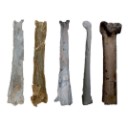
Ornithocheirid pterosaurs were the largest of the toothed pterodactyloids and had a worldwide distribution, although their fossil record is fragmentary, with the exception of the north-eastern Brazilian Crato and Santana Formations (Aptian, ?Albian, Early Cretaceous). With Istiodactylidae, they were also the only toothed pterosaurs that survived into the Cenomanian (Late Cretaceous), becoming extinct at the end of this period. Here we report on an ornithocheirid metacapus from the Late Cenomanian laminated limestone of north-eastern Mexico discovered about 120 km north-west of Ciudad Acuña, northern Coahuila at the south banks of Rio Bravo. The specimen comprises a fragmentary distal syncarpal, a crushed but complete metacarpal IV, two fragmentary preaxial metacarpals and a possible fragmentary terminal left wing finger phalanx. It represents the geologically youngest known ornithocheirid worldwide. We suggest that ornithocheirid pterosaurs may have become extinct because of massive sea level fluctuations during the mid to late Cretaceous that may have obliterated their breeding sites on coastal plains and low lying islands.
PV article infos
Published in Vol 43-1 (2020)
|
PDF
|

|
Préface au mémoire jubilaire en hommage à René Lavocat
Published online: 01/10/1980
Keywords:
Editorial
https://doi.org/10.18563/pv.9.ext.1-13
Abstract
Monsieur René Lavocat, Directeur du Laboratoire de Paléontologie des Vertébrés de la troisième section de l'Ecole Pratique des Hautes Etudes, quittait le service actif en l'année 1979.
Cela fait maintenant quinze ans que fut installé à Montpellier, le laboratoire de Paléontologie des Vertébrés de l'Ecole Pratique des Hautes Etudes. La décision de M. René Lavocat a été particulièrement heureuse dans ses conséquences. Il a en effet permis le développement de l'enseignement et de la recherche en Paléontologie des Vertébrés à l'Université de Montpellier où se créa un des centres importants de cette discipline, en France. Il suscita la création de nouveaux laboratoires de l'Ecole Pratique des Hautes Etudes installés dès leur origine à Montpellier, ainsi que le déplacement à Montpellier d'un Laboratoire de l'Ecole Pratique, préexistant. Ce groupe de laboratoires constitue maintenant l'Institut de Montpellier de l'Ecole Pratique des Hautes Etudes.
[...]
View editorial
Published in Vol. 9, Ext (1980)
|
PDF
|

|
Hexanchiforme nouveau (Neoselachii) du Crétacé inférieur du Sud de la France
Published online: 18/12/1990
Keywords:
Hexanchiformes; New genera; Southern France; Systematics; Valanginian
https://doi.org/10.18563/pv.20.1.33-54
Abstract
The dentition of Welcommia bodeuri nov. gen. nov. sp. from the Valanginian of Southem France is described and reconstructed. Species and genera of Upper Jurassic and Lower Cretaceous Hexanchiformes are reviewed and discussed.
The genus Notidanoides MAISEY, 1986 must be restricted to the single Nusplingen Upper Jurassic specimen, whose attribution to the species muensteri AGASSIZ, 1843 remains doubtful.
The genus Paranotidanus WARD &THIES, 1987 that does not rest on any type-species nor on any precise dental characterization must be rejected.
The genus Eonotidanus PFEIL, 1983, based on a very poorly preserved and heterogeneous type-material must also be rejected.
Teeth from the Lower Cretaceous, with a peculiar morphology, previously assigned to Eonotidanus or to Notidanoides, are to be ranked in the new genus Pachyhexanchus.
PV article infos
Published in Vol. 20, Fasc. 1 (1990)
|
PDF
|

|
Morphotypes dentaires actuels et fossiles des chiroptères vespertilionines. 2ème partie: implications systématique et phylogéniques.
Published online: 15/11/1987
Keywords:
Chiroptera; PHYLOGENY; Systematics; Vespertilionine
https://doi.org/10.18563/pv.17.3.77-150
Abstract
The first part of this study was devoted to a descriptive analysis of teeth morphologies among the vespertilionine bats. This leads now to a tentative synthesis, providing views on the systematics of the group. The results could be seen according to three distinct but closely related purposes : 1 - the sorting of the genera contents in order to conform the genera units to homogeneous taxa that could represent natural issues of evolutionary lineages ; 2 - the investigation of relationships between extant genera in order to infer the possibilities of common origin ; 3 - according to the preceeding items and to the observed evolutionary trends, a tentative phylogeny, modest and cautious. The contents of many genera are sorted : Leuconoe is removed from subgeneric to generic position, whereas Myotis becomes a subgenus of it ; the myotodont species are cleared away from the Pipistrellus genus ; Glischropus and Scotozous are synonymized within Pipistrellus ; Hypsugo is raised to the generic level ; some species previously ranged within Pipistrellus will form provisionally a collective group, Attalepharca nov. ; the Eptesicus genus is broken up, the excluded species being grouped within Nycterikaupius gen. nov. ; the Nycticeini tribe is defined again after exclusion of Otonycteris , Scotoecus, Scotophilus , and addition of Hesperoptenus ; the species la io and Pipistrellus tasmaniensis are removed to Eptesicus (n.s.) and Pipistrellus dormeri to Scotoecus. Groupings of genera are stated according to the main evolutionary trends of I1/. The relevance of these is often warranted by close morphologic similarities of other teeth. This leads to a recognition of the major evolutionary radiations which occurred in the group. The filiations schematized at the end of the work show the dental relationships observed between the extant genera, and could represent a phylogenic framework. Two major facts are to be underlined : 1- the early divergence of leuconoids ; 2 - the successives crossings to myotodonty from the nyctaloid flow. Fossil data from the literature are punctually and tentatively incorporated within phylogenic sketches.
PV article infos
Published in Vol. 17, Fasc. 3 (1987)
|
PDF
|

|
Contributions à l'étude du gisement Miocène supérieur de Montredon (Hérault). Les grands mammifères. 3 - Les artiodactyles ruminants
Published online: 15/11/1988
Keywords:
Artiodactyla; France; Montredon; Ruminentia; Upper Miocene
https://doi.org/10.18563/pv.18.ext.43-56
Abstract
The remains of Ruminantia are very rare at Montredon. No specific determination was possible. We have only one Micromeryx, one small cervid, one tragocere and one (?) gazella. The faunal spectrum is in good correlation with the general retreat of the cervids in the European upper Miocene, but in contrast it is not convenient for the bovids, which are in expansion at the same time. For them, we have to invoke the local ecological conditions.
PV article infos
Published in Vol. 18, Ext (1988)
|
PDF
|

|
Norselaspis glacialis n.g., n.sp, et les relations phylogénétiques entre les kiaeraspidiens (Osteostraci) du dévonien inférieur du Spitsberg.
Published online: 15/06/1981
Keywords:
Devonian; kiaeraspids; Osteostraci; Spitsbergen
https://doi.org/10.18563/pv.11.2-3.19-131
Abstract
The anatomy of Norselaspis glacialis n.g., n.sp., a primitive kiaeraspidian from the Lower Devonian of Spitsbergen, is described on the basis of spécimens studied by grinding sections or prepared with dilute formic acid. This study yielded some new anatomical details, including the presence of a canal prolonging posteromedially the canal alloted to the facial nerve by Stensiö. This posterior prolongation of the « facial canal ›› into the posterolateral part of the labyrinth cavity is consistent with the hypothesis put forward by Allis, Lindström, Jefferies and Whiting, that this canal housed the glossopharyngeus nerve. Furthermore, in N. glacialis, the foramen usually referred to as the foramen for the œsophagus opens posteriorly into a cavity in the postbranchial wall, referred to here as the intramural cavity, and which is interpreted as having housed the heart. Consequently, the œsophagus probably accompanied the dorsal aorta through the aortic canal. Finally, the foramen generally interpreted as having transmitted the ventral afferent arterial trunk is here considered as having housed the hepatic vein, which emptied into the venous sinus of the heart. The ventral afferent arterial trunk may thus have passed through the former «œsophageal ›› foramen.
The problem of the position of the dorsal nerves in the Osteostraci is discussed, and it is suggested that the three foremost nerve canals opening into the oralobranchial cavity housed the maxillary ramus of the trigeminus, the facial nerve and the glossopharyngeus nerve respectively. The mandibular ramus of the trigeminus must have accompanied one of the two foremost nerves, but for the moment it is impossible to decide which.
The problem of the nature of the interbranchial crests of the Osteostraci is briefly discussed. Comparison with the branchial apparatus of the Petromyzontida does not support the hypothesis that the interbranchial crests are part of the branchial arches, incorporated into the endoskeletal shield. A different hypothesis is proposed, that the branchial skeleton of the Osteostraci was situated entirely inside the oralobranchial cavity, and was attached to the endoskeletal shield only by the ventromedial processes. The grooves classically allotted to the efferent branchial arteries would thus have housed extrabranchial arteries, branching off from the dorsal aorta, and irrigating the ventral branchial musculature.
A phylogeny and a classification of the kiaeraspidians are proposed. The evolution of this monophyletic group is characterized by, e.g., reduction of cornual processes, shortening of the abdominal division of the shield, subdivision of the lateral fields, and enlargement of the supraoral fossae.
The phylogenetic position of the kiaeraspidians within the Osteostraci remains uncertain. Their sister-group may be either the benneviaspidiens or the thyestidians, or Thyestes alone (in which case they would have to be included within the thyestidians).
PV article infos
Published in Vol. 11, Fasc. 2-3 (1981)
|
PDF
|
|
Enigmatic rodents from Lavergne, a late middle Eocene (MP 16) fissure-filling of the Quercy Phosphorites (Southwest France)
Published online: 08/04/2024
Keywords:
diversity; late Bartonian; Rodentia; taxonomy; Theridomyidae
https://doi.org/10.18563/pv.47.2.e1
Abstract
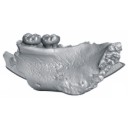
Two somewhat “odd” taxa of theridomyid rodents, one formerly known (Bernardia marandati Vianey-Liaud, 1991) and the other new (Idicia vidalenci gen. et sp. nov.) are discussed from a taxonomical and taphonomical perspectives. These two rodents were found at Lavergne, a late middle Eocene (MP16) “phosphatière” from the Quercy (Southwest France). The genus Bernardia, being preoccupied by a scale insect (Bernardia Ashmead, 1881), is here renamed Burgia. We benefit from this nomenclatural change to describe additional new dental specimens of this patriotheridomyine species, including a previously undescribed locus (P4). The other theridomyid from Lavergne, Idicia vidalenci gen. et sp. nov., so far documented by a mandible preserving two teeth (m2-m3) is a new taxon of peculiar occlusal morphology, and whose subfamilial affinities remain unknown. These two peculiar theridomyids recorded at Lavergne are found nowhere else, whether in coeval localities in Quercy or elsewhere in Western Europe. We discuss the possible causes of their unique presence at Lavergne.
PV article infos
Published in 47-2 (2024)
|
PDF
|

|
Book of Abstracts of the 20th Annual Conference of the European Association of Vertebrate Palaeontologists, 26th June – 1st July 2023, Sabadell (Barcelona), Spain
Published online: 15/06/2023
Keywords:
Abstracts; EAVP
https://doi.org/10.18563/pv.eavp2023
Abstract
PV article infos
Published in special issue 1-2023 (2023)
|
PDF
|

|
La variabilité morphologique dentaire du Landenodon (Condylarthra) de Dormaal, (Eocène,Belgique)
Published online: 01/10/1980
Keywords:
Condylarths; Dormaal; Early Eocene; Landenodon
https://doi.org/10.18563/pv.9.ext.167-196
Abstract
The study of dental variations in Landenodon from Dormaal (early Eocene, Belgium) shows that only one
species is present in this locality : L. woutersi QUINET, 1968 (Condylarthra, Arctocyonidae, Arctocyoninae). A high morphological variability is described, especially concerning the metaconid of P/4, the paraconid of M/2, and some characters of M1/ which have been found to be independant of each other. This variability is discussed.
PV article infos
Published in Vol. 9, Ext (1980)
|
PDF
|

|
Les crocodiliens paléogenes du Tilemsi (Mali): un aperçu systématique
Published online: 01/10/1980
Keywords:
Crocodilians; Dyrosoridae; Eocene; Mali; Palaeocene
https://doi.org/10.18563/pv.9.ext.15-35
Abstract
Abundant crocodilian fossil remains have been collected, mainly by R. Lavocat. from several levels of the
Palaeogene of the Tilemsi valley (eastern Mali). Several dyrosaurids occur in the Palaeocene (Montian ?) : Phosphatosaurus sp., Hyposaurus bequaerti (Dollo). H. wilsoni (Swinton). H. nopesai (Swinton), Rhabdognathus rarus Swinton, R. compressus n. sp. ln the lower Eocene has been found a dyrosaurid which cannot be accurutely determined.In the middle Eocene were found a dyrosaurid, Tilemsisuchus lavocati n. g., n. sp., and an indeterminate eusuchian.
PV article infos
Published in Vol. 9, Ext (1980)
|
PDF
|

|
Pronycticebus neglectus - an almost complete adapid primate specimen from the Geiseltal (GDR)
Published online: 04/12/1989
Keywords:
Adapiformes; Eocene; Paleoecology; PHYLOGENY; Pronycticebus neglectus
https://doi.org/10.18563/pv.19.3.115-130
Abstract
In the course of the current revision of adapid primates from the Eocene Geiseltal, an almost complete specimen was found in the Geiseltal Museum collections. The fossil, the most complete adapid specimen so far discovered in Europe, has been determined as Pronycticebus neglectus n. sp.
Ecology and locomotion as well as the likely phylogenetic position within the infraorder Adapiformes are discussed.
PV article infos
Published in Vol. 19, Fasc. 3 (1989)
|
PDF
|

|
Pairomys et Ectropomys : la fin d'une ambiguïté ; mise au point sur les Oltinomyinae et Remyinae (Rodenia, Theridomyidae).
Published online: 20/05/1994
Keywords:
PHYLOGENY; taxonomy; Theridomyidae; Upper Eocene
https://doi.org/10.18563/pv.23.1-4.119-152
Abstract
The description of new material of the Upper Eoœne of France, Southem Germany and Spain together with the restudy of the material described by Thaler (1966b) as Pairomys allows to confirm the validity of the genus Ectropomys up to know controversally discussed. As a consequence the subfamily Remyinae and Oltinomyinae can be defined precisely. The study of the dental characters shows that the Remyinae in fact belong to the Theridomyidae and represent a derived evolutionary unit within this family. The Oltinomyinae together with the Theridomyinae and Issiodoromyinae very probably form a monophyletic unit.
PV article infos
Published in Vol. 23, Fasc. 1-4 (1994)
|
PDF
|

|
Les vertébres dévoniens de la Montagne Noire (Sud de la France) et leur apport à la phylogénie des pachyosteomorphes (Placodermes Arthrodires).
Published online: 15/05/1987
Keywords:
Devonian; Montagne Noire; New taxon; PHYLOGENY; Placoderms; Stratigraphy; Vertebrate
https://doi.org/10.18563/pv.17.1.1-26
Abstract
Several different taxa of jawed vertebrates are reported for the first time from the Devonian of south-eastern Montagne Noire, France. Besides some undeterminable fragments of placoderm fishes from the Pragian and Lower Emsian, the material from the Upper Devonian is mainly represented by Melanosteus occitanus gen. and sp. nov. (Frasnian) and Thoralodus cabrieri LEHMAN, 1952 ("Famennian"). The good state of preservation of Melanosteus allows a detailed anatomical study leading to a phylogenetic analysis of the selenosteid pachyosteomorphs.
PV article infos
Published in Vol. 17, Fasc. 1 (1987)
|
PDF
|

|
Skeleton of early Eocene Homogalax and the origin of Perissodactyla
Published online: 16/12/1996
Keywords:
Eocene; Homogalax; Perissodactyla; Skeletal Anatomy
https://doi.org/10.18563/pv.25.2-4.243-260
Abstract
The first good skeletal remains of Homogalax protapirinus from the Wasatchian of the Bighorn Basin, Wyoming, indicate that this primitive tapiromorph was more plesiomorphic in many features than primitive equoids including Hyracotherium. Compared to Hyracotherium, Homogalax more closely resembles Phenacodonta (the closest outgroup of Perissodactyla for which postcrania are known) in various details of articular surfaces, muscle attachments, and proportions of the humerus, manus, and pes.Among known taxa, Homogalax most nearly approximates the plesiomorphic postcranial skeletal anatomy of Perissodactyla.
PV article infos
Published in Vol. 25, Fasc. 2-4 (1996)
|
PDF
|

|
Rates of evolution in divergent species lineages as a test of character displacement in the fossil record : tooth size in Paleocene Plesiadapis (Mammalia, Proprimates)
Published online: 16/12/1996
Keywords:
character displacement; character divergence; fractal time series; Plesiadapis; Rates of evolution
https://doi.org/10.18563/pv.25.2-4.193-204
Abstract
Two species lineages of North American late Paleocene Plesiadapis exhibit a pattern of size divergence from a common ancestral lineage. Time series of fossils in each of these lineages are analyzed to test the idea that size divergence represents competitive character displacement. The critical factor in a test of character divergence is showing that divergent lineages evolved directionally rather than randomly (multifactorially). Analysis of evolutionary rates and their temporal scaling in Plesiadapis shows that both divergent species lineages have the scaling slope expected for lineages evolving randomly rather than directionally, and size divergence in Plesíadapis does not represent character displacement. Rates of evolution commonly observed on a per-generation time scale are high enough to produce character displacement within a few generations. Thus character displacement is not likely to be visible on scales of time that can be studied in the fossil record.
PV article infos
Published in Vol. 25, Fasc. 2-4 (1996)
|
PDF
|

|
Le genre Mesembriacerus (Bovidae, Artiodactyla, Mammalia) : un Oviboviné primitif du Vallésien (Miocène supérieur) de Macédoine (Grèce)
Published online: 15/12/1984
Keywords:
Bovidae; Cladistics; Late Miocene; Ovibovinae; Vallesian
https://doi.org/10.18563/pv.14.4.201-223
Abstract
The bovid Mesembriacerus melentisi, the numerous skulls, teeth and limb bones of which are described from the locality Ravin de la Pluie (Macedonia, Greece), bears some features which allow us to put it in the tribe ovibovini (Ovibovinae) with several other Miocene genera and the Recent one Ovibos. A cladogram gives the phyletic relationships within this tribe. It shows that Mesembriacerus which is one of the oldest genera, is also the most primitive. The limb bones are as elongated as those of Recent cursorial bovids and they show, as does the bulk of the fauna, an open environment for the locality.
PV article infos
Published in Vol. 14, Fasc. 4 (1984)
|
PDF
|

|
Les Gruiformes (Aves) des phosphorites du Quercy (France). 1. sous-ordre cariamae (Cariamidae et Phorusrhacidae), systématique et biostratigraphie.
Published online: 30/11/1983
Keywords:
Aves; Biostratigraphy; Birds; Cariamae; gruiformes; Quercy Phosphorites; Systematics
https://doi.org/10.18563/pv.13.4.83-143
Abstract
The revision of the old collections of fossil birds from the “Phosphorites du Quercy” and the study of new material give the following results (Gruiformes, Cariamae) : The humeri and most of the carpometacarpi described under the name Filholornis belong in Elaphrocnemus. The ulnae ascribed to Fïlholornis belong in Idiornis. Most of the post-cranial elements of the genera Elaphrocnemus and Idiornis are described and show great similarities with recent Cariamidae and Opisthocomidae, and fossil Bathornithinae. A new genus and a new species, Oblitavis insolitus, are created in the sub-family Idiornithinae; two new species are described in the genera Elaphrocnemus (E. brodkorbz) and Idiornis (I. itardiensis), and the species Elaphrocnemus gracilis is transferred to the genus Idiornis. The genus Propelargus Lydekker is transferred from the family Ciconiidae to Cariamidae. A new generic name, Occitaniavis, is created for the species Geranopsis elatus, which belong in Cariamidae, while the type-species of the genus, Geranopsis hastingsiae, is a member of the Gruidae. The affinities between the Quercy avifauna and the Neotropical one is emphasized by the occurrence of Phorusrhacidae, previously known only from the Cenozoic of South America and the Late Pliocene or Early Pleistocene of North America. Thanks to the material collected during the new excavations, the stratigraphical position of most of the species is stated precisely, and evolutionary lineages are outlined. This study shows that the suborder Cariamae, presently restricted to two South American genera, was already extremely diversified during the Eocene, and widespread in Europe and North America.
PV article infos
Published in Vol. 13, Fasc. 4 (1983)
|
PDF
|

|
Les mammifères de Rians (Eocène inférieur, Provence)
Published online: 01/02/1981
Keywords:
Eocene; Mammals; Provence; Rians
https://doi.org/10.18563/pv.10.2.43-126
Abstract
The fossil mammals discovered in the quarry of Rians (Sparnacian, Provence) are described. Among these forms, Hyracotherium is interesting because of the little molarization of the lower premolars and its small size, and Diacodexis by its small size and very primitive astragalus ; they may be the most primitive representatives of their respective orders. Also, Proviverra eisenmanni n. sp. is the smallest and most primitive hyaenodontid yet described. Hyopsodus itinerans is the first species of this genus described France. Among other rare fossils is a new species of bat, a small palaeoryctid, and other forms not yet identified. Marsupials are varied. Several new species are present among the rodents. The fauna is well-balanced and rich in small hyopsodontid condylarths. It is stratigraphically situated at the
Dormaal reference-level, at the base of the early Eocene, and is considered equivalent to the late Clarkforkian of North America. The hypothesis is presented that new forms appearing at the beginning of the Wasatchian in North America migrated, in fact, at that time from Europe.
PV article infos
Published in Vol. 10, Fasc. 2 (1981)
|
PDF
|