|
Les Gliridés (Rodentia) de l'Oligocène supérieur de Saint-Victor-la-Coste (Gard).
Published online: 28/10/1968
Keywords:
Gliridae; Late Oligocene
https://doi.org/10.18563/pv.2.1.1-16
Abstract
The locality of St.-Victor-la-Coste (Gard) has yielded, rather abundantly, teeth of two glirids hitherto very poorly known: Glirudinus praemurinus (Freudenberg) and Glirudinus glirulus (DEHM). It has permitted, moreover, new views on the evolution of Peridyromys murinus (POMEL). Study of these forms confirms the late Oligocene age of the fauna, without allowing, however, further precision.
PV article infos
Published in Vol. 02, Fasc. 1 (1968)
|
PDF
|
|
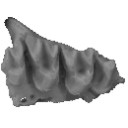
A new species of bat (Chiroptera: Vespertilionidae) from the early Oligocene global cooling period, Brule Formation, North Dakota, USA
Published online: 09/12/2019
Keywords:
Eocene-Oligocene global cooling; Mammalia; Oligocene; Plecotini; Quinetia
https://doi.org/10.18563/pv.42.2.e2
Abstract
We report the first confirmed fossil bats from North Dakota, including a new species referable to the Vespertilionidae represented by a maxilla with P4-M3 from the Brule Formation, Fitterer Ranch local fauna, early Oligocene, Whitneyan North American Land Mammal Age. Unassociated postcranial fragments of the humerus and femur also represent a vespertilionoid, but appear to reflect a different, unidentified species. The new taxon, Quinetia frigidaria sp. nov., is referred to the genus Quinetia, previously known only from approximately contemporaneous deposits in Europe. The new species is larger than Quinetia misonnei from the early Oligocene of Belgium. It is similar in some morphological characters to Chadronycteris rabenae (Chiroptera incertae sedis) of the late Eocene (Chadronian) of northwestern Nebraska and to Stehlinia species (?Palaeochiropterygidae) from the Eocene and Oligocene of Europe, but differs from each in morphological details of the dentition and maxilla. An unassociated talonid of a lower molar from Fitterer Ranch shows myotodont morphology, unlike the nyctalodont lower molars in Q. misonnei, and thus represents a second chiropteran taxon in the fauna. Quinetia frigidaria is a member of a Paleogene radiation of bats near the low point of the Eocene-early Oligocene decline in global temperatures, increased seasonal aridity, and loss of tropical floras from mid-latitude North America.
PV article infos
Published in Vol 42-2 (2019)
|
PDF
|
|
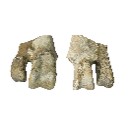
A reassessment of the giant birds Liornis floweri Ameghino, 1895 and Callornis giganteus Ameghino, 1895, from the Santacrucian (late Early Miocene) of Argentina.
Published online: 13/12/2016
Keywords:
Argentina; Aves; Callornis; Liornis; Miocene
https://doi.org/10.18563/pv.40.2.e3
Abstract
The status of the giant bird taxa Liornis floweri and Callornis giganteus from the Santa Cruz Formation (late Early Miocene) of Patagonia, first described by Ameghino (1895) is reassessed on the basis of a re-examination of the type material at the Natural History Museum, London. Liornis floweri, which lacks a Pons supratendineus on the tibiotarsus and has an unbifurcated Canalis interosseus distalis on the tarsometatarsus, is clearly a brontornithid and is considered as a junior synonym of Brontornis burmeisteri. Ameghino’s replacement of Callornis by Eucallornis is unjustified. Callornis giganteus is a chimera based on a phorusrhacid tarsometatarsus (probably belonging to Phorusrhacos longissimus) and a brontornithid tibiotarsus. The latter can be considered as the lectotype of Callornis giganteus, which may represent a small morph of Brontornis burmeisteri or a distinct taxon. It is referred to here as Brontornithidae indet. The tarsometatarsus described by Dolgopol de Saez (1927a,b) as Liornis minor and considered by her as a gracile brontornithid apparently has a bifurcated Canalis interosseus distalis and should therefore be placed among the Phorusrhacidae.
PV article infos
Published in Vol.40-2 (2016)
|
PDF
|

|
La poche à phosphate de Ste-Néboule (Lot) et sa faune de vertébres du Ludien supérieur. 4- Crocodiliens
Published online: 25/09/1978
Keywords:
Eocene; Quercy Phosphorites
https://doi.org/10.18563/pv.8.2-4.191-199
Abstract
Crocodilians are represented in the Upper Eocene of Sainte·Néboule (Lot) by an isolated parietal and a dorsal scute, bath from young individuals. They are refferred to Diplocynodon sp. Predators (mammals and birds) are probably responsible for the occurrence of remains of small crocodilians (belonging to the genera Allognathosuchus and Diplocynodon) in the phosphorltes of Quercy.
PV article infos
Published in Vol. 08, Fasc. 2-4 (1978)
|
PDF
|

|
Description des restes d'Elasmobranches (Pisces) du Dévonien moyen de Bolivie
Published online: 01/02/1977
Keywords:
South America
https://doi.org/10.18563/pv.7.4.126-132
Abstract
Some fragmentary remains of spines and endoskeletal elements, referred here to as ctenacanthid like elasmobranchs, are recorded in the Middle Devonian of Bolivia. These specimens, and some others from the Eodevonian of Brasil represent the only Devonian fish remains hitherto known from South America and indicate that further discoveries may be made in their original localities respectively.
PV article infos
Published in Vol. 07, Fasc. 4 (1977)
|
PDF
|

|
Rongeurs caviomorphes de l'Oligocène de Bolivie. 1 Introduction au deseadien de Bolivie
Published online: 01/08/1976
Keywords:
Rodentia; South America
https://doi.org/10.18563/pv.7.3.1-16
Abstract
The Tertiary of the Salla-Luribay basin consists of red beds affected by the second period of the andine compression, of Miocene ending age. The Tertiary layers are exposed at an approximate elevation of 3.500 to 4.000 meters. Two stratigraphic units can be distinguished in them: the Luribay conglomerates, in which vertical clifts result from erosion, and the Salla layers consisting mostly of consolidated clays. These clays are very fossiliferous and have furnished a rich vertebrate fauna which gave to R. Hoffstetter the possibility to establish the Oligocene age of these beds. Sediments of same age has been reported to be present in several other places of Bolivia, particularly near Lacayani, where have been collected highly hypsodont Rodents, different from those found in Salla-Luribay basin.
PV article infos
Published in Vol. 07, Fasc. 3 (1976)
|
PDF
|

|
Neue Beobachtungen zum Schädel-und Gebiss-Bau der Paulchoffatiidae (Multituberculata,Ober-Jura).
Published online: 15/12/1987
Keywords:
Dentition; Paulchoffatiidae; Portugal; Skull structure; Upper Jurassic
https://doi.org/10.18563/pv.17.4.155-196
Abstract
The ventral face of the Paulchoffatiinae skull (Multituberculata, Lower Kimmeridgian, Portugal) is new reconstructed. Some details hitherto unknown are added, as the presence of jugals, the structure of the palatine and the extension of the pterygoids. The situation of the m2/ is discussed. Kielanodon hopsoni n. g., n. sp. is erected, known by its upper p3-5/. From Guimarotodon leiriensis the mandible with its dentition is made known. New informations concerning the milk-dentition and the replacement of teeth are also added.
PV article infos
Published in Vol. 17, Fasc. 4 (1987)
|
PDF
|

|
Nouvelles espèces de Dendromus (Rongeurs,Muriodea) à Langebaanweg (Pliocène,Afrique du Sud) conséquences stratigraphiques et Paléoecologiques
Published online: 20/05/1994
Keywords:
Dendromurinae; Paleoecology; Pliocene; Rodents; South Africa; Stratigraphy
https://doi.org/10.18563/pv.23.1-4.153-176
Abstract
New Dendromus species (Rodentia, Muroídea) from Langebaanweg (Pliocene, South Africa). Stratigraphical and paleoecological consequences.
Two new species of Dendromus are described from the Langebaanweg site which precises the evolutionary trend among this genus in South Africa and gives further paleoenvironmental indications. Two evolutionary stages are described: D. darti nov. sp. shows low-crowned molars with bunodont cusps and its more closest relative would be D. melanozis from the Cape region. On the contrary, D. averyi nov. sp. is more lophodont and is better related with the modem D. melanotis. Both species are at a less evolved stage than the Dendromus sp. from Laetolil Beds at Laetoli. The Langebaanweg deposits cannot still be dated by biostratigraphy but they clearly cannot be older than the basis of Pliocene times. The association of Dendromus and Mystromys in the same levels indicates a grassland environment with woodland patches as well as probable swamps.
PV article infos
Published in Vol. 23, Fasc. 1-4 (1994)
|
PDF
|

|
Nouvelles données sur les mammifères du Thanétien et de l'Yprésien du bassin d'Ouarzazate (Maroc) et leur contexte stratigraphique.
Published online: 15/12/1998
Keywords:
early Paleogene; magnetostratigraphy; Mammals; Morocco; North Africa; Ouarzazatz basin; Systematics
https://doi.org/10.18563/pv.27.3-4.155-202
Abstract
New faunal and stratigraphical data on the vertebrates localities from the early Paleogene of the Ouarzazate Basin (Adrar Mgorn 1, Adrar Mgorn 1 bis et N'Tagourt 2), Morocco, are presented. A magnetostratigraphical study, the first for such early Paleogene Arabo-African mammal localities, and the discovery of probable remains of the nannofossil Discoaster support the Thanetian age of the Adrar Mgorn 1 site. The magnetostratigraphy suggests a slightly later age than was thought for the Paleogene formations of the local series of Tinerhir and for the vertebrate localities: late or latest Thanetian for Adrar Mgorn 1 and Adrar Mgorn 1 bis, middle Ypresian for N'Tagourt 2. It also indicates a lower position of the KT boundary in the series. Two tons of matrix recovered in the vertebrate sites have vielded new data on the micromammals. A damaged lower molar from N'Tagourt 2 is referable to Khamsaconus bulbosus and supports the proboscidean affinities of this species and especially possible relationships with bunolophodont taxa such as elephantiforms. A lower molar from Adrar Mgorn 1 bis belongs to a new form which can be identified as a plesiadapiform or an euprimate close to Altiatlasius koulchii though significantly larger. A new material from Adrar Mgorn 1 illustrates a new dilambdodont adapisoriculid species which is referable to Garatherium : ?Garatherium todrae n. sp. Another species referred to Garatherium is known in the locality (?Garatherium n. sp.). Garatherium is a new lineage from the Ouarzazate basin which crosses the Paleocene-Eocene boundary together with Palaeoryctes, Didelphodontinae gen. and sp. 2, Todralestes, and Afrodon, and it is the first Paleocene-Eocene lineage identified outside of this basin (Garatheríum is based on a species from El Kohol, Algeria). Among the Paleocene-Eocene lineages from the Ouarzazate basin, it should be also mentioned a new possible carnassial form (carnivoran or creodont; Adrar Mgorn 1), and an upper molar of Cimolestes cf. incisus (Adrar Mgorn 1 bis). The upper molar THR 168 previously reported as from an indeterminate didelphodontine is here identified as the M1/ of Afrodon chleuhi. The micromammal faunas from the Ouarzazate basin are positioned in the global chronological framework of the mammal localities from the Paleogene of the Arabo-African domain.
PV article infos
Published in Vol. 27, Fasc. 3-4 (1998)
|
PDF
|

|
Historical and new perspectives on the parataxonomyof fossil eggs.
Published online: 15/12/2003
Keywords:
amniotic eggshells; Parataxonomy
https://doi.org/10.18563/pv.32.2-4.189-195
Abstract
A critical review on the literature about the parataxonomy of amniote eggshells reasserts the great interest of this systematics tool for the progress of dinosaur eggshell paleontology. However, shedding light on its limits, we propose to give up the use of the basic types - morphotypes key system.
PV article infos
Published in Vol. 32, Fasc. 2-4 (2003)
|
PDF
|

|
Dating dinosaur oodiversity: chronostratigraphic control of LateCretaceous oospecies succession.
Published online: 15/12/2003
Keywords:
Biostratigraphy; Chronology; dinosaur eggshells; Late Cretaceous
https://doi.org/10.18563/pv.32.2-4.121-148
Abstract
An increasing fossil record of dinosaur eggs and eggshells allows putting ootaxa within a chronostratigraphic framework, in order to study their distribution pattern leading eventually to their use as biochronological markers. For these purposes, high-quality data exists in four major regions; North America, South America, Europe and Asia (Central Asia and India). Most of the highly diverse dinosaur egg record has been dated as Latest Cretaceous in age (Campanian-Maastrichtian), reaching the Cretaceous-Tertiary boundary closer than the dinosaur bone record. However, dating continental sections is problematic and need to be carefully verified, as it appears when comparing the European dinosaur eggshell record from two well-studied areas. Ootaxa distribution in both sides of the Pyrenees (Tremp and Aix basins) shows comparable oospecies successions, but different chronology. This disagreement probably indicates that one or both successions have a wrong chronostratigraphic calibration.
PV article infos
Published in Vol. 32, Fasc. 2-4 (2003)
|
PDF
|

|
Rythme et modalités de l'évolution chez les rongeurs à la fin de l'Oligocène-leurs relations avec les changements de l'environnement.
Published online: 15/12/2000
Keywords:
Environment; evolution; Oligocene; Rodents; Systematics
https://doi.org/10.18563/pv.29.2-4.83-360
Abstract
The analysis of oxygene isotope variations as well as paleobotanical data suggest that the Oligocene/Miocene boundary corresponds to a transitional period marked by floristical and climatic variations. During this period, the pyreneo-alpine tectonics has contribued to modify the geography and western Europe landscapes. Faunal changes (appearances, extinctions, migrations) are observed in different mammalian groups, notably in the rodents. A study of the evolutionary trends and patterns in paleogene rodents is involved for the period ranging from level MP 28 of the Late Oligocene to the Early Miocene, including the Oligo-Miocene boundary.
The Rodents fauna from the sites of Venelles (Bouches-du-Rhône District, France) and Thezels (Lot, France), previously mentionned in litterature, have been studied. The first description of the Eomyidae of La Milloque (MP 29) has been completed. These faunas are compared to those from various localities dating from the considered period. In La Milloque, a new representative of the Eomys species is described next to a form close to Rhodanomys hugueneyae ENGESSER, 1987. It is the Eomys milloquensis nov. sp., the likely descendant of Eomys quercyi COMTE & VIANEY-LIAUD, 1987. Two new species are also described in Thezels: Eucricetodon thezelensis nov. sp., resulting from a likely and local evolution of Eucricetodon praecursor (SCHAUB, 1925) from La Milloque, which, in the same geographic area, could be at the origin of Eucricetodon hesperius ENGESSER, 1985 from Paulhiac. Plesiosminthus admyarion nov. sp., quite distinct from Plesiosminthus schaubi VIRET, 1926, which announces Plesiosminthus myarion SCHAUB 1930. Venelles 'Plesiosminthus schaubi population is considered as a sub-species, named Plesiosminthus schaubi meridionalis nov. subsp. New phylogenetic patterns are proposed. Among the Eomyidae, a quantification of various features of the M1-2/ crown (hypsodonty, degree of abrasion, occlusal angle, state of development of the I and V anticlines), and a comparison with the occlusal diagram of the other teeth among various other populations allows a more efficient separation of Eomys and Rhodanomys genera. In Western Europe, and within this period, it finally does not seem possible to gradually connect the genus Eomys to the genus Rhodanomys. The evolution of the Eomys quercyi - milloquensis lineage seems to underline a similar evolution to that which may have led from the Eomys to the Rhodanomys form. The latter which appears totally accomplished at level MP 29 of the Oligocene is considered as an immigrant. If we compare the most representative species of the Venelles, Thezels, and Coderet sites, (i.e. Rhodanomys, Eucricetodon, Adelomyarion, Peridyromys, Plesíosminthus), it becomes impossible to confirm their biochronological separation. The noticeable differences between the populations may be interpreted as geographical variations. An explanation to these variations, and to fauna's evolution during the Late Oligocene and Early Miocene can be found in the environmental modifications, supported by isotopic, paleobotanical and sedimentologic analysis. A tentative reconstruction of the environments is attempted by the cenogram method. The analysis of the fluctuations of fauna's diversity shows variations which may be correlated to a drop in temperature at MP 29, during the Late Oligocene, followed by an increase in temperature along with an aridity phenomenom, during the basal Miocene (MN O).The confrontation of various methods give the opportunity of reconstituting and comparing the evolution of the environment of three sequences of sites chosen from different regions. Ecological affinities of various rodents' species are being examined. It is possible to consider that the integration of all the conclusions resulting from this study should lead to an explanation to the evolution of rodents for the period around the Oligocene-Miocene boundary. The site of Coderet- level 3- would be posterior to the latter, at the beginnig of the Miocene, and would mark the level MN 0 of the Aquitanian.
PV article infos
Published in Vol. 29, Fasc. 2-4 (2000)
|
PDF
|

|
Mammals and stratigraphy of the continental mammal-bearing Quarternary of South America
Published online: 16/12/1984
Keywords:
Geochronology; Mammalia; Quaternary; South America; Stratigraphy
https://doi.org/10.18563/pv.14.ext
Abstract
Previous chronological arrangements of South American Quaternary land mammal faunas are appraised on the basis of current geological and paleontological data. Three South American late Pliocene-Pleistocene land mammal ages are conventionally recognized, from oldest to youngest, the Uquian, Ensenadan, and Lujanian ; all are defined on Argentine faunas.
The Uquian is based fundamentally and historically on the fauna from the Uquía Formation in Jujuy Province, northwestern Argentina. Important known formations in Argentina yielding Uquian Age faunas include the sub-surface Puelche Formation (or Puelchense) near the city of Buenos Aires, and the Barranca de Los Lobos and Vorohué Formations between Mar del Plata and Miramar, Buenos Aires Province. A tentative subdivision is propos-ed for the Uquian into three subages based on knowledge of the Mar del Plata-Miramar sequence, from oldest to youngest, the Barrancalobian, Vorohuean, and Sanandresian. In Argentina the Uquian is presently marked by the first known record of Scelidodon, Hydrochoeropsis, Ctenomys, Canidae, Ursidae, Gomphotheriidae, Equidae, Tapiridae, Camelidae, Cervidae, and the last known record of Thylatheridium, Thylophorops, Dankomys, Eumysops, Pithanotomys, Eucoelophorus, Hegetotheriidae, Sparassocynidae, and Microtragulidae.
The Ensenadan Age is based on the fauna from the Ensenada Formation near the city of Ensenada, Buenos Aires Province. In Argentina the Ensenadan is marked by the first known record of Lomaphorus, Neothoracophorus, Plaxhaplous, Cavia, Lyncodon, Lutra, Galera, Smilodon, Dicotyles, Lama, Vicugna, the last known record of Orthomyctera, and the only known record of Brachynasua.
Typícal beds of late Lujanian Age in Argentina consist of fluvial deposits occupying stream channels, and shallow basins, often incised into beds of early Lujanian (i.e. Bonaerian of early workers) and Ensenadan Age. The Lujanian Age is based on a fauna from beds along the Rio Luján, about 65 km west of the city of Buenos Aires, Buenos Aires Province. The Lujanian in Argentina is marked by the first record of Equus, Chlamyphorus, and Holochilus, and the last record of Megatherioidea, Glyptodontoidea, Arctodus (=Arctotherium), Smilodon, Litopterna, Notoungulata, Proboscidea, Equidae, Morenelaphus, and Palaeolama.
These land mammal ages are often difficult to recognize in other South American countries. The compositions of South American Pleistocene faunas vary with the environment. Some taxa were widely distributed in fossil deposits throughout the continent, but their occurrences need not reflect synchroneity. This is a result of changing climates and habitats in time. Consequently, proposed intracontinental correlations need confirmation based on magnetostratigraphy and a radioisotope time scale. Paleontologic characterizations of these land mammal ages (i.e. first and last record, and guide fossils) are useful for much of Argentina, but extensions to most of the other parts of South America are at best tenuous.
The majority of known non-Argentine Pleistocene faunas are believed to be Lujanian in age. Possible non Argentine early Pleistocene (Uquian) faunas include Ayo Ayo and Anzaldo in Bolivia, and Cocha Verde in southern Columbia. A possible middle Pleistocene (Ensenadan or early Lujanian) fauna is the Chichense of Ecuador. Paleomagnetic and radioisotopic date (MacFadden et al., 1983) clearly indicate that the greater part of the Tarija fauna (Bolivia) is Ensenadan in age.
The end of the Pleistocene and beginning of the Holocene in South America is marked by extinction of nearly all large mammalian herbivores and their specialized large predators. Radiocarbon age determinations suggest that large scale extinctions of megafauna occurred between 15,000 and 8,000 yrs. B.P. (years before present).
PV article infos
Published in Vol. 14, Ext (1984)
|
PDF
|

|
Un nouveau genre de ?Palaeotheriidae (Perissodactyla, Mammalia) décelé dans les phosphorites du Quercy (Eocène supérieur ou Oligocène) d'après un arrière crâne sans dents.
Published online: 15/06/1999
Keywords:
endocranial cast; Epitympanic sinus; Palaeotheriidae; Paléogène; Quercy Phosphorites; skull anatomy
https://doi.org/10.18563/pv.28.1.75-87
Abstract
A rear skull from the Quercy Phosphorites is described. It documents a new perissodactyl genus, likely assignable to the family Palaeotheriidae and probably paleogene of age. Owing to the lack of any tooth, this family assignment remains however somewhat hypothetical. The specimen is firstly characterised by the presence of a wide epitympanic sinus swelling and hollowing the squamosal shell and the post-glenoid process. This cavity might make up a peculiar pattern of improvement for the hearing apparatus by carrying out a kind of drum near the middle ear, whereas the bony tympanic remains barely bulged and forms but a few developed auditory bulla. This pattern appears an outcome of a trend observed with many palaeotheriids, such as Plagiolophus. Furthermore, the endocranial cast shows a rather high degree of gyrencephaly for a paleogene mammal. The prominent lambdoidal crest points out a powerful nape musculature and a lowered head bearing. Consequently, it is assumed that such an animal was probably living in somewhat open places, at the expense of rather tough vegetables. It might have been accordingly provided with a semi-hypsodont, cement covered, "plagiolophoid" dentition.
PV article infos
Published in Vol. 28, Fasc. 1 (1999)
|
PDF
|

|
Evolution of the Rhizomyine zygoma
Published online: 30/12/1985
Keywords:
parallel evolution; Rhizomyidae; Rodentia; Siwalik; zygoma
https://doi.org/10.18563/pv.15.3.129-138
Abstract
Cranial anatomy of a late Miocene rhizomyid, Brafhyrhizomys cf. B. pilgrimi, provides new evidence on the origin of the dorsal, round infraorbital foramen of living rhizomyines. Primitive rhizomyids retain a myomorphous keyhole foramen with a long ventral slit that retracts upward during the evolutionary history of the Rhizomyidae. The primitive condition of the elongated ventral slit is represented by Kanisamys sivalensis. Among later burrowers the foramen shows progressive dorsal migration, the ventral slit terminating midway up the snout in B.tertracharax and B. choristos ; well above the midline of the snout in Brachyrhizamys cf. B. pilgrimi. Apparently this transformation began earlier among Rhizomyinae than among Tachyoryctinae and continued to a more derived stage in rhizomyines. ln living Rhizomyx the ventral slit is absent and only a high round hole remains at the anterior end of the zygomatic arch.
PV article infos
Published in Vol. 15, Fasc. 3 (1985)
|
PDF
|

|
Avant-propos
Published online: 16/12/1996
Keywords:
D.E.Russell
https://doi.org/10.18563/pv.25.2-4.61-62
Abstract
Le présent volume est l'aboutissement d'un projet né il y a presque cinq ans. En décembre 1991, l'un d'entre nous (MG) prenait des contacts en vue de proposer un symposium sur les mammifères fossiles, dédié à D.E. Russell, dans le programme du 4e Congrès de la European Society for Evolutionary Biology. Ce congrès, baptisé "Evolution 93", devait se tenir à Montpellier en août 1993. Son Comité d'Organisation, animé par F. Catzeflis, recherchait des organisateurs de symposiums. L'idée fut acceptée avec enthousiasme par le second d'entre nous (PDG), et le titre de notre Symposium fut précisé: " Palaeobiology and Evolution of Early Cenozoic Mammals - A Symposium in Honor of D.E. Russell". Le projet fut formellement accepté par le Comité d'Organisation en avril 1992.
PV article infos
Published in Vol. 25, Fasc. 2-4 (1996)
|
PDF
|
|
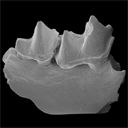
First Neogene Otonycteris (Chiroptera: Vespertilionidae) from Ukraine: its biostratigraphic and paleogeographic significance.
Published online: 19/03/2015
Keywords:
bats; East Europe; Gritsev; Late Miocene; Mammalia
https://doi.org/10.18563/pv.39.1.e2
Abstract
A new species, Otonycteris rummeli nov. sp., is described from the Late Miocene site Gritsev (MN 9) in the Ukraine. Otonycteris rummeli nov. sp. differs from those of most vespertilionids, except recent Otonycteris, Antrozous and Early Miocene Karstala silva, in having a well-developed entocingulid at the foot of the trigonid valley in the lower molars. The morphological resemblance of Otonycteris, Antrozous and Karstala is apparently a case of convergence in the evolution of the Old and New Worlds bat faunas. From at least the Middle Miocene the range of Otonycteris distribution spread to the whole of Central Europe and such a situation continued during the whole Late Miocene. This indicates a more arid climate in Europe during the Upper Miocene compared to the Quaternary. The reduction of the distribution range of Otonycteris and its extinction in most of the territory of Europe could have been caused by the global climatic cooling and increasing glacial cycle amplitude during the onset of the Quaternary.
PV article infos
Published in Vol.39-1 (2015)
|
PDF
|

|
Osteology of Prolagus sardus, a Quaternary Ochotonid (Mammalia, Lagomorpha).
Published online: 21/06/1969
Keywords:
Lagomorpha; Ochotonidae; Prolagus
https://doi.org/10.18563/pv.2.4.157-190
Abstract
Prolagus sardus is the last representative of the diverse lineages of European endemic ochotonids. It is also the most abundant in the collections. The previous studies made of this species have established rather well its dental morphology, its phylogenetic position, its geographic and temporal distribution, and its intraspecific individual variation. On the other hand, no osteologic study has fully utilized the superb material from Corsica and Sardinia collected by Forsyth Major.
Nearly all of the parts of the skeleton are represented in this material; they are here described and figured. Comparisons are made with Ochotona, the only surviving genus of the family, as well as with the living leporids, in particular Romerolagus, Oryctolagus and Lepus. A brief examination of the dentition reveals some particular characters of the incisors. The osteologic study allows limited interpretations to be advanced concerning the posture, mastication. locomotion and some other adaptive features of P. sardus.
P. sardus appears as an incontestable ochotonid, but it differs from Ochotona by some characters which are found in leporids. Certain of the characters are here judged primitive for lagomorphs. The genus Ochotona therefore can no longer be considered as the image of a primitive lagomorph, because in spite of the lack of cursorial adaptations which differentiate it from leporids, it presents other specializations which are common to it alone.
PV article infos
Published in Vol. 02, Fasc. 4 (1969)
|
PDF
|
|
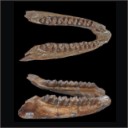
A mandible of the hyracoid mammal Titanohyrax andrewsi in the collections of the Muséum National d'Histoire Naturelle, Paris (France) with a reassessment of the species
Published online: 18/04/2016
Keywords:
Afro-Arabia; Fayum; Oligocene; Titanohyracidae
https://doi.org/10.18563/pv.40.1.e4
Abstract
An unpublished mandible of the large hyracoid Titanohyrax andrewsi from the early Oligocene Jebel Qatrani Formation, Fayum Depression, Egypt is described. This specimen has a twofold importance. Firstly, it opens an unexpected window on early paleontological research in the Fayum because it was discovered as early as 1904 by the French paleontologist René Fourtau during an expedition to the Fayum organized by the Muséum National d’Histoire Naturelle, Paris (MNHN). This expedition has remarkably never been mentioned in the literature. Secondly, the mandible documents the best-preserved specimen of T. andrewsi, permitting a revision of one of the very rare Paleogene hyracoids. Interestingly, the new mandible was discovered two years before the first report of the species by Charles W. Andrews. The hypodigm of T. andrewsi is reviewed and the dentition as a whole is compared in detail, notably with other Titanohyrax species from the Fayum. The validity of the large Titanohyrax “schlosseri” species is discussed, but a pronounced sexual size dimorphism for T. andrewsi is favoured.
PV article infos
Published in Vol.40-1 (2016)
|
PDF
|

|
La poche à phosphate de Ste-Néboule (Lot) et sa faune de vertebres du Ludien supérieur. 10 - Paléothérides (Perissodactyles).
Published online: 25/09/1978
Keywords:
Eocene; Quercy Phosphorites
https://doi.org/10.18563/pv.8.2-4.291-293
Abstract
La poche à phosphorite de Sainte-Néboule (Lot) a livré au cours des récentes campagnes de fouilles effectuées dans le cadre de la RCP 311 une douzaine de dents ou fragments de dents de paléothéridés à rapporter à 3 taxons.
PV article infos
Published in Vol. 08, Fasc. 2-4 (1978)
|
PDF
|