Book of Abstracts of the XXII Annual Meeting of the European Association of Vertebrate Palaeontologists, 30 June–5 July 2025, Kraków, Poland
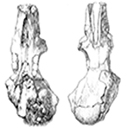
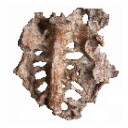
Pterosaurs from Coahuila
Early Oligocene Fishes from Alabama, USA
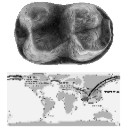
Oldest evening bat from the Early Eocene of France
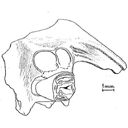
The digital endocast of Necrolemur antiquus
stapes trapped in artiodactyls bony labyrinth
Eocene (57) , Quercy Phosphorites (38) , Systematics (32) , Rodents (29) , Mammalia (27) , Rodentia (25) , Miocene (24)
Page 14 of 18, showing 20 record(s) out of 359 total
|
|
Analysis of changing diversity patterns in Cenozoic land mammal age faunas, South AmericaLarry G. Marshall and Richard L. CifelliPublished online: 3/30/90Keywords: Cenozoic; Chronofaunas; diversity; Equilibrium theory; Extinction; Land mammal faunas; Origination; South America Abstract Comparison of various measurements of taxonomic evolution using stratigraphic range data for orders, families and genera of land mammals indicates several means by which deficiencies of the South American fossil record (e.g., presence of hiatuses, unequal temporal and geographic representation of ages, unequal systematic treatment) may be normalized, thus permitting a less distorted appreciation of diversity pattern and trend. Initial radiation of native taxa resulted in a relative equilibrium by early Eocene time. Subsequent increases in absolute diversity were apparently induced by immigration at the family level and by environmental factors at the generic level. Miocene through Pleistocene phases of faunal stability, herein characterized as chronofaunas, are punctuated by rapid turnover events resulting from a complex of factors, including adaptive radiation of immigrant taxa into unoccupied eco-space; environmental and concomitant habitat change induced by orogenic events of the Andes; and biotic interactions between native and immigrant taxa, including competition and prey naivete. The first two factors account for major faunal transitions in the South American middle and late Tertiary; immigration-induced turnover may have been of greater importance in shaping the character of the fauna upon the Great American Interchange and the arrival of man in the Neotropics PV article infos Published in Vol. 19, Fasc. 4 (1990) |
|
|
|
The Quaternary avifauna of Crete, Greece.Peter D. WeesiePublished online: 9/1/88Keywords: Avifauna; Crete; Quaternary; Systematics Abstract Pleistocene bird fossils have been studied from nine localities on Crete. Part of this material was described earlier by the author (Weesie, 1982) and will not be treated here in extenso, the results will be incorporated. More than one third of the over 10,000 fossil bird bones available could be identified ; they were found to represent at least 65 bird species. The following species of the Pleistocene Cretan avifauna are new to the fauna of Crete : Branta ruficollis, Haliaeetus albicilla, Gyps melitensis, Aquila chrysaetos simurgh n. ssp., Ketupa zeylomensis, Aegolius funereus, Dendrocopos leucotos, Zoothera dauma, Turdus iliacus and Pyrrhula pyrrhula. The Pleistocene Cretan avifauna differs less from comparable mainland avifaunas than (fossil) avifaunas from oceanic islands do. Still, the Pleistocene Cretan avifauna has two qualities that are characteristic of island avifaunas : the almost complete absence of a group of birds (the Galliformes) and the presence of two endemic (sub)species : the giant eagle Aquila chrysaetos simurgh n. ssp. and the long-legged owl Athene cretensis (Weesie, 1982). The new subspecies is described in the present study. PV article infos Published in Vol. 18, Fasc. 1 (1988) |
|
|
|
Mammifères nouveaux de l'Ilerdien des Corbières et du Minervois (Bas-Languedoc, France)Bernard MarandatPublished online: 12/4/89Keywords: Bas-Languedoc; Early Eocene; France; Ilerdian; Mammals; New taxa Abstract Four new taxa (two genera, one subgenus, and four species) conceming the orders Condylarthra, Rodentia, Pantolesta, and an undetermined order from middle and middle/upper Ilerdian localities (lower Ypresian) of the Corbières and Minervois regions (Bas-Languedoc, Southem France) are presented in this short paper PV article infos Published in Vol. 19, Fasc. 3 (1989) |
|
|
|
Pronycticebus neglectus - an almost complete adapid primate specimen from the Geiseltal (GDR)Urs Thalmann, Hartmut Haubold and Robert D. MartinPublished online: 12/4/89Keywords: Adapiformes; Eocene; Paleoecology; PHYLOGENY; Pronycticebus neglectus Abstract In the course of the current revision of adapid primates from the Eocene Geiseltal, an almost complete specimen was found in the Geiseltal Museum collections. The fossil, the most complete adapid specimen so far discovered in Europe, has been determined as Pronycticebus neglectus n. sp. PV article infos Published in Vol. 19, Fasc. 3 (1989) |
|
|
|
Die Referenzfauna des Geiseltalium, MP levels 11 bis 13 (Mitteleozan, Lutetium)Hartmut HauboldPublished online: 12/4/89Keywords: Eocene; Geiseltal; Land mammal ages; Mammalian reference levels Abstract The Middle Eocene Fossillägerstätte of the Geiseltal lignite beds near Halle/S. (German Democratic Republic) is the reference locality of the European land mammal age Geiseltalian and of the Mammalian Paleogene reference levels MP 11 - MP 13. Due to this importance a reinvestigation is given of the lithostratigraphical development of the Geiseltal beds and of their vertebrate sites. The last are genetically related to the southwest border of the Geiseltal depression and the influx of carbonate-rich waters. The geographical distribution and stratigraphical position of the fossiliferous sites depends on subrosive and tectonically controlled distribution of coal seams. The geological factors and the known stratigraphical guide of some mammalian species suggest corrections of the age of some sites. Four of the alltogether five coal bearing phases contain the 35 sites with mammalian remains. By the distribution of the around 69 mammal species are characterized, with 5 faunal steps ranging from MP 11 to MP 14 or over the Geiseltalian up to the Lower Robiacian. Well distant are the faunas of MP 11 and MP 12. Beginning with MP 12 up to MP 13/14, the fossil record is very frequent by 27 sites. This evidence coincides somewhat more with the concept of land mammal ages compared to that of the punctual mammalian reference levels. PV article infos Published in Vol. 19, Fasc. 3 (1989) |
|
|
|
Equus caballus antunesi, nouvelle sous-espèce Quaternaire du PortugalJoao L. Cardoso and Véra EisenmannPublished online: 10/30/89Keywords: Equidae; Equus caballus; new subspecies; Perissodactyla; Portugal; Würm Abstract Equus caballus antunesi, nova subspecies, was a hypsodont, slender, and rather small horse (around 141cm at the withers), with narrow hooves and protocones longer on P3/-P4/ than on M1/-M2/. It does not fit in any of the different "types" of Pleistocene caballine horses previously recognized but may be related to the horse from the Acheulean of Solana del Zamborino. PV article infos Published in Vol. 19, Fasc. 2 (1989) |
|
|
|
Analysis of mammalian communities from the late Eocene and Oligocene of southern FranceSerge LegendrePublished online: 12/15/86Keywords: Late Eocene; Mammalian communities; Oligocene; Quercy; Southern France Abstract Valverde's cenogram method is used to analyse mammalian communities from the late Eocene to late Oligocene of southern France, mainly from the "Phosphorites du Quercy". Cenogram analysis involves plotting the size of each component species in a fauna on a semilog diagram in rank order, permitting fossil faunas to be compared with Recent ones. The configurations of Recent communities serve as models for establishing the general environmental characteristics of fossil mammalian faunas. This method of analysis applied to faunal sequence can reveal major and sudden ecological perturbations. The paleobiogeographical event (i.e. the mammalian immigration wave) at the Eocene-Oligocene Boundary in western Europe, known as the «Grande Coupure", is here shown to represent a drastic and sudden ecological change: late Eocene tropical environments in Europe deteriorated rapidly turning to subdesert or desert environments al the beginning of the Oligoccne. PV article infos Published in Vol. 16, Fasc. 4 (1986) |
|
|
|
Nouvelles espèces de Dendromus (Rongeurs,Muriodea) à Langebaanweg (Pliocène,Afrique du Sud) conséquences stratigraphiques et PaléoecologiquesChristiane DenysPublished online: 5/20/94Keywords: Dendromurinae; Paleoecology; Pliocene; Rodents; South Africa; Stratigraphy Abstract New Dendromus species (Rodentia, Muroídea) from Langebaanweg (Pliocene, South Africa). Stratigraphical and paleoecological consequences. PV article infos Published in Vol. 23, Fasc. 1-4 (1994) |
|
|
|
Pairomys et Ectropomys : la fin d'une ambiguïté ; mise au point sur les Oltinomyinae et Remyinae (Rodenia, Theridomyidae).Monique Vianey-Liaud, Norbert Schmidt-Kittler and Pablo Pelaez-CampomanesPublished online: 5/20/94Keywords: PHYLOGENY; taxonomy; Theridomyidae; Upper Eocene Abstract The description of new material of the Upper Eoœne of France, Southem Germany and Spain together with the restudy of the material described by Thaler (1966b) as Pairomys allows to confirm the validity of the genus Ectropomys up to know controversally discussed. As a consequence the subfamily Remyinae and Oltinomyinae can be defined precisely. The study of the dental characters shows that the Remyinae in fact belong to the Theridomyidae and represent a derived evolutionary unit within this family. The Oltinomyinae together with the Theridomyinae and Issiodoromyinae very probably form a monophyletic unit. PV article infos Published in Vol. 23, Fasc. 1-4 (1994) |
|
|
|
A survey of Cretaceous tribosphenic mammals from middle Asia (Uzbekistan, Kazakhstan and Tajikistan), of their geological setting, age and faunal environmentLev A. Nessov, Denise Sigogneau-Russell and Donald E. RussellPublished online: 5/20/94Keywords: Cretaceous; Environment; Middle Asia; Sharks; Tribosphenic mammals Abstract This paper is an English concentrate of various Russian publications by the senior author presenting the mammaIian taxa from the Cretaceous (Albian through Santonian) of the region termed Middle Asia by Soviet geographers. The diagnoses are the unmodified, literal translation of the original version, but are followed with short complementary remarks; most of the species are illuslrated anew with SEM photographs, others are by normal photography. The fossiliferous formations are cited and arguments for their dating are given. Finally, the main vertebrate groups accompanying mammaIs are listed and the environment and climate at the time of deposition are suggested. In conclusion, an hypothesis on the origin and high diversity of tribosphenic mammals on the Cretaceous coastal plains of southwest Asia is proposed. In appendix the taxon Khuduklestes bohlini novo gen. novo sp. is formally defined. PV article infos Published in Vol. 23, Fasc. 1-4 (1994) |
|
|
|
Les vertébres dévoniens de la Montagne Noire (Sud de la France) et leur apport à la phylogénie des pachyosteomorphes (Placodermes Arthrodires).Hervé Lelièvre, Raimund Feist, Daniel Goujet and Alain BlieckPublished online: 5/15/87Keywords: Devonian; Montagne Noire; New taxon; PHYLOGENY; Placoderms; Stratigraphy; Vertebrate Abstract Several different taxa of jawed vertebrates are reported for the first time from the Devonian of south-eastern Montagne Noire, France. Besides some undeterminable fragments of placoderm fishes from the Pragian and Lower Emsian, the material from the Upper Devonian is mainly represented by Melanosteus occitanus gen. and sp. nov. (Frasnian) and Thoralodus cabrieri LEHMAN, 1952 ("Famennian"). The good state of preservation of Melanosteus allows a detailed anatomical study leading to a phylogenetic analysis of the selenosteid pachyosteomorphs. PV article infos Published in Vol. 17, Fasc. 1 (1987) |
|
|
|
Insectivores pliocènes du Sud de la France (Languedoc-Roussillon) et du Nord-Est de l'Espagne.Jean-Yves CrochetPublished online: 10/31/86Keywords: Biostratigraphy; Insectivora; Languedoc; Pliocene; Spain; Systematics Abstract The first lists of Insectivores (Erinaceidae, Talpidae and Soricidae) from the Pliocene beds of Southern France and North-East Spain are given in this paper. The material from twelve localities is studied. These localities are geographically situated in Languedoc (Celleneuve, Vendargues, Nîmes, Sète, Balaruc 2 and Seynes), in Roussillon (Terrats, Serrats-d'en-Vacquer, Château d'eau and Mont-Hélène) and in North-East Spain (Layna, Medas Islands and Puebla de Valverde). These faunas correspond to the Early, Middle and Late Pliocene. 1 to 8 taxa are identified in these localities and 14 specific taxa are presently listed for this period in this area. Two new specific taxa are described as Galerix depereti nov. sp. from all the Early Pliocene localities in the North-Pyrenean area and as Desmanella gardiolensis nov. sp. from Balaruc 2. For this small mammals, two faunal assemblages are recognized. The first one is dated from the Early Pliocene (F 1, 2 and 3 zones in Aguilar et Michaux) and is characterized by Galerix depereti and rare and little diversified Soricids. The second one is Late Pliocene in age (zones G 2 and G 3). The fossils of the genus Talpa are relatively abundant and the Soricids are diversified and very abundant. The Middle Pliocene (zone G 1) is a transitional period. ln these faunas, most of the insectivore genera are known from the European Late Miocene beds (8 on 10). This fact demonstrates a relative continuity between the invectivore faunas from the Late Miocene to the Early Pliocene. In conclusion, somme paleoecological considerations are suggested. PV article infos Published in Vol. 16, Fasc. 3 (1986) |
|
|
|
THE ANIMALS Systematische ZoologieLeigh M. Van ValenPublished online: 4/15/86Keywords: Book review; Systematics Abstract Systematische Zoologie by A. REMANE, V. STORCH, and U. WELSCH. PV article infos Published in Vol. 16, Fasc. 1 (1986) |
|
|
|
Les mammifères post-glaciaires de Corse. Etude Archéozoologique.Jacques MichauxPublished online: 9/15/89Keywords: Book review Abstract Les mammifères post-glaciaires de Corse. Etude Archéozoologique, par Jean-Denis Vigne, 1988. XXVle suppléments à "Gallia Préhistoire". Editions du C.N.R.S., Paris, 337 p. FRF 300. ISSN 0072-0100, ISBN 2-222-04130-9. PV article infos Published in Vol. 19, Fasc. 1 (1989) |
|
|
|
Decouverte d'un nouveau Diacodexis (Artiocactyla, Mammalia) dans l'Eocène inférieur de Silveirinha, Portugal.Carmen Estravis and Donald E. RussellPublished online: 9/15/89Keywords: Artiodactyla; Eocene; Migration; Portugal; Silveirinha Abstract A new artiodactyl, Diacodexis antunesi n.sp., is described from the early Eocene of Silveirinha, Portugal. Comparisons are made with Diacodexis gazini GODINOT, 1978, D. varleti SUDRE et al., 1983, D. cf. varleti from Paris Basin sites, D. sp. from Dormaal and from localities in Spain and England, D. secans from North America and D. pakistanensis from Asia; affinities and evolutive tendencies are discussed. The presence of Diacodexis in the locality of Silveirinha confirms the very early Eocene age of the latter. As Diacodexis antunesi appears ta be more primitive than D. gazini from Rians (early Eocene of France), it lends corroboration to the interpretation (essentially based previously on condylarths) of the Silveirinha assemblage as the oldest Eocene fauna known in Europe and supports the hypothesis that early artiodactyls migrated from Europe to North America. PV article infos Published in Vol. 19, Fasc. 1 (1989) |
|
|
|
Palaecarcharodon orientalis (Sinzow) (Neoselachii : Cretoxyrhinidae), from the Paleocene of maryland, USA.Gerard R. CasePublished online: 9/15/89Keywords: Maryland; Palaeocarcharodon; Paleocene; Selachian; Systematics; U.S.A. Abstract Recent collecting of fossil vertebrate remains from the lowermost member of the Aquia Formation (Paleocene), has enabled me to report here for the very fIrst time, the earliest occurrence for the teeth of Palaeocarcharodon in the fossil record of the New World. PV article infos Published in Vol. 19, Fasc. 1 (1989) |
|
|
|
Contributions à l'étude du gisement Miocène supérieur de Montredon (Hérault). Les grands mammifères. 7 - Les proboscidiens DeinotheriidaeHeinz TobienPublished online: 11/15/88Keywords: allometry; Astaracian; Deinotherium; Montredon; Systematics; taphonomy; Vallesian Abstract Some complete tooth rows and about one hundred isolated teeth enabled the identification of the deinothere of the Vallesian site Montredon (Hérault) as Deinotherium giganteum KAUP 1829, mainly by comparisons with the likewise Vallesian sample of the type locality Eppelsheim (Rheinhessen, F.R.G.). PV article infos Published in Vol. 18, Ext (1988) |
|
|
|
Contributions à l'étude du gisement Miocène supérieur de Montredon (Hérault). Les grands mammifères. 3 - Les artiodactyles ruminantsLéonard Ginsburg and Herbert ThomasPublished online: 11/15/88Keywords: Artiodactyla; France; Montredon; Ruminentia; Upper Miocene Abstract The remains of Ruminantia are very rare at Montredon. No specific determination was possible. We have only one Micromeryx, one small cervid, one tragocere and one (?) gazella. The faunal spectrum is in good correlation with the general retreat of the cervids in the European upper Miocene, but in contrast it is not convenient for the bovids, which are in expansion at the same time. For them, we have to invoke the local ecological conditions. PV article infos Published in Vol. 18, Ext (1988) |
|
|
|
Contributions à l'étude du gisement Miocène supérieur de Montredon (Hérault). Les grands mammifères. 1 - Les LagomorphesNieves Lopez-MartinezPublished online: 11/15/88Keywords: Lagomorpha; Montredon; Prolagus; Upper Miocene Abstract A sample of 231 isolated teeth of lagomorphs from the upper Miocene of Montredon (southern France), identified as the ochotonid Prolagus crusafonii DOPEZ, 1975, is studied, comparing it with other populations of the same species as well as with its closest species P. oeningensis (KÖNIG, 1825). PV article infos Published in Vol. 18, Ext (1988) |
|
|
|
Une nouvelle espèce de Steneosaurus (Thalattosuchia, Teleosauridae) dans le Callovien du Poitou (France) et la systématique des Steneosaurus longirostres du Jurassique moyen d'Europe Occidentale.Patrick VignaudPublished online: 9/15/98Keywords: middle Jurassic; nov. sp.; phylogenetic relationships; skulls; Steneosaurus pictaviensis; Systematics; thalattosuchian crocodile Abstract The study of all the available skulls allows us to review the systematic relationships of the longirostrine Steneosaurus from the Middle Jurassic of western Europe. Up to now, Aalenian and Bajocian deposits have not yielded any significant Steneosaurus remain. In the Bathonian, the only valid longirostrine species, S. megistorhynchus, is known in the Britain-Normandy Basin, the Poitou and the Lorraine. In the Callovian, most of the longirostrine Steneosaurus remains can be attributed to the species S. leedsi. Nevertheless, some remains from the Middle Callovian of Poitou (France) show important differences with S. leedsi. A new Steneosaurus species, only known in Poitou, is created and named S. pictaviensis. The specific characters are carried by the skull (preorbital pit well marked, orbit and ptetygoid fossae shapes), by the mandible (symphysis shape) and by the teeth (ornamentation). S. megistorhynchus is probably situated near the stem of the Callovian species but remains from the Bathonian and Lower Callovian are very scarce and it is very difficult to precise the phylogenetic relationships between the longirostrine species of the Middle Jurassic. PV article infos Published in Vol. 27, Fasc. 1-2 (1998) |
|