Current issue


2025-12
48-2
<< prev. next >>

Print ISSN: 0031-0247
Online ISSN:
2274-0333
Frequency: biannual

Article Management

You must log in to submit or manage articles.

You do not have an account yet ? Sign up.

Most downloaded articles (last year)


Page 5 of 19, showing 20 record(s) out of 365 total

Dortokid turtle remains from the Upper Cretaceous of Cruzy (Hérault, southern France) and phylogenetic implications
Haiyan Tong, Eric Buffetaut Logo and Julien Claude Logo
Published online: 14/11/2022

Keywords: Cruzy; Dortoka vasconica; France; Late Cretaceous; Turtle

https://doi.org/10.18563/pv.45.2.e3

  Abstract

    An isolated right costal 1 from the Late Cretaceous Massecaps locality (Cruzy, Hérault, southern France) is assigned to Dortoka vasconica (Dortokidae). This find adds a new element to the Late Cretaceous turtle fauna of Cruzy and further supports the hypothesis that two distinct lineages of Dortokidae were present in Europe during the Late Cretaceous-Paleogene due to geographical isolation.


  PV article infos

Published in 45-2 (2022)

PDF
Types dentaires adaptatifs chez les sélaciens actuels et post-paléozoïques.
Henri Cappetta Logo
Published online: 01/09/1986

Keywords: Dental types; evolution; Fossil selachians; Recent selachians; Trophic adaptations

https://doi.org/10.18563/pv.16.2.57-76

  Abstract

    The dentition of selachians is characterized by an often very pronounced heterodonty involving a great morphological diversity. Despite this fact, the dentitions of selachians can be grouped in a rather reduced number of dental types corresponding to trophic adaptations: grasping, tearing, cutting, crushing, grinding and grasping-grinding type. The numerous exemples of convergence and parallelism that can be observed in fossil selachians and between Recent and fossil ones is the result of this reduced number of dental types. These dental specialisations allow to try a reconstruction of the way of life of fossil forms. 


  PV article infos

Published in Vol. 16, Fasc. 2 (1986)

PDF
Mammals and stratigraphy : the Paleocene of Europe
Donald E. Russell, Jean-Louis Hartenberger, Charles Pomerol, Sevket Sen Logo, Norbert Schmidt-Kittler and Monique Vianey-Liaud Logo
Published online: 01/12/1982

Keywords: Europe; Mammalia; Mammalian biochronology; Paléogène; Stratigraphy

https://doi.org/10.18563/pv.12.ext

  Abstract

    The mammalian faunas of the Paleogene of Europe and their localities are reviewed with comments on problems of European stratigraphy (epoch, stage and substage limits) and on the possibilities of faunal migrations. Radiometric dating is discussed. A stratigraphic scale for the Paleogene is presented, as well as a refined system of sequential faunal levels. 


  PV article infos

Published in Vol. 12, Ext (1982)

PDF
Rongeurs du Miocène inférieur et moyen en Languedoc. Leur apport pour les correlations Marin-Continental et la Stratigraphie.
Jean-Pierre Aguilar
Published online: 31/03/1980

Keywords: Languedoc; Miocene; Rodents; Southern France

https://doi.org/10.18563/pv.9.6.155-203

  Abstract

    The rodents (Cricetidae, Gliridae, Sciuridae) found in lacustrine, brackish marine and karstic sediments of Miocene age in Languedoc, assign the position of the different localities in the scale of "niveaux repères" used by mammalogists. Some detailed stratigraphical studies bring several correlations between this continental biochronological scale and the marine scale ; the most important results are the Aquitanian age of the "niveaux repères" of Coderet and Paulhiac, the Burdigalian age of Laugnac, Estrepouy, Vieux-Collonges, La Romieu and Sansan and the Langhian or Lower Serravallian age of La Grive M. The correlations between the Tethys and the Central Paratethys for the Lower Neogene profit also of these results, since the locality of Neudorf Spalte 1, 2 (Czechoslovakia) is shown to be younger than Sansan (France). The paleontological study has also several geological inferences for the Miocene of Languedoc ; with the calibration of this Miocene, we know quite precisely that the Lower Miocene is chiefly a time lacustrine sedimentation, and also that the marine Miocene sedimentation ends early in the Miocene Period, in Langhian or lower Serravallian times. 


  PV article infos

Published in Vol. 09, Fasc. 6 (1980)

PDF
Etude de la Variabilité chez Lophiodon lautricense Noulet
Jean Sudre
Published online: 28/02/1971

Keywords: Cheek teeth; Eocene; Lophiodon; variability

https://doi.org/10.18563/pv.4.3.67-95

  Abstract

    The biometric and morphologie variability of the cheek teeth in the end-of-the-phylum species Lophiodon lautricense Noulet studied in this note, reposes on the observation of about 800 teeth. These were revealed to be little variable in absolute dimensions. The considerable morphologie variability in the upper premolars permitted the problem of the molarization process to be taken up. An hypothesis concerning the order of eruption of the cheek teeth is formulated based on an examination of a large number of milk dentitions. In conclusion, it is suggested that reservations be held on the value of dental characters classically used in systematics for the group under consideration. 


  PV article infos

Published in Vol. 04, Fasc. 3 (1971)

PDF
Contribution à la classification des Pistes de Vertébrés du Trias : les types du Stormberg d'Afrique du Sud (2 ème Partie: le Stormberg supérieur - 1. Le biome de la zone B/1 ou niveau de Moyeni: ses biocénoses).
Paul Ellenberger
Published online: 01/12/1974

Keywords: biocenosis; Footprints; South Africa; Stormberg; Trias

https://doi.org/10.18563/pv.6.ext

  Abstract

    Les Pistes de Vertébrés du Stormberg Supérieur ("Trias terminal à Rhétien"), ou Quthingien

    Si les zones du Stormberg inférieur se sont révélées contenir de nombreuses traces, surtout dans les faciès dits "Molteno moyen et supérieur", représentant apparemment la base du Keuper, il est frappant de voir pratiquement l'ensemble de cette grosse faune "Molteno" disparaître avec la fin de cette période, que nous avons appelée le "Maphutsengien".

    Dès les premières zones du Stormberg supérieur, que nous nommons le"Quthingien" la zoocénose et la phytocénose, en même temps que les données d'ensemble manifestées par l'environnement, sont modifiées. Nous ne verrons plus guère de dépôts marécageux à flore riche et variée, parfois même luxuriante. Les fougères elles-mêmes ont disparu. Elles sont remplacées par de maigres plantes, aux feuilles très souvent filiformes qui paraissent témoigner d'un climat continental. Le sol est devenu de plus en plus rouge, avec des variations latérales beaucoup plus accusées. Les fleuves amenant des galets des monts du "Grand Sud" ont tari. La faune va en subir les conséquences. Certaines des espèces se révèleront sautillantes ou coureuses, pour un grand nombre plus légères et pour la quasi-totalité d'apparence carnivore ou entomophages, les phytophages devant se contenter d'un régime ingrat,difficile ou à tout le moins irrégulier,les dépôts le montrent.

    C'est dans ces conditions que s'inaugure notre Etage nouveau,quelque peu discordant sur les zones A/5, A/6 ou A/7 du Stormberg inférieur (Maphutsengien). Le Stormberg supérieur (ou Quthingien) commence avec le paléopaysage remarquable dit de Moyeni, que nous allons maintenant étudier, typologiquement, avec ses homologues du même âge. Quelques 38 types d'animaux tous nouveaux vont défiler à nos yeux lors de la zone de base de cet Etage, ou zone B/1.

    L'on nous avait proposé d'intituler ce Ile Tome de la série : "La grande Dalle de Moyeni et ses homologues. Paléo-spectacles, scènes et paysages animaux au Lesotho à l'approche du Trias finissant". Nous avons préféré garder le sous-titre plus haut, peut-être plus prosaïque.

    Un llle Tome est en préparation : "Les développements ultérieurs et terminaux de la faune du Gondwana".


  PV article infos

Published in Vol. 6, Ext (1974)

PDF
Observations sur l'anatomie crânienne du genre Palaeotherium (Perissodactyla, Mammalia): mise en évidence d'un nouveau sous-genre, Franzenitherium
Jean-Albert Remy
Published online: 01/12/1992

Keywords: Palaeotherium; Paléogène; Perissodactyla; skull anatomy; Systematics

https://doi.org/10.18563/pv.21.3-4.203-224

  Abstract

    The skull remains referred to the genus Palaeotherium are recorded and described. Biometrical tests are made to elucidate intrageneric allometric relationships and to allow comparisons with various other perissodactyls. Apart from the well known shortness of post canine diastems and deepness of the narial opening, the genus is characterized by a great lengthening of the splanchnocranium, owing to a spreading of the post-orbital facial region, by a reduced area of the eye-socket and by the prevalence of the temporal muscle with regard to the masseter; this original shape of the masticatory apparatus needs to be related to the morphology of the jugal teeth and particularly to their  asymmetrical semi-hypsodonty.
        These animals, whose running ability was evidently poor, appear to have been adapted to rather closed environments, feeding on relatively soft vegetable matter; olfactory sense was likely to play a leading part in interindividual and environmental relationships. Such evolutionary trends might explain the disappearance of most of them, as clirnatic conditions deteriorated at the end of the Eocene, before the "Grande Coupure" which affected mammalian faunas at that time.
          Although the present paper is not directly concemed with phylogenetics, it invalidates the supposed ancestor-descendant relationship between P. castrense and P. magnum, and it suggests a possible emergence of the P. medium lineage from a P. siderolithicum stock. Moreover, the structure of the post-orbital facial area allows the  erection of a new sub-genus, Franzenitherium, for the  species lautricense and duvali.


  PV article infos

Published in Vol. 21, Fasc. 3-4 (1992)

PDF
Observations sur des remaniements structuraux post-mortem dans des dents de mammifères fossiles provenant des phosphorites du Quercy
Jean-Albert Remy
Published online: 01/12/1974

Keywords: Quercy Phosphorites; rearrangements; Teeth

https://doi.org/10.18563/pv.6.3-4.163-176

  Abstract

    Deux types de remaniements post mortem me paraissent caractéristiques de l'état de conservation des dents de mammifères fossiles dans les Phosphorites du Quercy :

    1) Des destructions localisées d'origine biologique, sous forme de galeries de morphologie très variable creusées dans la dentine et le cément, et impliquant sans doute la participation de différents types de micro-organismes. Ces altérations se sont développées peu de temps après la mort, avant la fossilísation proprement dite et se sont rapidement arrêtées après l'enfouissement dans le sédiment phosphaté.

    2) Des perturbations dans les structures de la dentine liées aux variations locales de minéralisation, provoquées par une imprégnation diffuse des zones les moins calcifiées par divers minéraux et probablement surtout de l`apatite. 


  PV article infos

Published in Vol. 06, Fasc. 3-4 (1975)

PDF
Contributions à l'étude du gisement Miocène supérieur de Montredon (Hérault). Les grands mammifères. 2 - les carnivores
Gérard de Beaumont
Published online: 15/11/1988

Keywords: anatomy; Carnivora; France; Montredon; Systematics; Upper Miocene

https://doi.org/10.18563/pv.18.ext.15-42

  Abstract

    The locality of Montredon has provided 8 species of camivores, often little documented, that are discribed and depicted. All the remains are fragmentary and generally badly preserved which lowers very much the possible precision of the taxonomic study; this one has however allowed the creation of a new subspecies. The most richlypdocumented forms are an ursid (Indarctos) and a felid (Machairodus). Issuing often from a westem Europe evolution, the carnivores are well inserted between those of the better known faunas of the "Classical Pontian" and of the lower Vallesian and this situation fits also well with their stratigraphic level, that cannot however be more accurately defined with them alone.


  PV article infos

Published in Vol. 18, Ext (1988)

PDF
A new species of hippopotamine (Cetartiodactyla, Hippopotamidae) from the late Miocene Baynunah Formation, Abu Dhabi, United Arab Emirates
Jean-Renaud Boisserie Logo, Mathieu Schuster Logo, Mark J. Beech Logo, Andrew Hill and Faysal Bibi Logo
Published online: 07/04/2017

Keywords: Arab Peninsula; Hippopotamidae; Hippopotamine event; Systematics

https://doi.org/10.18563/pv.41.1.e2

  Abstract

    The discovery of new hippopotamid material from the late Miocene Baynunah Formation (Abu Dhabi, United Arab Emirates) has prompted the revision of the existing material of this as yet unnamed fossil taxon. The Baynunah hippopotamid appears to be distinct from all other contemporary and later species in having a relatively more elongate symphysis, a feature similar to the earlier (and more primitive) Kenyapotamus. Yet, the Baynunah hippopotamid presents a dentition typical of the Hippopotaminae. It is therefore a distinct species attributed to the later subfamily, described and named in this contribution. This species provides further evidence for a ca. 8 Ma evolutionary event (termed “Hippopotamine Event”) that initiated the spread and ecological significance of the Hippopotaminae into wet habitats across Africa and Eurasia. The morphological affinities of the new species from Abu Dhabi suggest that the Arabian Peninsula was not a dispersal route from Africa toward southern Asia for the Hippopotamidae at ca. 7.5 Ma to 6.5 Ma. 


  PV article infos

Published in Vol 41-1 (2018)

PDF
S.I. Data
New datation of the Tafna Basin (Algeria): A combination between biochronological and magnetostratigraphical data
Salamet Mahboubi Logo, Mouloud Benammi Logo and Jean-Jacques Jaeger Logo
Published online: 11/03/2015

Keywords: correlations; Late Miocene; North Africa; Rodentia

https://doi.org/10.18563/pv.39.1.e1

  Abstract

    The Tafna Basin corresponds to the lowlands, which are located in front of Tessala and Traras ranges, below the Tlemcen mountains, Algeria. This basin displays a complete sedimentary cycle dominated by lagoonal-fluvial and marine deposits. The continental formations located at the base of these deposits are mainly composed of alternating sandstones and clays. An early late Miocene age has been previously attributed to them, based on direct correlations with marine deposits. Search for micromammal fossils led to the discovery of three different rodent species from a single level of the Djebel Guetaf section, located at the bottom of these deposits. The rodent assemblage indicates a late Miocene age. Combined magnetostratigraphical and biostratigraphical investigations were carried out to provide a more accurate age control of these continental deposits. Sixty-four oriented rock samples were collected for a magnetostratigraphic study along a 92 meters thick section including the fossiliferous layer. Rock magnetic investigations indicate the presence of both high and low coercivity minerals. Specimens subjected to progressive thermal demagnetization procedures show that the samples exhibit a high temperature magnetization component and display a normal polarity. Based on biostratigraphic constraints, the Guetaf section is correlated with Chron C4An, indicating an age ranging from
    9.1 to 8.7 Myr.


  PV article infos

Published in Vol.39-1 (2015)

PDF
A new species of Propalaeotherium (Palaeotheriidae, Perissodactyla, Mammalia) from the Middle Eocene locality of Aumelas (Hérault, France).
Jean-Albert Remy, Gabriel Krasovec Logo and Bernard Marandat
Published online: 24/05/2016

Keywords: Eocene; new species; Palaeotheriidae; Propalaeotherium

https://doi.org/10.18563/pv.40.2.e1

  Abstract

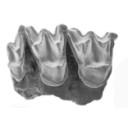
    A new Propalaeotherium species, clearly distinct from the genus Eurohippus, is described. It is characterized by having a similar size as P. voigti from the German Geiseltal localities (MP 11 to MP 13 reference-level), but differs in several features suggesting a slighty more derived morphology. It presents indeed less brachyodont crowns with less prominent and less elevated cingula, slightly larger relative surface of premolars, and a more marked metaconid splitting on cheek teeth. This new species is unknown from other European localities except the nearby Saint-Martin de Londres locality which has been considered older than the MP 13 level. 


  PV article infos

Published in Vol.40-2 (2016)

PDF
S.I. Data
Reflections on some Russian eotheriodonts (Reptilia, Synapsida, Therapsida)
Denise Sigogneau-Russell and P. K. Tchudinov
Published online: 28/02/1972

Keywords: Reptilia; Russia; Synapsida; Therapsida

https://doi.org/10.18563/pv.5.3.79-109

  Abstract

    As a result of the enrichment of eotheriodont material by one of us (P.K.T.), these specimens (essentially Biarmosuchur and Eotitanosuchur) are reexamined and refigured. A reevaluation of their particularities supports the distinction of two families, for which new diagnoses are proposed. This leads us to discuss the affinities of these families, with respect to the sphenacodonts on one hand, and to the South African primitive theriodonts on the other (gorgonopsids and ictidorhinids). This study contains inherent paleogeographic consequences which are considered in conclusion. 


  PV article infos

Published in Vol. 05, Fasc. 3 (1972)

PDF
Données nouvelles sur le genre Stehlinia (Vespertilionoidea, Chiroptera) du Paléocène d'Europe
Bernard Sigé
Published online: 01/12/1974

Keywords: Chiroptera; Palaeocene; Vespertilionoidea

https://doi.org/10.18563/pv.6.3-4.253-272

  Abstract

    Cet article présente une étude détaillée du genre Stehlinia, un chiroptère du Paléogène d'Europe, basé sur un matériel abondant issu notamment du gisement d'Escamps (Quercy). L'analyse révèle que Stehlinia possède un mélange de caractères primitifs (comme une denture tribosphénique complète et des prémaxillaires soudés) et évolués (notamment dans le squelette post-crânien), le rapprochant des vespertilionoïdes actuels, en particulier des Kerivoula


  PV article infos

Published in Vol. 06, Fasc. 3-4 (1975)

PDF
Rongeurs nouveaux de l'Oligocène Moyen d'Espagne.
Louis Thaler
Published online: 15/09/1969

Keywords: Cricetidae; Oligocene; Pseudocricetodon; Rodents; Theridomys

https://doi.org/10.18563/pv.2.5.191-207

  Abstract

    Description of four new rodents from a recently discovered locality at Montalban. Theridomys crusafonti nov. sp. is considered as the ancestry of T. Iembronicus. Theridomys varian: nov. sp. includes «Theridomys» morphotypes and «Blainvilllimys» morphotypes; it could be ancestral to B. blainvillei. Pseudoltinomys nanus nov. sp. represents a new lineage paralleling in evolution that of P. gaillardi (which is equally found at Montalban). Pseudocricetodon montalbanensis nov. gen., nov. sp. designates a lineage of very small Cricetidae accompanying Eucricetodon. With these well defined new species and six others present in the locality, Montalban appears as the best faunal reference point within the biochronologic zone of La Sauvetat.
    As an annex, discussion of two rodent specimens from the classic localíty of Tárrega, close in age to that of Montalban. 


  PV article infos

Published in Vol. 02, Fasc. 5 (1969)

PDF
New Squalicorax species (Neoselachii: Lamniformes) from the Lower Maastrichtian of Ganntour phosphate deposit, Morocco
Henri Cappetta Logo, Sylvain Adnet Logo, Driss Akkrim and Mohammed Amalik
Published online: 05/12/2014

Keywords: Anacoracidae; Chondrichthyes; Maastrichtian; Morocco; New taxa

https://doi.org/10.18563/pv.38.2.e3

  Abstract

    Two new Squalicorax species, S. benguerirensis nov. sp. and S. microserratus nov. sp. are described from the Lower Maastrichtian of the Benguérir phosphate open mine, Ganntour deposit, Morocco. The species S. benguerirensis nov. sp. was classically assigned to S. yangaensis since Arambourg (1952) and has been also recognized in coeval deposits from eastern USA to Mid-East. The species S. microserratus nov. sp. correspond to the lateral teeth of S. kaupi as reported by Arambourg (1952) and which is now referred in fact to S. bassanii. The comparison of these two new species with other Anacoracids, known in Moroccan or elsewhere, allows highlighting the great taxonomic and ecological diversities of this family during the Cretaceous.


  PV article infos

Published in Vol.38-2 (2014)

PDF
New Late Miocene plecotine bats (Chiroptera, Vespertilionidae: Plecotini) from Gritsev, Ukraine
Valentina V. Rosina, Sergei Kruskop Logo and Yuriy Semenov Logo
Published online: 07/03/2019

Keywords: Barbastella; bats; late Neogene; Mammalia; Plecotus

https://doi.org/10.18563/pv.42.1.e2

  Abstract

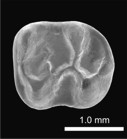
    The Late Miocene site of Gritsev (MN 9, Ukraine) has yielded a very rich bat fauna, the remains of which are well preserved. Compared to other Neogene bat assemblages of Europe, the Gritsev bat community is unique in preserving plecotine bats, which are rare from Neogene sites. Some peculiar and new bat species, including a large plecotin Otonycteris, already were described from the Gritsev mammal site. Here we report new records of small plecotin bats from Gritsev, including a new taxon, Barbastella maxima nov. sp. This is the earliest reliable fossil record of this genus and it differs from more recent species of Barbastella in being considerably larger. The evolutionary patterns in the odontology within the tribe Plecotini, supported by biostratigraphical distribution of fossil records of Plecotus are discussed. The morphological peculiarities of the new fossils of plecotine bats from Gritsev are discussed in connection with its possible taxonomical affinity. 


  PV article infos

Published in Vol 42-1 (2019)

PDF
Ostéologie de la tête de Richardus excavans Lavocat,1988
René Lavocat
Published online: 30/10/1989

Keywords: Africa; anatomy; Bathyergidae; Miocene; Rodents

https://doi.org/10.18563/pv.19.2.73-80

  Abstract

    Remarkable association of a small infraorbital foramen, similar to that in recent Heterocephalus, and of a strong muscular print on the dorsal anterior part of the zygomatic plate and on the premaxillary. Several anatomical structures to be compared with those of Heterocephalus suggest relationships with this genus. Richardus supports the ancestrality of the hystricomorph character in the bathyergids 


  PV article infos

Published in Vol. 19, Fasc. 2 (1989)

PDF
Nouvelles données sur les Ichnites de dinosaures d'El Bayadh (Crétacé Inférieur, Algérie)
Mostefa Bessedik Logo, Cheikh Mammeri, Lahcene Belkebir Logo, Mahammed Mahboubi, Mohamed Adaci Logo, Hakim Hebib Logo, Mustapha Bensalah Logo, Bouhameur Mansour Logo and Mohammed E. H. Mansouri Logo
Published online: 16/12/2008

Keywords: Algeria; Brezina; El Bayadh; Ichnites; Lower Cretaceous; Sauropoids; Theropoids

https://doi.org/10.18563/pv.36.1-4.7-35

  Abstract

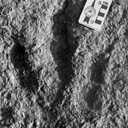
    Evidence of 350 Lower Cretaceous Dinosaur footprints is pointed out in El Bayadh area. Their preliminary study allow to distinguish four trackway assemblages which reveal vertebrate bipedal presence forms of tri-and tetradactylous Dinosauroïds (Assemblages 1-3) and quadrupidal Sauropoïd (Assemblage 4).

    The analysis of their footprint biometric features will attribute the quadrupidal Sauropoïd form to Brontopodus ichnogenus which is weIl known in the Jurassic and Cretaceous periods. In retum and despite their age, the dinosauroïd forms were approached, temporarily, to Grallator and Eubrontes types.

    The occurrence of the dinosaur traces (Theropoïd and Sauropoïd) constitutes, in the Lower Cretaceous, an important first step of the knowlege of the marshy Reptilian fauna which takes over, from the begining of the Secondary Era, a wide paleogeographie area on the Southem Tethyan margin. 


  PV article infos

Published in Vol. 36, Fasc. 1-4 (2008)

PDF
Comparative bone histology of rhabdodontid dinosaurs
Edina Prondvai Logo
Published online: 17/11/2014

Keywords: bone histology-based ontogeny; Mochlodon; Rhabdodon; skeletal maturation; Zalmoxes

https://doi.org/10.18563/pv.38.2.e1

  Abstract

    A comparative bone histological study of the three known genera of the endemic European ornithopod dinosaur family, Rhabdodontidae, is presented here in an ontogenetic context. Investigated specimens were assigned to different ontogenetic stages based exclusively on the histological indicators of osteologic maturation during diametrical bone growth; an entirely size-independent method as opposed to most previous studies. Qualitative comparison of bone histology of corresponding ontogenetic stages and elements among the three valid rhabdodontid genera, Mochlodon, Zalmoxes, and Rhabdodon, revealed some consistent patterns. Genus specific histological differences within Rhabdodontidae are most expressed between Rhabdodon and the Mochlodon-Zalmoxes clade. These indicate a prolonged phase of fast growth and a less constrained cyclicity in the growth dynamics of Rhabdodon, as opposed to the slower and more regulated growth strategy reflected in the bones of Mochlodon and Zalmoxes. These genus specific differences are consistent with the phylogenetic interrelation of the genera and are most probably related to the pronounced differences in body size. However, when compared to other ornithopods, most detected histological features in rhabdodontids do not seem to reliably reflect either phylogenetic relations or body size. A notable common feature of all rhabdodontid genera irrespective of body size is the ontogenetically early onset of cyclical growth and secondary remodelling; a pattern that more resembles the condition found in derived ornithopods than that described in more basal taxa which are closer relatives of rhabdodontids. The recognition of taxon-specific histological patterns as well as patterns indicative of ecological and thereby functional traits clearly requires more accurate, preferably quantitative evaluations.   


  PV article infos

Published in Vol.38-2 (2014)

PDF

Page 5 of 19, showing 20 record(s) out of 365 total