Print ISSN: 0031-0247
Online ISSN: 2274-0333
Frequency: biannual
Notidanodon tooth (Neoselachii: Hexanchiformes) in the Late Jurassic of New Zealand
Additions to the elasmobranch fauna from the upper Cretaceous of New Jersey (middle Maastrichtian, Navesink Formation)
stratigraphy and biochronology of Oligo-Miocene of Kazakhstan
Fossil snakes, Palaeocene, Itaborai, Brazil, Part I
Abstract book of the 18th Conference of the EAVP
Eocene (57) , Quercy Phosphorites (38) , Systematics (32) , Rodents (29) , Mammalia (27)

|
Sur le remplissage des "poches à phosphorite" d'Aubrelong (commune de Bach, Lot)Bernard GèzeKeywords: Aubrelong; Quercy PhosphoritesAbstract Abstract not available Article infos Published in Vol. 06, Fasc. 1-2 (1974) |
|
|

|
The Quaternary avifauna of Crete, Greece.Peter D. WeesieKeywords: Avifauna; Crete; Quaternary; SystematicsAbstract Pleistocene bird fossils have been studied from nine localities on Crete. Part of this material was described earlier by the author (Weesie, 1982) and will not be treated here in extenso, the results will be incorporated. More than one third of the over 10,000 fossil bird bones available could be identified ; they were found to represent at least 65 bird species. The following species of the Pleistocene Cretan avifauna are new to the fauna of Crete : Branta ruficollis, Haliaeetus albicilla, Gyps melitensis, Aquila chrysaetos simurgh n. ssp., Ketupa zeylomensis, Aegolius funereus, Dendrocopos leucotos, Zoothera dauma, Turdus iliacus and Pyrrhula pyrrhula. The Pleistocene Cretan avifauna differs less from comparable mainland avifaunas than (fossil) avifaunas from oceanic islands do. Still, the Pleistocene Cretan avifauna has two qualities that are characteristic of island avifaunas : the almost complete absence of a group of birds (the Galliformes) and the presence of two endemic (sub)species : the giant eagle Aquila chrysaetos simurgh n. ssp. and the long-legged owl Athene cretensis (Weesie, 1982). The new subspecies is described in the present study. Article infos Published in Vol. 18, Fasc. 1 (1988) |
|
|

|
Les sélaciens du Miocène de la région de MontpellierHenri CappettaKeywords: Ichtyofauna; Miocene; Montpellierdoi: 10.18563/pv.3.ext.1-139 Abstract The utilization of screen-washing and attack by dilute acetic acid has permitted the collecting, in the Miocene of the department of Hérault (France), of a very rich ichthyofauna. This fauna is presently comprised of about 60 studied species, of which 11 are new, and represents, in the present state of knowledge, the most varied Miocene selachian fauna described in the world. Article infos Published in Vol. 3, Ext (1970) |
|
|

|
Une nouvelle espèce d'Hipparion du Miocène terminal d'Espagne.Miquel Crusafont i Pairó and P. SondaarKeywords: Hipparion; Late Miocene; Spain; Villafranchiandoi: 10.18563/pv.4.2.59-66 Abstract The recently discovered, very rich, Pliocene locality of Layna (Soria, Spain), has already yielded 30 species of mammals. Hipparion fissurae, described here is more dolichopodic than other Hipparion. It is related to Hipparion crusafonti from Villaroya (Villafranchian), but more slender between other characters. Article infos Published in Vol. 04, Fasc. 2 (1971) |
|
|

|
Un crane de Chalicothere (Mammalia, Perissodactyla) du Miocène supérieur de Macédoine (Grèce) : remarque sur la phylogénie des ChalicotheiinaeLouis de Bonis, Geneviève Bouvrain, George D. Koufos and Pascal TassyKeywords: Chalicotheriidae; Cladistics; Greece; Miocene; Perissodactyla; PHYLOGENYAbstract The discovery in the Turolian (Late Miocene) of Dytiko 3 (Macedonia, Greece) of a complete skull with mandibles and cervical vertebrae, atlas and epistropheus, is a very important contribution to the knowledge of the subfarnily Chalicotheríinae. After the description, the comparison with other specimens of Miocene chalicotheres permits the revival of the generic name Macrotherium with a new species M. macedonicum. This genus is mainly characterized by a short snout and an inflated cerebral skull. It coexists during the Miocene with Chalicotherium. A cladistic analysis leads to conclusion that the species which has been described from the Early Middle Miocene of Rusinga must be identified as the type-species of a new genus: Butleria. Article infos Published in Vol. 24, Fasc. 1-2 (1995) |
|
|

|
An unusual cranial fossil of the giant lower Pliocene shrew (Paranourosorex gigas Rzebik-Kowalska, 1975) from Podlesice, PolandDavid L. Harrison and Barbara Rzebik-KowalskaKeywords: Mammalia; Paranousorex gigas; Pliocene; Poland; Ruscinian; SoricidaeAbstract A well-preserved anterior cranium of Paranourosorex gigas RZEBIK-KOWALSKA, 1975 from Podlesice, Poland, provides additional knowledge of this rare shrew, including almost complete maxillary dentition. The systematic status of this species as a relative of recent Anourosorex MILNE- Article infos Published in Vol. 21, Fasc. 1-2 (1991) |
|
|
|
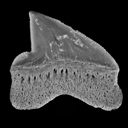
New Squalicorax species (Neoselachii: Lamniformes) from the Lower Maastrichtian of Ganntour phosphate deposit, MoroccoHenri Cappetta, Sylvain Adnet, Driss Akkrim and Mohammed AmalikKeywords: Anacoracidae; Chondrichthyes; Maastrichtian; Morocco; New taxadoi: 10.18563/pv.38.2.e3 Abstract Two new Squalicorax species, S. benguerirensis nov. sp. and S. microserratus nov. sp. are described from the Lower Maastrichtian of the Benguérir phosphate open mine, Ganntour deposit, Morocco. The species S. benguerirensis nov. sp. was classically assigned to S. yangaensis since Arambourg (1952) and has been also recognized in coeval deposits from eastern USA to Mid-East. The species S. microserratus nov. sp. correspond to the lateral teeth of S. kaupi as reported by Arambourg (1952) and which is now referred in fact to S. bassanii. The comparison of these two new species with other Anacoracids, known in Moroccan or elsewhere, allows highlighting the great taxonomic and ecological diversities of this family during the Cretaceous. Article infos Published in Vol.38-2 (2014) |
|
|
|
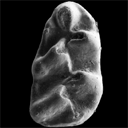
New datation of the Tafna Basin (Algeria): A combination between biochronological and magnetostratigraphical dataSalamet Mahboubi, Mouloud Benammi and Jean-Jacques JaegerKeywords: correlations; Late Miocene; North Africa; Rodentiadoi: 10.18563/pv.39.1.e1 Abstract The Tafna Basin corresponds to the lowlands, which are located in front of Tessala and Traras ranges, below the Tlemcen mountains, Algeria. This basin displays a complete sedimentary cycle dominated by lagoonal-fluvial and marine deposits. The continental formations located at the base of these deposits are mainly composed of alternating sandstones and clays. An early late Miocene age has been previously attributed to them, based on direct correlations with marine deposits. Search for micromammal fossils led to the discovery of three different rodent species from a single level of the Djebel Guetaf section, located at the bottom of these deposits. The rodent assemblage indicates a late Miocene age. Combined magnetostratigraphical and biostratigraphical investigations were carried out to provide a more accurate age control of these continental deposits. Sixty-four oriented rock samples were collected for a magnetostratigraphic study along a 92 meters thick section including the fossiliferous layer. Rock magnetic investigations indicate the presence of both high and low coercivity minerals. Specimens subjected to progressive thermal demagnetization procedures show that the samples exhibit a high temperature magnetization component and display a normal polarity. Based on biostratigraphic constraints, the Guetaf section is correlated with Chron C4An, indicating an age ranging from Article infos Published in Vol.39-1 (2015) |
|
|

|
Revision der Equoidea aus den Eozänen Braunkohlen des Geiseltales bel Halle (DDR).Jens L. Franzen and Hartmut HauboldKeywords: Eocene; Europe; Mammalia; Perissodactyla; Stratigraphy; taxonomyAbstract The dentitions as well as one complete and several partial skeletons of Equoids from the Eocene lignite beds of the Geiseltal locality are revised. Instead of 13 species distinguished up to now 3 chronoclines with 5 species and 3 separate species are recognized (text. fig. 1). Propalaeotherium hassiacum HAUPT, 1925 is evolving into Propalaeotherium isselanum (CUVIER, 1824) between the levels of the « obere Unterkohle ›› and the « untere Mittelkohle ›› of the Geiseltal section. Propalaeotherium argentonicum GERVAIS, 1849 is shown to be present in the « untere Unterkohle ››, whereas Lophiotherium pygmaeum (DEPERET,1901) occurs in the « obere Mittelkohle ›› and in the « oberes Hauptmittel ››. Plagiolophus cartieri STEHLIN, 1904 appears during the transition from the « Mittelkohle ›› into the « Oberkohle ›› as the earliest true Palaeothere. Therefore the « Oberkohle ›› is already regarded as Upper Eocene. This is corroborated by the occurrence of a phyletic descendant of Propalaeatherium parvulum (Propalaeotherium n.sp.) in the middle and upper "Oberkohle " because this species appears otherwise for the first time at the mammal level of Lissieu. On the other hand Propachynolophus gaudryz (LEMOINE, 1878) described by Matthes (1977) from the « untere Unterkohle ›› turns out te be in fact a Phenacodont. Thus the decisive argument for classifying the « untere Unterkohle ›› as Lower Eocene has to be dropped. Biostratigraphically the « Unterkohle ›› and the «Basishauptrnittel ›› correspond with the lower Middle Eocene (mammal level of Messel), whereas the «unteres Hauptmittel ›› and the « untere Mittelkohle ›› are equivalent to the middle part of the middle Eocene (mammal level of lssel), and the « obere Mittelkohle ›› together with the « oberes Hauptmittel ›› coincide with the upper Middle Eocene (mammal level of Bouxwiller). Article infos Published in Vol. 16, Fasc. 1 (1986) |
|
|

|
Les mammifères post-glaciaires de Corse. Etude Archéozoologique.Jacques MichauxKeywords: Book reviewAbstract Les mammifères post-glaciaires de Corse. Etude Archéozoologique, par Jean-Denis Vigne, 1988. XXVle suppléments à "Gallia Préhistoire". Editions du C.N.R.S., Paris, 337 p. FRF 300. ISSN 0072-0100, ISBN 2-222-04130-9. Article infos Published in Vol. 19, Fasc. 1 (1989) |
|
|

|
Nouvelles faunes de rongeurs de la fin Miocène inférieur en Provence. Implications géologiques et Paléogéographiques.Dominique LalaïKeywords: Biogeographic province; Biozonation; Correlation; Miocene; Palaeogeography; RodentiaAbstract Rodents from the new localities of Châteauredon (Alpes-de-Haute-Provence) and La Denise (Bouches-du-Rhône) show more similarities with the rodents known from the Czecho-Slovak locality of Franzenbad than with the species found in contemporaneous Lower Miocene faunas located westward of the present Rhône Valley. This is another data wich support the existance of several biogeographical provinces in Southern France during Lower Miocene. The correlations which have been settled down allow new datations of several formations in Provence and give new information on the Aquitanian and Burdigalian paleogeographies of this region. More precise stratigraphical allocations are given to some other localities of Central Europe. Article infos Published in Vol. 16, Fasc. 2 (1986) |
|
|

|
Contributions à l'étude des micromammifères du gisement Miocène supérieur de Montredon (Hérault). 2- Les rongeursJean-Pierre AguilarKeywords: Hérault; Late Miocene; Micromammals; Montredon; RodentsAbstract The recent excavation of the Upper Miocene locality of Montredon (Hérault) provides a rich material of Mammals. The present study deals with rodents. The new quarry is 10 meters above the classical Depéret's Quarry. No differences have been noticed between the rodent populations coming grom these two sites. The description of two new species : Hispanomys mediterraneus and Muscardinus heintzi is given and the dormouse Eliomys is recorded there for the first time. The new zonation of the Miocene given by Aguilar (1982) and the previously established correlations between marine and continental chronological scales give Tortonien age (estimated between 9 and 10 M.Y. old) to the site of Montredon, which belongs to the Mammal zone D 2. Article infos Published in Vol. 12, Fasc. 3 (1982) |
|
|

|
Premier signalement du Monachinae (Phocidae, Mammalia) dans le Sahélien (Miocène supérieur) d'Oran (Algérie)Christian de MuizonKeywords: Algeria; Late Miocene; PhocidaeAbstract Messiphoca mauretanica nov. gen., nov. sp. représente le premier Phocidae fossile recensé en Afrique du Nord. Provenant du gisement sahélien (Miocène supérieur) de Raz-el-Aïn (Algérie), il est connu par quelques os du membre antérieur (humérus, radius, ulna), quelques vertèbres dorsales et un crâne très fragmentaire. La description de cette forme nouvelle amène à considérer Messiphoca mauretanica comme un Monachinae archaïque proche de l'origine du groupe Pliophoca - Monachus. L'incidence de cette interprétation d'un Phocidae «pré-Messinien ›› sur la crise de salinité du Messinien est aussi envisagée. Article infos Published in Vol. 11, Fasc. 5 (1981) |
|
|

|
Contributions à l'étude du gisement miocène supérieur de Montredon (Hérault). Les grands mammifères. Avant propos.Bernard SigéKeywords: Editorial; Mammalia; Montredon; Upper MioceneAbstract Le Mémoire Extraordinaire 1988 de PALAEOVERTEBRATA regroupe dix articles consacrés au gisement à mammifères du Miocène supérieur de Montredon (Hérault), connu et classique depuis la fin du siècle dernier, et auquel est lié le nom du savant paléontologue lyonnais Charles Depéret. View editorial Published in Vol. 18, Ext (1988) |
|
|
|
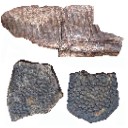
Terrestrial vertebrate paleocommunities from the Cerro del Pueblo Formation (Late Cretaceous; Late Campanian) at Las Aguilas, Coahuila, MexicoHéctor E. Rivera-Sylva, Eberhard Frey, Wolfgang . Stinnesbeck, Natalia Amezcua Torres and Diana Flores HuertaKeywords: Campanian; Coahuila; dinosaurs; Mexico.; Vertebratesdoi: 10.18563/pv.42.2.e1 Abstract The Las Águilas site near Porvenir de Jalpa, Coahuila, Mexico, is extremely rich in tetrapod remains comprising both bones and trackways of several dinosaur taxa of late Campanian age. Within a 50 m thick section we identified at least nine layers with dinosaur bone assemblages. In one of these the dinosaur bones are associated with remnants of eusuchian crocodilians, turtles, plesiosaurs, pterosaurs, tyrannosaurids, dromaeosaurids, parksosaurid, hadrosaurids, ceratopsids, and ankylosaurs. This layer is also rich in coprolites of turtles, crocodilians and likely theropods, thus providing evidence for the wealth of Late Cretaceous vertebrate life in the area. Article infos Published in Vol 42-2 (2019) |
|
|

|
Première occurrence d'un mégachiroptère ptéropodidé dans le Miocène moyen d'Europe (Gisement de Lo Fournas-II, Pyrénées-Orientales, France).Jean-Pierre Aguilar, Marc Calvet, Jean-Yves Crochet, Serge Legendre, Jacques Michaux and Bernard SigéKeywords: Europe; First occurence; Megachiroptera; Middle Miocene; TeethAbstract A lot of isolated teeth of a pteropodid fruit bat has been recently found within an assemblage of micromammals recovered from a karstic fissure filling named Lo Fournas-Il near the locality of Baixas (Pyrénées-Orientales, France). The fauna is Middle Miocene Serravallian age. The fossil fruit bat appears morphologically close to Rousettus; its size is that of a recent medium-sized fruit bat. While the fruit bats are very poorly known as fossils, this discovery shows that one of their recent types of dentitions was perfectly established by Middle Miocene times, and supports the presumed long geologic story of the suborder. One of the major invasions of the Old World fruit bats, supposed originated from SE Asia, reached up to Europe. A suborder unit is added to the miocene fauna of this continent. Article infos Published in Vol. 16, Fasc. 3 (1986) |
|
|

|
Les Amphibiens et les reptiles du Pliocène supérieur de Balaruc II (Herault, France)Salvador BailonKeywords: amphibians; Europe; France; Pliocene; ReptilesAbstract The late Pliocene site (MN 16) of Balaruc II (Hérault, France) has provided remains of the following amphibians and reptiles: Chelotriton pliocenicus nov. sp. and Triturus marmoratus (Salamandridae), cf. Rana (Ranidae), cf. Blanus (Amphisbaenidae), cf. Agama (Agamidae), Gekkonidae indet., Lacerta s.l. (Lacertidae), "Ophisaurus" sp. (Anguidae), Michauxophis occitanus (Aniliidae), Erycinae indet. (Boidae), Elaphe cf. E. longissima and Malpolon sp. (Colubridae), cf. Naja (Elapidae) and Vipera sp. (Viperidae). The salamandrid Chelotriton pliocenicus and the aniliid Michauxophis occitanus constitute, up to now, the only records of these groups in the European Pliocene. The fauna is indicative of a warm, dry Article infos Published in Vol. 19, Fasc. 1 (1989) |
|
|

|
Etude du crâne de Pachynolophus lavocati n. sp. (Perissodactyla, Palaeotheriidae) des Phosphorites du QuercyJean-Albert RemyKeywords: Perissodactyla; Quercy Phosphoritesdoi: 10.18563/pv.5.2.45-78 Abstract The genus Pachynolophus, one of the poorest known of the Palaeotheriidae, includes the brachyodont forms with reduced and non-molariform premolars and with upper molars lacking a mesostyle. Quantitative characters (divers surface indications and elongation of the teeth), while demonstrating a close relationship to Hyracotherium, permit a better differentiation of the genus, confirm its specific splitting, and permit the distinction of three lineages. The skull from Memerlein is taken as the type of a new species, P. Iavocati, of which the dentition is extremely characterized by its lophiodonty, the strong reduction of the premolars and the reduction of the cingula. This characterization testifies to a late age which extends the existence of the genus quite near to the Eocene-Oligocene limit. Compared with the only two skulls known of related species (Hyracotheríum vulpiceps and Pachynolophus Iivinierensis), that from Memerlein is distinguished by progressive characters affecting diferent regions but most particularly the braincase; it is not possible, however, to isolate within this evolution the part which leads to a systematic differentiation. Modernization is translated by a considerable increase in size of the braincase, principally in the frontal region, a development of the facial region with anterior displacement of the dental series and a greater specialization of the masticatory apparatus. This evolution parallels the history of the Equidae of the North American early Tertiary, but certain particularities, the form of the alisphenoid, the presence of an anterior frontal foramen, and the structure of the paroccipital apophysis, testifies to the independance of the European forms. Article infos Published in Vol. 05, Fasc. 2 (1972) |
|
|

|
Avant-proposMarc Godinot and Phillip D. GingerichKeywords: D.E.RussellAbstract Le présent volume est l'aboutissement d'un projet né il y a presque cinq ans. En décembre 1991, l'un d'entre nous (MG) prenait des contacts en vue de proposer un symposium sur les mammifères fossiles, dédié à D.E. Russell, dans le programme du 4e Congrès de la European Society for Evolutionary Biology. Ce congrès, baptisé "Evolution 93", devait se tenir à Montpellier en août 1993. Son Comité d'Organisation, animé par F. Catzeflis, recherchait des organisateurs de symposiums. L'idée fut acceptée avec enthousiasme par le second d'entre nous (PDG), et le titre de notre Symposium fut précisé: " Palaeobiology and Evolution of Early Cenozoic Mammals - A Symposium in Honor of D.E. Russell". Le projet fut formellement accepté par le Comité d'Organisation en avril 1992. Article infos Published in Vol. 25, Fasc. 2-4 (1996) |
|
|

|
Les mammifères Montiens de Hainin (Paléocène moyen de Belgique) Part II : Les CondylarthresJean Sudre and Donald E. RussellKeywords: Belgium; Condylarths; Louisininae; Oxyclaeninae; PaleoceneAbstract The Condylarths from Hainin (Hainault, Belgium) show no affinity at the generic level to those known in other Paleocene localities of Europe and North America ; they are described as new forms : Monshyus praevius n. gen., n. sp. and Prolatidens waudruae n. gen., n. sp. Monshyus praevius, discovered in only one of the levels in the excavation at Hainin, is similar to the genera Microhyus TEILHARD and Louisina RUSSELL ; with them it is included in the subfamily Louisininae (Hyopsodontidae). With respect to Microhyus and Louisina, Monshyus is distinguished by the precociously modern aspect of its upper molars, the only teeth that are referable. Prolatidens waudruae, known only by lower molars, was found in several levels in the pit at Hainin. It is an arctocyonid presenting possible relationships to the North American form Oxyprimus galadrielae ; it therefore has been provisionally attributed to the subfamily Oxyclaeninae. If this attribution is confirmed, this species will constitute the first and only representative of the group in Europe. Article infos Published in Vol. 12, Fasc. 6 (1982) |
|