|
Les serpents des phosphorites du Quercy
Published online: 20/12/1974
Keywords:
Grande Coupure; Quercy Phosphorites; Serpents
https://doi.org/10.18563/pv.6.3-4.273-303
Abstract
A short review of the genera and species of snakes from the Quercy's phosphorites described by former authors is followed by the study of specimens recently collected. Most of these latter specimens belong to the Aniliidae, Boidae, Colubridae and to the Scolecophidia; the precise systematic position of some of them is not defined yet. The following genera and species are described: Eonilius europae nov. gen. and nov. sp., Platyspondylia lepta nov. gen. and nov. sp., Coluber cadurci nov. sp. and Dunnophis cadurcensis nov. sp.; a species described by de Rochebrune (Palaeopython filholi) is revised. One of the most important conclusions of this study is that the Colubridae appear as early as the Upper Eocene. The stratigraphic repartition of these snakes shows that the rich Upper Eocene fauna is followed by the very reduced fauna of the Lower Oligocene; then the oligocene «Grande Coupure» corresponds to a very important faunistic renewal. The fauna remains poor and little diversified during the beginning of the Middle Oligocene after which there is a new faunistic explosion.
PV article infos
Published in Vol. 06, Fasc. 3-4 (1975)
|
PDF
|
|
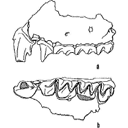
Les Chiroptères du Miocène inférieur de Bouzigues. 1- Etude systématique.
Published online: 17/04/1968
Keywords:
bats
https://doi.org/10.18563/pv.1.3.65-133
Abstract
In recent years, the techniques of chemical preparing have permitted a rich paleontologic material to be obtained from the phosporitic sediment of Bouzigues (Hérault, France). The fauna of this locality is comprised of quite varied microvertebrates, amphibians, reptiles, birds, mammals. Twenty five species of the latter, belonging to seven orders, are today known from the site. Among them, the numerous rodents have allowed L. Thaler to chronologically situate this fauna in the Zone of Laugnac (<< late Aquitanian ›> of some authors).
The chiropterans are, with the rodents, the best represented of the locality's mammals. Three families comprise the bat fauna, with nearly complete dominance by one of them (Hippoxideridae) over the two others (Megadermatidae and Vespertílionidae)
Six forms are described, of which three are new species and one a new sub-genus.
Megaderma braillomi n. sp., an animal of rather large size, shows like the Miocene megaderms several evolved dental characters, translating the adaptation of these animals to a partially carnivorous regime. The Bouzigues species seems, however, to represent a particular lineage.
Hipposideros (Brachipposideros n. subgen.) dechaseauxi n. sp. and Hípposideros (Brachipposideros) cf. collongenris Depéret, small sized forms, belong to a group rather well represented in the late Oligocene and early Miocene of Europe, and not distinguished until now within the genus Hipposideros.
Hipposideros (Pseudorhinolophus) bouziguensis n. sp., is the most abundant mammal in the locality and, occuring at the Oligocene-Miocene limit, the last representative known of the subgenus Pseudorhínolophus, common in Europe from the middle Eocene.
However, beyond Neogene and Quaternary times, certain among the numerous living species of Hipposideros are close to Pseudorhinolophus and others to Brachipposíderos. 'This fact would in the future justify a global revision of the genus, on the basis of comparative anatomy of the squeleton and of the teeth.
The bat fauna of Bouzigues is completed by two small Vespertilionidae, rare forms, Myoris sp. I and sp. II.
PV article infos
Published in Vol. 01, Fasc. 3 (1968)
|
PDF
|

|
Essai de filiation des campagnols et des lemmings (Arvicolidae, Rodentia) en zone holartique d'après la morphologie dentaire.
Published online: 01/10/1980
Keywords:
Arvicolidae; Dental morphology; Paleogeography; phyletic relationships
https://doi.org/10.18563/pv.9.ext.375-382
Abstract
The Arvicolid evolution results in an increase of the dental structure complexity. The M3/ differenciation seems to characterise the tribe subdivisions, that of M/1 being variable from one to another lineage. The phyletic relationships of fossil lineages are discussed from a paleogeographic point of view.
PV article infos
Published in Vol. 9, Ext (1980)
|
PDF
|

|
Contribution à la classification des pistes de vertébrés du Trias: Les types du Stormberg d'Afrique du Sud (1).
Published online: 16/10/1972
Keywords:
Footprints; South Africa; Stormberg; Trias
https://doi.org/10.18563/pv.5.ext
Abstract
Cet article explore les pistes fossiles de vertébrés du Stormberg (Trias, Afrique du Sud), révélant une diversité ichnologique inédite avec 64 ichnotypes classés en tridactyles, tétradactyles et pentadactyles. Les découvertes incluent des reptiles bipèdes comme Qemetrisauropus et Prototrisauropus, dont les empreintes suggèrent des adaptations évolutives vers la bipédie, ainsi que des pentadactyles géants comme Pentasauropus, annonçant les futurs sauropodes. L’étude combine ichnologie et restes osseux pour reconstituer des écosystèmes triasiques riches, où flore (fougères, conifères) et faune témoignent d’une transition écologique majeure avant l’essor des dinosaures.
PV article infos
Published in Vol. 5, Ext (1972)
|
PDF
|
|
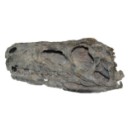
Difficulties with the origin of dinosaurs: a comment on the current debate
Published online: 01/07/2020
Keywords:
dinosaur anatomy; dinosaur evolution; Ornithoscelida; palaeobiogeography; Triassic Period
https://doi.org/10.18563/pv.43.1.e3
Abstract
The origin and early evolutionary history of the dinosaurs is a topic that has recently gone through a period of renewed interest and academic debate. For 130 years, one way of classifying the various dinosaur subgroups persisted as the accepted model, with increasing levels of research in the past quarter-century also providing evidence for the hypothesis that dinosaur origination occurred in the Southern Hemisphere, particularly in South America. It is, after all, from within the Late Triassic strata of countries like Argentina and Brazil that we get some of the very best early dinosaur specimens; many of these specimens are the earliest known representatives of some of the major dinosaur subgroups, such as the theropods and sauropodomorphs. However, some recent analyses have brought about a shift in terms of what is currently accepted and what is now disputed regarding the origin of dinosaurs – the Southern Hemisphere origination hypothesis was questioned (although this was based upon observations and not with quantitative analysis techniques), as has the shape of the dinosaur tree. Responses to the new hypothesis were numerous; many further supported a Southern Hemisphere point of origin. Whilst the interrelationships between the major dinosaur clades remains to be resolved, the current data does seem to comprehensively answer the question of where the dinosaurs first originated. However, it is arguable whether the current data that is being used in such palaeobiogeographical analyses is sufficient to provide an answer to the question of where specifically the dinosaur clade first appeared. This short communication urges a degree of caution about the current consensus and what steps may need to be taken to ensure that more meaningful results are produced in the future.
PV article infos
Published in Vol 43-1 (2020)
|
PDF
|

|
Nouveau Dichobunidae (Artiodactyla, Mammalia) du gisement d'Aumelas (Hérault) d'âge Lutétien terminal
Published online: 01/10/1980
Keywords:
Aumelas; Dichobunidae; Hérault; Middle Eocene; Upper Lutetian
https://doi.org/10.18563/pv.9.ext.197-211
Abstract
The faunal list of the mammals collected at the locality of Aumelas (Hérault, France) is revised. For the first
time this Middle Eocene locality is precisely settled in the european chronological scale of "niveaux repères", between the levels of Bouxwiller and Egerkingen, in Uppermost Lutetian.
A new Dichobunid from the site is described : Aumelasia gabineaudi n. g., n. sp. This new genus has primitive characters. and it may be in the descent of the Lower Eocene Protodichobune.
PV article infos
Published in Vol. 9, Ext (1980)
|
PDF
|

|
Pantolestidae nouveaux (Mammalia, Insectivora) de l'Eocène moyen de Bouxwiller (Alsace).
Published online: 31/03/1970
Keywords:
Bouxwiller; Insectivora; Mammalia; Middle Eocene; Pantolestidae
https://doi.org/10.18563/pv.3.3.63-82
Abstract
The Pantolestidae from the middle eocene of Bouxwiller are the subject of a detailed study. Buxolestes hammeli (n. g., n. sp.) is not closely related to any other European or North American form described until now; it presents, however, some characters in common with Pantolestes, a form of the same age from North America. A parallel evolution from a common ancestral form could explain this ressemblance.
Another form (gen. and sp. indet.) accompanies Buxolertes hammeli in the Bouxwiller fauna.
PV article infos
Published in Vol. 03, Fasc. 3 (1970)
|
PDF
|

|
Les nouvelles faunes de rongeurs proches de la limite mio-pliocène en Roussillon. Implications biostratigraphiques et biogéographiques
Published online: 29/04/1991
Keywords:
Arvicolidae; Cricetidae; Gliridae; Miocene; Muridae; Pliocene; Rodents; Southern France
https://doi.org/10.18563/pv.20.4.147-174
Abstract
Three new fossiliferous localities, two of karstic origin, Castelnou 3 and Font Estramar, respectively Late Upper Miocene and Lower Pliocene, and one of lacustrine origin, Thuir, Lower Pliocene, add data about the transition between Miocene and Pliocene faunas of rodents in southern France. An unexpected association of taxa was present in the late Upper Miocene, including between others, Myocricetodon, Hispanomys, Ruscinomys, Cricetus barrierei, Promimomys and a new species of Stephanomys, S. dubari nov. sp. Myocricetodon is still known in the Lower Pliocene. It is shown that the large field-mice known since the Late Upper Miocene belong to two different lineages, on one side, A. jeanteti, on the other side, A. gudrunae followed by A. gorafensis. Biochronological and biogeographical implications are discussed.
PV article infos
Published in Vol. 20, Fasc. 4 (1991)
|
PDF
|

|
Additions of the Geiseltal mammalian faunas, Middle Eocene: Didelphidae, Nyctitheriidae, Myrmecophagidae.
Published online: 04/12/1989
Keywords:
Edentata; Geiseltalian; German Democratic Republic; Lipotyphla; Marsupialia; MP 11-13
https://doi.org/10.18563/pv.19.3.95-114
Abstract
New and hitherto unpublished mammals from the stratigraphical levels Unterkohle, Untere Mittelkohle and Obere Mittelkohle of the Geiseltal near Halle, GDR, are described (= biochronological levels MP 11-13, Geiseltalian sensu Franzen & Haubold 1986a, b). The marsupial taxa Amphiperatherium aff. maximum (MP 12), A. goethei (MP 12), and Peratherium aff. monspeliense (MP 12 and 13) are recorded for the first time. A lectotype for Amphiperatherium giselense is designated, and the alleged primate Microtarsioides voigzi is assigned to Marsupialia, incertae sedis. A new insectivore species, Saturninia ceciliensis n. sp., is described (MP 13). The anteater Eurotamandua joresi is recorded for the first time outside its type locality, Grube Messel, FRG (MP 11). The present humerus and ulna display the autapomorphic features of the myrmecophagids.
PV article infos
Published in Vol. 19, Fasc. 3 (1989)
|
PDF
|

|
Evolution des Aplodontidae Oligocènes Européens
Published online: 01/10/1979
Keywords:
Aplodontidae; Europe; Oligocene
https://doi.org/10.18563/pv.9.2.33-82
Abstract
Until now Aplodontidae of the European Oligocene have been documented by four species only. The phylogenetic relations remained obscure. as the distribution of only one species has been known in some detail. New material made it possible to define the stratigraphic range of two of the already existing species (Plesispermophilus angustidens, Sciurodon cadurcense) and to follow their development during the Oligocene beginning with the event of the « Grande Coupure ››. Sciurodon remained nearly without change until the end of the Middle Oligocene. Plesispermophilus angustidens split into two distinct phyletic lines, one of which (P. macrodon n. sp.) reaching considerable size, is represented till the beginning of the Upper Oligocene (Pech de Fraysse, Gaimersheim). The other line leads to Plesispermophilus ernii (basal Upper Oligocene of Burgmagerbein 1. terminal Upper Oligocene of Coderet). Besides the already known forms a new small-sized species (P. atavus n. sp.) is described, which by its primitive features closely resembles the genus Plesispermophilus. Two other small-sized species already known from the Upper Oligocene (? P. argoviensis) and Lower Miocene (? P. descedens) seem to be closely related to the new species. It cannot be decided whether they are descendents of this line or have developed independently, because of their poor fossil record.
Comparison of the evolutionary modalities in the different phylogenetic lines reveals general trends. the most striking of which is the complication of the tooth pattern by the development of additional crests. In the lower molars the cusps diminuate in size and are more and more transformed into ridges. ln addition new connection between the crests appear. in the upper molars, the « selenodont » shape of the teeth becomes more and more dominant, and in the two main evolutionary lines of Plesispermophilus the metaconulus becomes duplicated. A further evolutionary trend is the size increase of the premolars compared to the molars, which is even more pronounced in the Miocene Aplodontidae.
Phylogenetic relations between the primitive Plesispermophilus and certain « prociurines ›› of Northern America as well as between Plesispermophilus (P. angustidens) and more progressive forms of the Upper Oligocene (P. ernii, P. macrodon n. sp.) can be documented. In this light, the taxonomic distinction between Prosciurinae (bunodont) and Allomyinae (selenodont) sensu Rensberger 1976 can be shown to be artificial, because it separates forms from each other, which are evidently closely related. Consequently the separation into two subfamilies has been abolished.
PV article infos
Published in Vol. 09, Fasc. 2 (1979)
|
PDF
|

|
Mammifères nouveaux de l'Ilerdien des Corbières et du Minervois (Bas-Languedoc, France)
Published online: 04/12/1989
Keywords:
Bas-Languedoc; Early Eocene; France; Ilerdian; Mammals; New taxa
https://doi.org/10.18563/pv.19.3.161-167
Abstract
Four new taxa (two genera, one subgenus, and four species) conceming the orders Condylarthra, Rodentia, Pantolesta, and an undetermined order from middle and middle/upper Ilerdian localities (lower Ypresian) of the Corbières and Minervois regions (Bas-Languedoc, Southem France) are presented in this short paper
PV article infos
Published in Vol. 19, Fasc. 3 (1989)
|
PDF
|

|
Les pantolestidés (Mammalia, Pantolesta) de l'Eocène inférieur de Prémontré (Aisne, France).
Published online: 30/07/2001
Keywords:
France; Mammals; Pantolestids; Ypresian
https://doi.org/10.18563/pv.30.1-2.11-35
Abstract
Study of pantolestid mammals from the late Ypresian locality of Prémontré (reference level MP 10) allows the recognition of three genera: Palaeosinopa. Pantolestes and Premontrelestes n. gen. Pantolestes, up to now only recorded from North America, is represented by P. sabatieri n. sp. Premontrelestes n. gen., represented by the type species P. duchaussoisi n. sp., is compared with Pantolestes and Buxolestes. The latter, known from middle Eocene sites in Europe, has not been recognized at Prémontré. Two other taxa, the first of which is close to Pantolestes and the second of Premontrelestes n. gen. are left in open nomenclature.
PV article infos
Published in Vol. 30, Fasc. 1-2 (2001)
|
PDF
|

|
Etude des dents jugales inférieures des Equus (Mammalia, Perissodactyla) actuels et fossiles
Published online: 15/04/1981
Keywords:
Cheek teeth; Equus; Mammals
https://doi.org/10.18563/pv.10.3-4.127-226
Abstract
The comparative morphology and biometry of the lower cheek teeth of modern Equus are studied on approximately 300 mandibles belonging to the 10 usually recognised species : Equus grevyi, E. burchelli, E. quagga, E. zebra, E. africanus, E. asinus, E. hemionus, E. klang, E. przewalskii, E. caballus. The studied parameters comprise : occlusal length and width, postflexid length and index ; shape of the double knot (metaconid + metastylid + lingual groove) ; depth of the vestibular groove on the molars ; frequency of the pli caballinid, protostylid and other enamel plications or islets ; frequency of the dP/l.
The same methods of study are applied to a number of North American, Eurasian and African species. For the sake of comparison, some Hemphillian equids were observed (Dinohippus interpolatus, Dinohippus leidyanus, Astrohippus ansae, Phiohippus mexicanus) but most of the discussed material belongs to Pliocene or Pleistocene species of Equus : the « stenonine ›› E. stenonis, E. simplicidens, E. sanmeniensis and E. teilhardi; the « caballine ›› E. scotti, E. lambei, E. Iaurentius, E. mosbachensis, E. germanicus, E. gallicus, E. taubachensis and the Liakhov horse. The relationships of other species, in particular the North American E. calobatus, E. occidentalis, E. cf mexicanus are not clear for the moment. ln Africa, the Plio-Pleistocene species from Koobi Fora (Kenya) show some stenonine and perhaps asinine affinities. The relationships of E. numidicus and E. tabeti are uncertain but these species are probably related to the East African ones. E. mauritanicus is most certainly related to the Quagga group.
The biometrical data are gathered in 32 tables ; 4 photographie plates and 19 figures illustrate the next. The whole is a complement of the previously published studies of the skulls, upper cheek teeth, incisors and metapodials of modern and fossil Equus.
PV article infos
Published in Vol. 10, Fasc. 3-4 (1981)
|
PDF
|

|
Norselaspis glacialis n.g., n.sp, et les relations phylogénétiques entre les kiaeraspidiens (Osteostraci) du dévonien inférieur du Spitsberg.
Published online: 15/06/1981
Keywords:
Devonian; kiaeraspids; Osteostraci; Spitsbergen
https://doi.org/10.18563/pv.11.2-3.19-131
Abstract
The anatomy of Norselaspis glacialis n.g., n.sp., a primitive kiaeraspidian from the Lower Devonian of Spitsbergen, is described on the basis of spécimens studied by grinding sections or prepared with dilute formic acid. This study yielded some new anatomical details, including the presence of a canal prolonging posteromedially the canal alloted to the facial nerve by Stensiö. This posterior prolongation of the « facial canal ›› into the posterolateral part of the labyrinth cavity is consistent with the hypothesis put forward by Allis, Lindström, Jefferies and Whiting, that this canal housed the glossopharyngeus nerve. Furthermore, in N. glacialis, the foramen usually referred to as the foramen for the œsophagus opens posteriorly into a cavity in the postbranchial wall, referred to here as the intramural cavity, and which is interpreted as having housed the heart. Consequently, the œsophagus probably accompanied the dorsal aorta through the aortic canal. Finally, the foramen generally interpreted as having transmitted the ventral afferent arterial trunk is here considered as having housed the hepatic vein, which emptied into the venous sinus of the heart. The ventral afferent arterial trunk may thus have passed through the former «œsophageal ›› foramen.
The problem of the position of the dorsal nerves in the Osteostraci is discussed, and it is suggested that the three foremost nerve canals opening into the oralobranchial cavity housed the maxillary ramus of the trigeminus, the facial nerve and the glossopharyngeus nerve respectively. The mandibular ramus of the trigeminus must have accompanied one of the two foremost nerves, but for the moment it is impossible to decide which.
The problem of the nature of the interbranchial crests of the Osteostraci is briefly discussed. Comparison with the branchial apparatus of the Petromyzontida does not support the hypothesis that the interbranchial crests are part of the branchial arches, incorporated into the endoskeletal shield. A different hypothesis is proposed, that the branchial skeleton of the Osteostraci was situated entirely inside the oralobranchial cavity, and was attached to the endoskeletal shield only by the ventromedial processes. The grooves classically allotted to the efferent branchial arteries would thus have housed extrabranchial arteries, branching off from the dorsal aorta, and irrigating the ventral branchial musculature.
A phylogeny and a classification of the kiaeraspidians are proposed. The evolution of this monophyletic group is characterized by, e.g., reduction of cornual processes, shortening of the abdominal division of the shield, subdivision of the lateral fields, and enlargement of the supraoral fossae.
The phylogenetic position of the kiaeraspidians within the Osteostraci remains uncertain. Their sister-group may be either the benneviaspidiens or the thyestidians, or Thyestes alone (in which case they would have to be included within the thyestidians).
PV article infos
Published in Vol. 11, Fasc. 2-3 (1981)
|
PDF
|

|
Etude paléoneurologique comparative de Parabos Cordieri (De Christol), un bovidae (Mammalia, Artiodactyla) du Pliocène d'Europe Occidentale.
Published online: 31/03/1982
Keywords:
Bovidae; endocranial cast; Europe; Pliocene
https://doi.org/10.18563/pv.12.2.57-74
Abstract
A skull of Parabos cordieri, undamaged by fossilisation, allows us to make an endocranial cast, which is compared to those of Bos taurus, Boselaphus tragocamelus and Hippotragus equinus. These are studied by general form (shape, volume, « rolling-up›› and inclination), and by detailed morphology (gyri and sulci patterns, rete mirabile, importance of rhinencephalon and cerebellum).
A preliminary study is made in order to recognize convolution topography, gyri, sulci, and the various encephalic regions as clearly on an endocranial cast as on a bare encephalon; an intermediate stage is the study of an encephalon covered with «soft» meninges.
The comparative study reveals great similarity between the endocranial cast of Parabos cordieri and that of Boselaphus tragocamelus, both belonging to the tribe Boselaphini. On the other hand, a marked differences separates the cast of Parabos cordieri from that of Bos taurus, representing the tribe Bovini to which Parabos cordieri had been referred. The endocranial cast of Hippotragus equinus, which had long been considered the descendant of Parabos cordieri, is also quite different from that of Parabos.
PV article infos
Published in Vol. 12, Fasc. 2 (1982)
|
PDF
|

|
Rongeurs du Miocène supérieur de Chorora, Ethiopie: Murinae, Dendromurinae et conclusions.
Published online: 30/07/2001
Keywords:
Ethiopia; Late Miocene; Muridae; Rodentia
https://doi.org/10.18563/pv.30.1-2.89-109
Abstract
The subfamilies Murinae and "Dendromurinae" both include 4 species at Chorora. Among the former, while Preacomys nov. gen. seems to be a forerunner of Acomys, the affinities of the remaining, poorly known taxa, are more difficult to evaluate. The bulk of the fauna, remarkably, consists of Dendromurines. Their similarities with those of Ngorora tends to pull the site back in time, but the large size and diversity of Murines fit better an age more recent than the very beginning of the Late Miocene.
PV article infos
Published in Vol. 30, Fasc. 1-2 (2001)
|
PDF
|
|
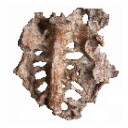
New remains of the giant bird Gargantuavis philoinos from the Late Cretaceous of Provence (south-eastern France)
Published online: 27/08/2015
Keywords:
Aves; Gargantuavis; Late Cretaceous; Pelvis; South-eastern France
https://doi.org/10.18563/pv.39.2.e3
Abstract
Two incomplete pelves of the giant bird Gargantuavis philoinos are described from Late Cretaceous deposits at Fox-Amphoux (Var, south-eastern France). They consist of synsacra with attached parts of the ilia. One of them has undergone considerable dorsoventral compression, which makes it very similar in appearance to the holotype pelvis of Gargantuavis philoinos from Campagne-sur-Aude (Aude, southern France). The second specimen has suffered some lateral distortion but is uncrushed dorsoventrally. Because of this, its avians characters (including an arched synsacrum and widespread pneumatisation) are especially clear. These new specimens confirm the avian nature of Gargantuavis and reveal new details about its pelvic anatomy, but provide little new evidence about its systematic position within Aves. The geographical distribution and general rarity of Gargantuavis are discussed.
PV article infos
Published in Vol.39-2 (2015)
|
PDF
|

|
Analyse d'ouvrage: “J.J. THOMASON (Ed.): Functional morphology invertebrate paleontology (1995)”
Published online: 18/03/1996
Keywords:
Book review; Functional morphology
https://doi.org/10.18563/pv.25.1.54-55
Abstract
Functional morphology invertebrate paleontology, édité par Jeffrey J. THOMASON, 1995. Cambridge University Press, xi + 277 p. ISBN 0-521-44095-5, f. 45,00 ($ 69,95).
La morphologie fonctionnelle appliquée aux fossiles demeure un sujet à la fois passionnant et important. Passionnant, car elle s'adresse à des êtres disparus, aux combinaisons de caractères parfois inattendues et sans contrepartie chez les formes actuelles. Sujet important, car il faut, au delà de la constatation classique de l'adéquation de la forme des organes à leur fonction, expliquer l'origine des structures par évolution. L'évolution ou descendance avec modification, implique que les êtres vivants sont reliés les uns aux autres et qu'i! est possible de tenter à l'aide d'un raisonnement par inférence, la caractérisation des ancêtres en fonction des traits des formes auxquelles ils ont donné naissance. Mais il faut ajouter que par sa fonction, la structure relie immédiatement l'animal à son milieu puisqu'elle assure un rôle biologique.
PV article infos
Published in Vol. 25, Fasc. 1 (1996)
|
PDF
|

|
The skull of Arsinoitherium (Mammalia, Embrithopoda) and the higher order interrelationships of ungulates
Published online: 17/12/1992
Keywords:
Arsinoitherium; PHYLOGENY; Skull; Ungulate
https://doi.org/10.18563/pv.22.1.1-43
Abstract
Detailed anatomical description of arsinoithere cranial remains from the Lower Oligocene, Fayum Depression, Egypt, provides the basic data for a systematic investigation. All cranial and some postcranial features are assessed from a phylogenetic standpoint. Several soft tissue characters are then added to a cladistic analysis based on 54 derived ungulate morphological characters. The resulting phylogenetic hypothesis implies that perissodactyls, sirenians, proboscideans and arsinoitheres constitute a monophyletic unit (5 synapomorphies). However, increasing the tree length by 3 steps reveals a closer association between hyraxes and perissodactyls. Nevertheless, 13 synapomorphies link proboscideans, sirenians and arsinoitheres to the exclusion of all other ungulates. Form of the sphenopalatine and ethmoid foramina, recurved posttympanic process, absence of a fenestra rotundum in the petrosal, vestigial paroccipital process of the exoccipital and the highly unusual absence of a hypoglossal foramen in the skull, imply a robust sister-group relationship between arsinoitheres and proboscideans. In this analysis artiodactyls share only one derived character with all other ungulates studied. Monophyly of Ungulata, including Artiodactyla, is therefore only weakly supported. It is argued that pedal anatomy of hyraxes is non-homologous with that of Tethytheria. Arsinoitherium should now be classified within Tethytheria, sharing a sister-group relationship with Proboscidea. Hyraxes are excluded, thus refuting the concept of Paenungulata. However, monophyly of the wider concept, Pantomesaxonia, containing hyraxes, perissodactyls, sirenians, proboscideans and now, arsinoitheres, is supported by this study.
PV article infos
Published in Vol. 22, Fasc. 1 (1992)
|
PDF
|

|
Die Ohr-Region der Paulchoffatiidae (Multituberculata, Ober-Jura).
Published online: 15/11/1988
Keywords:
Multituberculata; Ober-Jura; Paulchoffatiidae; Petrosum; Portugal
https://doi.org/10.18563/pv.18.3.155-185
Abstract
The petrosal of the Paulchoffatiidae HAHN, 1969 is described and compared with that of younger multituberculates and of other Mesozoic mammals. The "Morrison petrosal", described by Prothero (1983), is also discussed; it probably belongs to the multituberculates. The reconstruction of the ventral side of the Paulchoffatiinae-skull, given by Hahn in 1987, is completed by addition of the otic and the occipital region.
PV article infos
Published in Vol. 18, Fasc. 3 (1988)
|
PDF
|