
Abstract book of the 18th Conference of the EAVP
Pterosaurs from Coahuila
Miocene Bovidae (Mammalia) of the Siwaliks: Hypsodontinae and Bovinae
Les sélaciens du Miocène de la région de Montpellier
Contribution à l'étude des genres Gliravus et Microparamys.
Muridae du Pliocène supérieur d'Espagne et du midi de la France.
Eocene (57) , Quercy Phosphorites (38) , Systematics (32) , Rodents (29) , Mammalia (27) , Rodentia (25) , Miocene (25)
Page 2 of 2, showing 5 record(s) out of 25 total

|
Rongeurs du Miocène inférieur et moyen en Languedoc. Leur apport pour les correlations Marin-Continental et la Stratigraphie.Jean-Pierre AguilarPublished online: 31/03/1980Keywords: Languedoc; Miocene; Rodents; Southern France https://doi.org/10.18563/pv.9.6.155-203 Abstract The rodents (Cricetidae, Gliridae, Sciuridae) found in lacustrine, brackish marine and karstic sediments of Miocene age in Languedoc, assign the position of the different localities in the scale of "niveaux repères" used by mammalogists. Some detailed stratigraphical studies bring several correlations between this continental biochronological scale and the marine scale ; the most important results are the Aquitanian age of the "niveaux repères" of Coderet and Paulhiac, the Burdigalian age of Laugnac, Estrepouy, Vieux-Collonges, La Romieu and Sansan and the Langhian or Lower Serravallian age of La Grive M. The correlations between the Tethys and the Central Paratethys for the Lower Neogene profit also of these results, since the locality of Neudorf Spalte 1, 2 (Czechoslovakia) is shown to be younger than Sansan (France). The paleontological study has also several geological inferences for the Miocene of Languedoc ; with the calibration of this Miocene, we know quite precisely that the Lower Miocene is chiefly a time lacustrine sedimentation, and also that the marine Miocene sedimentation ends early in the Miocene Period, in Langhian or lower Serravallian times. PV article infos Published in Vol. 09, Fasc. 6 (1980) |
|

|
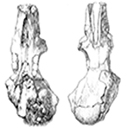
Rongeurs Miocènes dans le Valles-Penedes 2 : Les rongeurs de Castell de BarberaJean-Pierre Aguilar, Jordi Agusti
Published online: 20/04/1979 |
|
|
Rongeurs Miocènes dans le valles-Penedes 1 : Les rongeurs de Can Ponsic 1Jean-Louis Hartenberger and Miquel Crusafont i PairóPublished online: 20/04/1979Keywords: Can Ponsic 1; Miocene; Rodents; Valles-Penedes https://doi.org/10.18563/pv.9.1.1-15 Abstract The rodents from the spanish locality of Can Ponsic 1 bring new data about some rodents species of the beginning of the Upper Miocene in South-West Europe. The criticims made by Mein and Freudenthal about the validity of the species Hispanomys thaleri from Can Llobateres are not justiíied. The study of the anatomy of the skull of Rotundomys from Can Ponsic 1 gives accurate information about the affinity of this genus with Cricetulus, and shows that the hypothesis, according to which Rotundomys is an ancestral form of the Arvicolids, is unlikely. The systematics of Heteroxerus and the phylogeny of the mio-pliocene Muscardinus species are also discussed. The Can Ponsic 1 locality is a little older than Can Llobateres. PV article infos Published in Vol. 09, Fasc. 1 (1979) |
|

|
Les sélaciens du Miocène de la région de MontpellierHenri Cappetta
Published online: 15/12/1970 |
|
|
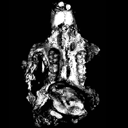
Contributions à l'étude de l'anatomie crânienne des rongeurs. 1- Principaux types de cricétodontinésJean-Louis HartenbergerPublished online: 25/09/1967Keywords: Cricetodon; Cricetodontinae; Miocene https://doi.org/10.18563/pv.1.2.47-64 Abstract Description, for the first time, of the skull of Ruscinomys Depéret on the basis of a nearly complete specimen, and description of a new facial part of a Megacricetodon Fahlbusch skull (material from upper Miocene, Spain). New description of the skull (facial part) of " Cricetodon" incertum Schlosser on the basis of the specimen from the Oligocene of Quercy phosphorites already published by S. Schaub. PV article infos Published in Vol. 01, Fasc. 2 (1967) |
|
Page 2 of 2, showing 5 record(s) out of 25 total
