
Book of Abstracts of the XXII Annual Meeting of the European Association of Vertebrate Palaeontologists, 30 June–5 July 2025, Kraków, Poland
Early Oligocene Fishes from Alabama, USA
CYLINDRACANTHUS FROM INDIA
Oldest evening bat from the Early Eocene of France
The digital endocast of Necrolemur antiquus
stapes trapped in artiodactyls bony labyrinth
Eocene (57) , Quercy Phosphorites (38) , Systematics (32) , Rodents (29) , Mammalia (27) , Rodentia (25) , Miocene (24)
Page 15 of 19, showing 20 record(s) out of 365 total
|
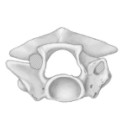
Latest Early-early Middle Eocene deposits of Algeria (Glib Zegdou, HGL50), yield the richest and most diverse fauna of amphibians and squamate reptiles from the Palaeogene of AfricaJean-Claude Rage
Published online: 2/8/21 |
|

|
Les Affinités de Nyctereutes megamastoides (Pomel), canidé du gisement Villafranchien de Saint-Vallier (Drôme, France).R. MartinPublished online: 1/31/71Keywords: Canidae; Nyctereutes; Villafranchian https://doi.org/10.18563/pv.4.2.39-58 Abstract Nyctereutes megamastoides (Pomel) from the Villafranchian of the Auvergne and from Saint-Vallier presents cranial and dental characters sufficiently close to those of the late Pliocene canid from Perpignan (Roussillon), described by Depéret under the specific name of Canis donnezani belonging to the same genus Nyctereutes. The extinction of the European "Nyctereutes" group seems due to the too great alimentary specialization of this canid, whereas the Asiatic lineage represented in the Villafranchian by Nyctereutes sinensis Schlosser and at present by Nyctereutes procyonider Gray was able to maintain itself probably by means of a profound change in its alimentary regime. PV article infos Published in Vol. 04, Fasc. 2 (1971) |
|

|
|
|
|
Les Chiroptères du Miocène inférieur de Bouzigues. 1- Etude systématique.Bernard SigéPublished online: 4/17/68Keywords: bats https://doi.org/10.18563/pv.1.3.65-133 Abstract In recent years, the techniques of chemical preparing have permitted a rich paleontologic material to be obtained from the phosporitic sediment of Bouzigues (Hérault, France). The fauna of this locality is comprised of quite varied microvertebrates, amphibians, reptiles, birds, mammals. Twenty five species of the latter, belonging to seven orders, are today known from the site. Among them, the numerous rodents have allowed L. Thaler to chronologically situate this fauna in the Zone of Laugnac (<< late Aquitanian ›> of some authors). PV article infos Published in Vol. 01, Fasc. 3 (1968) |
|
|
A classic in the making : VERTEBRATE PALAEONTOLOGY (4th edition). By Michael J. Benton.Eric Buffetaut
Published online: 1/27/16 |
|

|
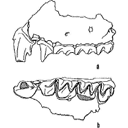
Pseudorhyncocyon cayluxi Filhol, 1892 insectivore géant des phosphorites du QuercyBernard SigéPublished online: 11/15/74Keywords: Insectivores; Leptictidae; Quercy Phosphorites Abstract Une hémimandibule et une molaire supérieure recueillies dans le gisement oligocène inférieur d'Escamps (phosphorites du Quercy) fournissent de nouvelles informations sur le genre Pseudorhyncocyon FllHOL, grand insectivore longirostre du Paléogène d'Europe, fossile très mal connu jusqu'ici. Des comparaisons avec les macroscélididés africains, géolabididés nord-américains, et leptictidés euraméricains permettent de rattacher cet amimal aux leptictidés, et de le rapprocher du genre Lepticidium TOBIEN, au sein de la sous-famille européenne nouvelle des pseudorhyncocyoninés. PV article infos Published in Vol. 06, Fasc. 1-2 (1974) |
|

|
Rongeurs muroidés du Néogène supérieur d'Afghanistan, évolution, biogéographie, corrélationsLouis D. BrandyPublished online: 9/30/81Keywords: Afghanistan; Muroidea; Neogene Abstract The rodent faunas of five afghan localities found in 1976 and 1977 (Sherullah, Ghazgay, Pul-e Charkhi, Dawrankhel 14 and 15) are studied. PV article infos Published in Vol. 11, Fasc. 4 (1981) |
|

|
Rongeurs du Miocène supérieur de Chorora (Ethiopie): Cricetidae, Rhizomyidae,Phiomyidae, Thryonomyidae,Sciuridae.Denis Geraads
Published online: 12/15/98 |
|

|
Ostéologie de la tête de Richardus excavans Lavocat,1988René LavocatPublished online: 10/30/89Keywords: Africa; anatomy; Bathyergidae; Miocene; Rodents Abstract Remarkable association of a small infraorbital foramen, similar to that in recent Heterocephalus, and of a strong muscular print on the dorsal anterior part of the zygomatic plate and on the premaxillary. Several anatomical structures to be compared with those of Heterocephalus suggest relationships with this genus. Richardus supports the ancestrality of the hystricomorph character in the bathyergids PV article infos Published in Vol. 19, Fasc. 2 (1989) |
|

|
The paramyid rodent Ailuravus from the middle and late Eocene of Europe, and its relationshipsAlbert E. WoodPublished online: 5/15/76Keywords: Ailuravinae; Rodentia Abstract The complex taxonomic history of the paramyid rodent genus Ailuravus is reviewed. It has been described as Hyracotherium, as a creodont carnivore and as a lemuroid primate - errors at the ordínal level that are most unusual for a rodent. The genus is a member of the poorly known subfamily Ailuravinae, probably derived from some European Early Eocene species of Paramys. Aíluravus was a large arboreal paramyid with highly rugose cheek teeth, very well developed hypocone, and a remarkably weak lower incisor. It was tropical to subtropical. Three named species are recognized, A. macrurus from the Lutetian of Messel; the genotype, A. picteti, from Egerkingen, Buchsweiler and the Geiseltal, slightly later in the Lutetian; and A. stehlinschaubi, new name, from the Bartonian of Mormont-Eclépens and Robiac. One or more unnamed species are present in the Ypresian of Cuis. The species are close to a phyletic sequence. No later representatives of the genus are known. The late Eocene to earliest Oligocene North American paramyid Mytonomys, whose relationships have been obscure, is tentatively referred to the Ailuravinae. PV article infos Published in Vol. 07, Fasc. 1-2 (1976) |
|

|
Multituberculate endocranial castsZofia Kielan-Jaworowska
Published online: 6/30/83 |
|

|
Contributions à l'étude des micromammifères du gisement Miocène supérieur de Montredon (Hérault). 3- Les insectivoresJean-Yves Crochet and Morton GreenPublished online: 6/30/82Keywords: Hérault; Insectivora; Late Miocene; Micromammals; Montredon Abstract This paper presents a preliminary list of insectivores from the Vallesian beds at Montredon (France). The associated rodent fauna has established a Vallesian age for the fauna. Eleven species belonging to the Soricidae, Talpidae, Erinaceidae, and Dimylidae are identified of which four only are referred with certainty to forms already named. PV article infos Published in Vol. 12, Fasc. 3 (1982) |
|

|
Mammifères nouveaux de l'Ilerdien des Corbières et du Minervois (Bas-Languedoc, France)Bernard MarandatPublished online: 12/4/89Keywords: Bas-Languedoc; Early Eocene; France; Ilerdian; Mammals; New taxa Abstract Four new taxa (two genera, one subgenus, and four species) conceming the orders Condylarthra, Rodentia, Pantolesta, and an undetermined order from middle and middle/upper Ilerdian localities (lower Ypresian) of the Corbières and Minervois regions (Bas-Languedoc, Southem France) are presented in this short paper PV article infos Published in Vol. 19, Fasc. 3 (1989) |
|

|
Evolution de la lignée Megacricetodon collongensis-Megacricetotodon roussillonensis (Cricetidae, Rodentia, mammalia) au cours du Midocène inférieur et moyen dans le Sud de la France.Jean-Pierre AguilarPublished online: 6/14/95Keywords: Cricetids rodents; Evolutionary lineage; Lower and Middle Miocene; Mammalian biochronology; Megacricetodon new species; Southern France Abstract New populations of the genus Megacricetodon have recently been discovered in Southern France.Two new species are defined: M. lemartineli n. sp. and M. fournasi n. sp., their stages of evolution are intermediate between those of M. gersii and M. roussillonensis. Morphological and biometrical analysis indicate the presence of only one lineage: M. collongensis--M. collongensis-gersii--M. gersii--M.lemartineli nov. sp.--M. fournasi nov. sp. and M. roussillonensis. This observation allows to refine the chronology based on rodents, for the Late Early Miocene and the Middle Miocene in the Southern France. PV article infos Published in Vol. 24, Fasc. 1-2 (1995) |
|

|
Un gisement à mammifères dans la formation lacustre d'âge Miocène moyen du Collet Redon près de St-Cannat (Bouches-du-Rhone). Implications stratigaphiquesJean-Pierre Aguilar and G. ClauzonPublished online: 4/10/79Keywords: France; Neogene; Rodentia Abstract The new fauna of Collet Redon (Bouches-du-Rhône, France) is dated by three rodents: Megacricetodon aff. bavaricus, Democricetodon affinis mutilus and Peridyromys cf. hamadryas. They correlate this locality with Oggenhof and Ohningen in Bavaria (Western Germany). As the radiometric age of Ohningen is estimated between 14 and 13 M.Y., these three localities are of Serravallian age. This datation brings a complete readjusment of the stratigraphy of the section of Collet Redon formerly described by Collot and Combaluzier. The marine deposits with underly the continental formation with the mammal fauna, are Burdigalian. The angular unconformity between the marine and the continental deposits gives evidence of an episode of emersion on the margin of a sedimentary basin, with deformation and erosion. Owing to the newly discovered fauna, this geodynamical event is clearly settled within the regional geographical and chronological context. Lacustrine and continental deposits of such an age were up to now unsuspected in this area. PV article infos Published in Vol. 08, Fasc. 5 (1979) |
|

|
La poche à phosphate de Ste-Néboule (Lot) et sa faune de vertébres du Ludien supérieur. 4- CrocodiliensEric Buffetaut
Published online: 9/25/78 |
|

|
L'anatomie de Lyrocephaliscus euri (wiman), Trématosaure du Trias inférieur du Spitsberg : arrière-crâne, squelette axial et ceinture scapulaire.Jean-Michel Mazin
Published online: 6/30/83 |
|

|
Contributions à l'étude du gisement miocène supérieur de Montredon (Hérault). Les grands mammifères. Avant propos.Bernard SigéPublished online: 11/15/88Keywords: Editorial; Mammalia; Montredon; Upper Miocene Abstract Le Mémoire Extraordinaire 1988 de PALAEOVERTEBRATA regroupe dix articles consacrés au gisement à mammifères du Miocène supérieur de Montredon (Hérault), connu et classique depuis la fin du siècle dernier, et auquel est lié le nom du savant paléontologue lyonnais Charles Depéret. View editorial Published in Vol. 18, Ext (1988) |
|

|
La poche à phosphate de Ste-Néboule (Lot) et sa faune de vertebres du Ludien superieur. 14 - Conclusions généralesJean-Louis HartenbergerPublished online: 9/25/78Keywords: Eocene; Quercy Phosphorites Abstract Le matériel provenant de nouvelles fouilles dans les phosphorites du Quercy, soumis aux divers spécialistes, a conduit à la soutenance de plusieurs thèses d'état: sur les rongeurs (Hartenberger, Vianey-Liaud), les Chiroptères et Insectivores (Sigé), les Artiodactyles (Sudre), les Squamates (Rage) et, en partie, les Chéloniens (De Broin). Chacun dans son domaine, à côté des conclusions d'ordre évolutif, paléogéographique ou paléoécologique, a pu établir des successions stratigraphiques des gisements du Quercy qui se sont révélées largement concordantes. Ainsi la succession des faunes du Quercy est actuellement l'une des mieux établies. Dans ce contexte, les différents spécialistes ont décidé de conjuguer leurs efforts dans l'étude monographique de plusieurs gisements repérés le long de cette échelle, afin de rassembler l'information paléontologique sur des faunes bien précises et de tenter d'obtenir des indications d'ordre taphonomique. PV article infos Published in Vol. 08, Fasc. 2-4 (1978) |
|

|
Les sélaciens du Miocène de la région de MontpellierHenri Cappetta
Published online: 12/15/70 |
|
