|
The fossil rabbit from Valdemino cave (Borgio Verezzi,Savona) in the context of western Europe Oryctolagini of Quaternary.
Published online: 15/12/1997
Keywords:
Lagomorpha; Mammals; North-western Italy; Oryctolagus; Plio-Pleistocene; Savona
https://doi.org/10.18563/pv.26.1-4.167-187
Abstract
The present research deals with the remains of a lagomorph found at Valdemino cave and comes to the conclusion that it is a rabbit with peculiar characteristics in comparison with the other known species Oryctolagus laynensis, O. lacosti and 0. cuniculus. We studied other fossil remains of rabbit populations from Villafranchían and middle Pleistocene deposits and compared them with data from the literature and with recent material. The analysis leads us to maintain two phylogenetic hypotheses about the history of Oryctolagini. The ñrst one, already formulated by Lopez Martinez, suggests that 0. cuniculus derives from O. laynensis,while the origin of O. lacostí is unknown; according to the second hypothesis 0. laynensis would be the common ancestor of two phyletic lineages, 0. lacosti and 0. cuniculus. In both cases the lagomorph from Valdemino would be the form derived from 0. lacosti, from which however it differs in peculiar characteristics. Since the rabbit from Valdemino survives until the beginning of Postgalerian, its disappearance may coincide with the retreat of 0. cuniculus from western Europe in Spain and, perhaps, in south-western France, before the last glaciation. O. cuniculus survived in Spain, from where it spread once again over western Europe as a result of man.
PV article infos
Published in Vol. 26, Fasc. 1-4 (1997)
|
PDF
|

|
Evolution de la lignée Megacricetodon collongensis-Megacricetotodon roussillonensis (Cricetidae, Rodentia, mammalia) au cours du Midocène inférieur et moyen dans le Sud de la France.
Published online: 14/06/1995
Keywords:
Cricetids rodents; Evolutionary lineage; Lower and Middle Miocene; Mammalian biochronology; Megacricetodon new species; Southern France
https://doi.org/10.18563/pv.24.1-2.1-45
Abstract
New populations of the genus Megacricetodon have recently been discovered in Southern France.Two new species are defined: M. lemartineli n. sp. and M. fournasi n. sp., their stages of evolution are intermediate between those of M. gersii and M. roussillonensis. Morphological and biometrical analysis indicate the presence of only one lineage: M. collongensis--M. collongensis-gersii--M. gersii--M.lemartineli nov. sp.--M. fournasi nov. sp. and M. roussillonensis. This observation allows to refine the chronology based on rodents, for the Late Early Miocene and the Middle Miocene in the Southern France.
Comparisons with some iberian species are done. The validity of the French species M. bezianensis and M. bourgeoisi is discussed.
PV article infos
Published in Vol. 24, Fasc. 1-2 (1995)
|
PDF
|

|
The endocranial cast and encephalization quotient of Ptilodus (Multituberculata, Mammalia)
Published online: 11/02/1993
Keywords:
encephaIization quotient; endocranial cast; Montana; Multituberculata; olfactory bulbs; Paleocene; Ptilodus
https://doi.org/10.18563/pv.22.2-3.99-112
Abstract
Simpson (1937a) reconstructed the brain of the Paleocene multituberculate Ptilodus as having the olfactory bulbs widest anteriorly, an unusual condition among mammals. Slight preparation and reexamination of the endocast specimens of Ptilodus reveals that the olfactory bulbs in fact taper anteriorly, as in the recently-described endocranial casts of three multituberculate species from the Late Cretaceous of Asia, and as in those of other mammals. The brain of Ptilodus was therefore essentially of the same general pattem as in other multituberculates. Ptilodus differs, however, in having the vermis more deeply inserted between the cerebral hemispheres. Other details concerning the endocast morphology of Ptilodus are clarified.
The encephalization quotient (EQ) of Ptilodus is recalculated from revised estimates of both endocranial volume and body mass to fall somewhere within a broad range of values; from 0.41 to 0.62 if the olfactory bulbs are included and from 0.37 to 0.55 if they are not. In any case, the relative brain size of Ptilodus is roughly equivalent to that of Chulsanbaatar, the only other multituberculate for which EQ has been calculated, but considerably smaller than that of an average extant mammnal.
PV article infos
Published in Vol. 22, Fasc. 2-3 (1993)
|
PDF
|

|
First report of an Eocene reptile fauna from Florida, USA
Published online: 30/07/2001
Keywords:
Eocene; Fauna; Florida; Reptile; USA
https://doi.org/10.18563/pv.30.1-2.1-10
Abstract
Fossils of the Trionychidae, Bataguridae or Emydidae, Palaeophis and Crocodylia from Chattahoochee, NW Florida, USA, represent the first report of an Eocene reptile fauna from Florida.
PV article infos
Published in Vol. 30, Fasc. 1-2 (2001)
|
PDF
|

|
Eléments nouveaux sur l'évolution des genres Eucricetodon et Pseudocricetodon (Eucricetodontinae, Rodentia,Mammalia, de l'Oligocène d'Europe Occidentale.
Published online: 01/07/1985
Keywords:
evolution; Occidental Europe; Oligocene; Rodentia; Systematics
https://doi.org/10.18563/pv.15.1.1-68
Abstract
The review of material recently collected in the new localities from the “Phosphorites du Quercy", and different localities from the South of France, bring new informations on the genus Eucricetodon THALER. 1966, and Pseudocricetodon THALER, I969 (Middle and Upper Oligocene. Western Europe). Thanks to Eucricetodon huerzeleri VIANEY-LIAUD, 1972, which were unsufficiently known until now, is proposed. During the middle Oligocene Eucricetodon atavus MISONNE, 1957 seems to give rise to two lineages. One of them led to Eucricetodon huberi,which however exhibits a larger size and a development of progressive characters on the teeth. The other would be Eucricetodon huerzeleri well differentiated at the “Mas de Pauffié" standard level (beginning of the upper Oligocene). The ornementation of lower incisors is described, when possible. Though the fossils are not abundant, it seems that the ancestral lineage, Eucriretodon atavus, remains in the upper Oligocene (Boningen standard level). evolving into Eucricetodon praecursor SCHAUB, 1925 (Rickenbach standard level). The characters of Eucricetodon dubius (SCHAUB. 1925), represented by a numerous population in Pech Desse and Pech du Fraysse (Quercy). confirm that this species and Eucricetodon praecursor belong to two different lineages. As Eucricetodon dubius shows more primitive features, this species could not originale from Eucricetodon atavus -Eucricetodon huberi. The appearance of this species at the level of Mas de Pauffié could be the result of an immigration. A new definition of Pseudocricetodon incertus (SCHLOSSER. 1884) is given. This species has been found in several localities, where it had not been identified until now. lts comparison with Pseudocricetodon moguntiacus (BAHLO. l975), found at several localities from the standard level of Antoingt (end of middle Oligocene). shows a parallel evolution to that of Pseudocetodon incertus, which is of larger size and with a less complicated pattern of teeth.
PV article infos
Published in Vol. 15, Fasc. 1 (1985)
|
PDF
|
|
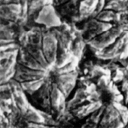
Eggshell microstructure and porosity of the Nicobar scrubfowl (Megapodius Nicobariensis, great Nicobar island, India)
Published online: 16/12/2008
Keywords:
conductance porosity; eggshell microstructure; incubation conditions; Megapodes
https://doi.org/10.18563/pv.36.1-4.75-88
Abstract
The eggshell of Nicobar scrubfowl (Megapodius nicobariensis) is described for the first time. Its egg porosity is calculated and discussed with data from several taxa (another megapode, some extant and fossil reptiles including a titanosaur group) in order to compare incubation types with eggshell structure. Eggshell microstructure reflects first phylogenetic traits and does not seem to have developed major adaptative features due to the incubation conditions, except for the pore canals.
PV article infos
Published in Vol. 36, Fasc. 1-4 (2008)
|
PDF
|

|
Editorial
Published online: 29/04/1991
Keywords:
Editorial
https://doi.org/10.18563/pv.20.4.145-146
Abstract
Editorial for celebrating the publication of the volume 20.
La revue PALEOVERTEBRATA a été fondée en 1967 par Louis THALER, à une époque où il n'existait, au plan international, que deux périodiques uniquement consacrés aux vertébrés fossiles. Actuellement ce nombre n'est que de quatre. A l'origine la revue fut essentiellement créée pour diffuser les résultats des chercheurs du Laboratoire de Paléontologie de l'Université de Montpellier, alors en début d'expansion et plusieurs thèses et de nombreux travaux directement liés à des thèses y furent publiés ce qui n'excluait déjà pas la publication d'articles d'auteurs étrangers.
[...]
View editorial
Published in Vol. 20, Fasc. 4 (1991)
|
PDF
|

|
Nouvelles données sur les mammifères du Thanétien et de l'Yprésien du bassin d'Ouarzazate (Maroc) et leur contexte stratigraphique.
Published online: 15/12/1998
Keywords:
early Paleogene; magnetostratigraphy; Mammals; Morocco; North Africa; Ouarzazatz basin; Systematics
https://doi.org/10.18563/pv.27.3-4.155-202
Abstract
New faunal and stratigraphical data on the vertebrates localities from the early Paleogene of the Ouarzazate Basin (Adrar Mgorn 1, Adrar Mgorn 1 bis et N'Tagourt 2), Morocco, are presented. A magnetostratigraphical study, the first for such early Paleogene Arabo-African mammal localities, and the discovery of probable remains of the nannofossil Discoaster support the Thanetian age of the Adrar Mgorn 1 site. The magnetostratigraphy suggests a slightly later age than was thought for the Paleogene formations of the local series of Tinerhir and for the vertebrate localities: late or latest Thanetian for Adrar Mgorn 1 and Adrar Mgorn 1 bis, middle Ypresian for N'Tagourt 2. It also indicates a lower position of the KT boundary in the series. Two tons of matrix recovered in the vertebrate sites have vielded new data on the micromammals. A damaged lower molar from N'Tagourt 2 is referable to Khamsaconus bulbosus and supports the proboscidean affinities of this species and especially possible relationships with bunolophodont taxa such as elephantiforms. A lower molar from Adrar Mgorn 1 bis belongs to a new form which can be identified as a plesiadapiform or an euprimate close to Altiatlasius koulchii though significantly larger. A new material from Adrar Mgorn 1 illustrates a new dilambdodont adapisoriculid species which is referable to Garatherium : ?Garatherium todrae n. sp. Another species referred to Garatherium is known in the locality (?Garatherium n. sp.). Garatherium is a new lineage from the Ouarzazate basin which crosses the Paleocene-Eocene boundary together with Palaeoryctes, Didelphodontinae gen. and sp. 2, Todralestes, and Afrodon, and it is the first Paleocene-Eocene lineage identified outside of this basin (Garatheríum is based on a species from El Kohol, Algeria). Among the Paleocene-Eocene lineages from the Ouarzazate basin, it should be also mentioned a new possible carnassial form (carnivoran or creodont; Adrar Mgorn 1), and an upper molar of Cimolestes cf. incisus (Adrar Mgorn 1 bis). The upper molar THR 168 previously reported as from an indeterminate didelphodontine is here identified as the M1/ of Afrodon chleuhi. The micromammal faunas from the Ouarzazate basin are positioned in the global chronological framework of the mammal localities from the Paleogene of the Arabo-African domain.
PV article infos
Published in Vol. 27, Fasc. 3-4 (1998)
|
PDF
|

|
Les Tayassuidés des phosphorites du Quercy
Published online: 15/11/1974
Keywords:
Quercy Phosphorites; Tayassuidae
https://doi.org/10.18563/pv.6.1-2.55-85
Abstract
Revision of the Tayassuidae from the old collections of the Quercy leads to interesting facts about taxonomic and phylogenetic problems. It could not have been well done without constant comparison with contemporaneous Tayassuidae from stratified series, as well as with European Miocene Tayassuidae and Hyotheriinae. The result is that only three species are present in the Phosphorites of Quercy: Doliochoerus quercyi FiLHOL (represented by two sub-species: the older, D. quercyi quercyi and the more recent, D. quercyi aquensis), Palaeochoerus gergorianus CROIZET et BLAINVILLE and Palaeochoerus purillus nov. sp. The two former species disappeared with Stampian time, while the third is the direct ancestor of the Aquitanian Palaeochoerus typus POMEL, which became extinct before the beginning of Burdigalian.
The comparison with Hyotheriinae brought to light new criteria for determinations, based on the study of lower premolars. These observations are condensed in a table of keys for determinations.
As a result of these studies, it came to light that the Suoidea of the Oligo-Miocene of Europe have never given rise to, except in rare cases, very long lineages. The different forms of pigs are replaced constantly in Europe by the simple game of extinctions and migrations. The reason of that discontinuity is considered here.
PV article infos
Published in Vol. 06, Fasc. 1-2 (1974)
|
PDF
|

|
Mode de vie et affinités de Paschatherium (Condylarthra, Hyopsopontidae) d'après ses os du tarse
Published online: 16/12/1996
Keywords:
Astragalus; Calcaneum; Condylarthra; Eocene; Functional morphology; Paschatherium; PHYLOGENY
https://doi.org/10.18563/pv.25.2-4.225-242
Abstract
Tarsals that can be confidently attributed to Paschatheríum dolloi from Dormaal (Belgium) are described. The astragalus is short; its broad neck is set at an angle of 30 degrees to the trochlea. The trochlea is pulley-shaped and proximally extended. There is no astragalar foramen. The medial tibial facet extends distally in a cup deeply excavated in the neck and buttressed. The sustentacular facet extends toward the navicular facet but is not fully confluent with it. The calcaneum bears a proximo-distally extended proximal facet for the astragalus. A relatively large peroneal tubercle projects from the body, and is situated distally. Functionally, the trochlea indicates extensive flexion-extension movements of the foot. Calcaneo-astragalar facets indicate sliding and rotation between the two tarsals. The inclination of the navicular facet suggests frequent foot inversion. The peroneal tubercle reflects good muscular capacities for foot rotation. Overall morphology is interpreted as a scansorial adaptation similar to that of sciurids.Comparisons are made with the tarsals of Macrocranion vandebroeki from Dormaal and Hyopsodus paulus from the Bridgerian of Wyoming. Some similarities between the astragali of Paschatherium and Macrocraníon (trochlea) are interpreted as convergences for rapid locomotion. However absence of mobility at the lower ankle and midtarsal joints in M. vandebroekzi suggests that this species was cursorial, as is known for M. tenerum from Messel. Similarities in the calcanea of Paschatherium and Hyopsodus are probably the result of close phylogenetic relations, and confirm the placement of Paschatherium in the hyopsodontids. The differences in the calcanea of Paschatherium and Macrocranion underline that Paschatherium is distinct from erinaceomorph insectivores. The differences in astragalar morphology between Paschatherium and Hyopsodus show that a marked adaptive divergence separates the two genera. We speculate about the common occurrence of a deep tibial cup (“cotylar fossa”) and a pulley-shaped trochlea in Paschatherium and hyracoids, suggesting that an adaptive scenario similar to that having led to Paschatherium (scansoriality) might explain the acquisition of the peculiar hyracoid tarsal characters; such a scenario contradicts the concept of Pantomesaxonia. Other peculiar characters of Hyopsodus suggest that hyopsodontids might be given more consideration in the search for hyracoid (and tethythere) origins.
PV article infos
Published in Vol. 25, Fasc. 2-4 (1996)
|
PDF
|

|
Les Entélodontes des phosphorites du quercy
Published online: 15/11/1974
Keywords:
Entelodontes; Quercy Phosphorites
https://doi.org/10.18563/pv.6.1-2.87-108
Abstract
The entelodonts of the Quercy phosphorites are essentially known from isolated teeth. The skull remains attributed to Entelodon magnum by Kowalewsky in 1876 and the type left mandible of Enteladon depereti RÉPELIN, 1918 do not belong to this family. From a morphologic point of view, the teeth from Quercy are quite comparable to those from the type localities of E. magnum and E. deguilhemi. In the absence of distinctive anatomical criteria between E. magnum (small species from the level of Ronzon) and E. deguilhemi (large species from the level of Villebramar) they are referred, according to their size, to one or the other of these two species. However, some of them are intermediate in size. Their existence speaks in favor of a close relationship between E. magnum and E. deguilhemi and confers a real stratigraphic interest to these entelodonts of Western Europe. Finally, some anatomical characters (notch on the mesial border of P4, presence of a paraconid joined to the metaconid, trigonid higher than talonid) considered until now as peculiar to the North American Archaeotherium and not yet cited in its European contemporary Entelodon have been brought to light on the teeth from Quercy.
PV article infos
Published in Vol. 06, Fasc. 1-2 (1974)
|
PDF
|

|
Rana (Amphibia : Ranidae) from the upper eocene (MP17a) Hordle Cliff locality, Hampshire, England.
Published online: 15/06/1999
Keywords:
Amphibia; England; Rana; Ranidae; Upper Eocene
https://doi.org/10.18563/pv.28.1.47-51
Abstract
An ilium from the Upper Eocene (MP l7a) of Hordle, England, represents the first report of Rana from the Eocene of Britain. The ilium is similar to those of the water frog (Rana [ridibunda]) species group.
PV article infos
Published in Vol. 28, Fasc. 1 (1999)
|
PDF
|

|
L'anatomie de Lyrocephaliscus euri (wiman), Trématosaure du Trias inférieur du Spitsberg : arrière-crâne, squelette axial et ceinture scapulaire.
Published online: 30/06/1983
Keywords:
skull anatomy; Spitsbergen; Trematosaurs; Trias
https://doi.org/10.18563/pv.13.1-2.13-31
Abstract
The formic acid preparation of a nodule collected from the Lower Triassic of Spitsbergen, and containing a skull with some associated postcranial elements of Lyrocephaliscus euri (WIMAN), precises and enriches previous descriptions of the reputedly well-known trematosaur. lt permits more detailed descriptions of the occipital region, of the course of the carotid arteries and collateral vessels, and refutes the previous description of a stapedial foramen in trematosaurs. The discovery of pleurocentres associated with the other vertebral components confirms the primitive rhachitomy of trematosaurs.
PV article infos
Published in Vol. 13, Fasc. 1-2 (1983)
|
PDF
|
|
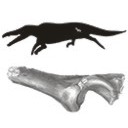
First record of the family Protocetidae in the Lutetian of Senegal (West Africa)
Published online: 05/12/2014
Keywords:
innominate; Lutetian; Protocetid; Senegal
https://doi.org/10.18563/pv.38.2.e2
Abstract
The earliest cetaceans are found in the early Eocene of Indo-Pakistan. By the late middle to late Eocene, the group colonized most oceans of the planet. This late Eocene worldwide distribution clearly indicates that their dispersal took place during the middle Eocene (Lutetian). We report here the first discovery of a protocetid fossil from middle Eocene deposits of Senegal (West Africa). The Lutetian cetacean specimen from Senegal is a partial left innominate. Its overall form and proportions, particularly the well-formed lunate surface with a deep and narrow acetabular notch, and the complete absence of pachyostosis and osteosclerosis, mark it as a probable middle Eocene protocetid cetacean. Its size corresponds to the newly described Togocetus traversei from the Lutetian deposits of Togo. However, no innominate is known for the Togolese protocetid, which precludes any direct comparison between the two West African sites. The Senegalese innominate documents a new early occurrence of this marine group in West Africa and supports an early dispersal of these aquatic mammals by the middle Eocene.
PV article infos
Published in Vol.38-2 (2014)
|
PDF
|

|
Rongeurs de l'Oligocène moyen provenant de nouvelles fouilles dans les phosphorites du Quercy
Published online: 15/09/1969
Keywords:
Oligocene; Quercy Phosphorites; Rodents; Theridomys
https://doi.org/10.18563/pv.2.5.209-239
Abstract
A recent campaign of excavations (1965-68) undertaken by the Laboratoire de Paléontologie of Montpellier in pockets of the Quercy phosphorites, has permitted the dating of several localities thanks to the analysis of their micromammalian fauna.
The rodents of localities belonging to the middle Oligocene (La Sauvetat zone) are the object of this study. This rodent fauna has been compared to the forms coming from three stratified localities belonging to the biochronologic zone of La Sauvetat : Balm, Montalban and Lovagny.
The abundance of material, notably of theridomyids and cricetids, permitted a summary statistical study to be effected and gave some precise details on the variability of the species (Theridomys varians in particular). Other details were provided on certain groups, notably on the upper teeth of Scíuromys cayluxi and on the milk teeth of theridomyids. Some specimens of «Sciurus» sp. and of Plesispermophilus angustidens were collected. By this means, it has been possible to establish, for the first time, a precise upper limit to the epoch of their appearance in Europe.
PV article infos
Published in Vol. 02, Fasc. 5 (1969)
|
PDF
|

|
The eosimiid and amphipithecid primates (Anthropoidea) from the Oligocene of the Bugti hills (Balochistan, Pakistan): new insight into early higher primate evolution in South Asia.
Published online: 15/10/2006
Keywords:
Amphipithecidae; anthropoid phylogney; Bugti Hills; Early Oligocene; Eosimiidae; Pakistan
https://doi.org/10.18563/pv.34.e15
Abstract
Eosimiid and amphipithecid primates document a long and significant history of primate evolution throughout the Eocene in Southeast Asia. Despite the absence of a comprehensive post-Eocene fossil record, it was generally hypothesized that both families left no descendant in Asia. Recently, two new small-bodied taxa, Bugtipithecus and Phileosimias, have been recovered in early Oligocene coastal deposits from the Bugti Hills (Balochistan, central Pakistan) and referred to the families Amphipithecidae and Eosimiidae, respectively, on the basis of dental fossil remains. In this paper, we provide more exhaustive description, comparison, and discussion of these taxa. As for tarsiid and sivaladapid primates, the persistence of eosimiids and amphipithecids into the Oligocene clearly demonstrates that low latitudes of South Asia provided a continuous access to tropical refugia during the climatic deterioration characterizing the late Eocene-early Oligocene interval, which was seemingly lethal for primate communities elsewhere across the Holarctic continents. As a contribution to the ongoing phylogenetic debates regarding the position of eosimiids and amphipithecids on the primate family tree, we have performed a cladistic analysis in a high-level primate systematic context in order to assess the position and the role of these new taxa in that phylogenetic issue. Our results support the view according to which eosimiids and amphipithecids (and by extension Phileosimias and Bugtipithecus, respectively) are stem anthropoids. These fossils from Pakistan document an unsuspected Oligocene phase of the evolutionary history of anthropoid primates in southern Asia, which clearly enhances the extent of the anthropoid radiation in this province during the Paleogene. Several phylogenetic and paleobiogeographic aspects are discussed, notably the intra- and inter-relationships between Paleogene Asian and Afro-Arabian anthropoids, and the resulting potential dispersal models between both land-masses during the Paleogene.
PV article infos
Published in Vol. 34, Fasc. 1-2 (2006)
|
PDF
|

|
Rongeurs du Miocène supérieur de Chorora (Ethiopie): Cricetidae, Rhizomyidae,Phiomyidae, Thryonomyidae,Sciuridae.
Published online: 15/12/1998
Keywords:
cricetids; Ethiopia; phiomyids; rhizomyids; Rodentia; sciurids; thryonomyids; Upper Miocene
https://doi.org/10.18563/pv.27.3-4.203-216
Abstract
Besides Dendromurids and Murids, the Chorora Rodents include 7 taxa, two of which are new. Afaromys nov. gen. is a Cricetodontine with very complicated lower molars, certainly isolated for a long time from Eurasian species. A Paraphiomys, with tetralophodont upper molars, is also quite different from other East African species, and its roots should probably he searched in the middle Miocene. Other taxa are less original, and more similar to the South Asiatic ones.
PV article infos
Published in Vol. 27, Fasc. 3-4 (1998)
|
PDF
|

|
New murids and gerbillids (Rodentia, Mammalia) from Pliocene Siwalik sediments of India.
Published online: 15/12/1997
Keywords:
Dental morphology; evolution; new species of murids and gerbillids; phylogenetic relationships; Systematics
https://doi.org/10.18563/pv.26.1-4.129-165
Abstract
Murids and gerbillids (Rodentia, Mammalia) recovered from four Upper Siwalik localities; Moginand (around 3.5-4.5 m.y.), Kanthro (around 2.5 m.y.), Ghaggar (around 2 m.y.) and Nadah (around 1.8-2 m.y.) are described herein. A comparison of Mus linnaeusi sp. nov. reveals its close relationship towards the house mouse Mus musculus. In contradiction to earlier proposals that Golunda migrated to the Indian subcontinent from Africa sometime during Late Pliocene, it is suggested here that Golunda (in the form of Golunda tatroticus sp. nov.) evolved from Parapelomys robertsí of Late Miocene deposits of Siwaliks. Golunda tatroticus sp. nov. exhibits a progressive relationship to the extant Indian Bush Rat Golunda ellioti through Golunda kelleri and Golunda sp. Tatera pinjoricus sp. nov. is considered here to be a link between the extinct Abudhabia kabulense and the extant Tatera indica.
PV article infos
Published in Vol. 26, Fasc. 1-4 (1997)
|
PDF
|

|
Preliminary evolution of paleosols and implications for interpreting vertebrate fossil assemblages, Kuldana formation, Northern Pakistan
Published online: 16/12/1996
Keywords:
Eocene; Kuldana Formation; Pakistan; Paleosols; Pedogenic Carbonate; taphonomy; Time Averaging; Vertebrate Fossils
https://doi.org/10.18563/pv.25.2-4.261-277
Abstract
Paleosols and the taphonomy of vertebrate fossils in the Eocene Kuldana Formation of northern Pakistan provide important information on the preservation and time-averaging of fossil assemblages. Morphologic, mineralogic, and chemical data as well as comparisons with Quaternary soils suggest that Kuldana paleosols formed under generally dry and oxidizing conditions over time intervals of less than 100 000 years and perhaps as short as 1000 years. The distribution of carbonate in Kuldana paleosols further indicates that the upper half of the profiles were acidic whereas the lower halves were alkaline. Vertebrate fossils are rare in Kuldana paleosols and occur primarily in well-cemented sandstones and conglomerates with abundant micritic and iron-stained nodules that were reworked from floodplain soils. The scarcity of vertebrate remains in Kuldana paleosols probably reflects a combination of acidic, dry, and oxidizing conditions in the upper half of the profiles and rapid floodplain sedimentation. Comparisons between the taphonomic characteristics of Kuldana channel fossil assemblages and bone accumulations in modem rivers provide a basis for estimating the length of time represented by Kuldana fossils from several important localities. Vertebrate fossil assemblages from Barbora Banda are characterized by a low-diversity paleofauna, partially articulated skeletons, and bones that are sorted by size and shape. Comparison with bone accumulations in modern rivers suggests that the fossils from Barbora Banda accumulated in 1 to 10 years. Vertebrate fossils from the Lower Kuldana in the Kala Chitta Hills region, typified by locality H-GSP 62, are characterized by a high-diversity paleofauna and generally random and unsorted fossil bone distributions, which suggest that the fossils from these localities represent longer time intervals than the Barbora Banda fossils. Based on the time estimates for Kuldana paleosol development, fossil assemblages in Kuldana channel deposits in the Kala Chitta Hills region probably represent time intervals of about 1000 years.
PV article infos
Published in Vol. 25, Fasc. 2-4 (1996)
|
PDF
|

|
Les Ischyrictis de la transition Vindobonien-Vallésien
Published online: 15/09/1972
Keywords:
Ischyrictis; Mustelidae
https://doi.org/10.18563/pv.5.5.253-260
Abstract
Le groupe des Mustélides « Ischyrictoïdes » développe des tendances évolutives qu’engendrent des formes de Carnassiers prédateurs robustes et de grande taille. C’est une évolution comparable à celle que l’on trouve chez Plesiogulo, qui, lui, a une origine énigmatique (Petter, 1963). Chez les Mustélides on peut signaler deux lignées assez nettes : celle du sous-genre nominal des Laphyctis, plus conservatrice, plus mustéliforme, renfermant les espèces Ischyrictis (Laphyctis) mustelinus VIRET et L. zibethoides BLAINVILLE ; celle de type félinoïde caractérisée par L. Ginsburg (1961) avec la forme type Ischyrictis (Hoplicitis) florancei du Vindobonien inférieur de Pontlevoy-Thenay et I. helbingi VIRET, 1951 du Vindobonien supérieur de la Grive Saint-Alban. De plus rappelons que I. vorax DEHM et I. comitans DEHM du Burdigalien de Wintershof-West sont sans rapport avec les espèces du Miocène supérieur (Ginsburg, o.c.).
Récemment G. Petter (o.c.) a montré la difficulté qu’il y avait à envisager que l’Ischyrictis de Can Llobateres qu’elle décrivait puisse être le descendant de Ischyrictis helbingi de La Grive : la forme plus récente est évidemment de plus grande taille, mais le développement très marqué et la position avancée du protocône paraissent constituer un obstacle à une telle filiation.
Donc on signalait jusqu’ici deux lignées de Mustélides « ischyrictoïdes » toutes deux de grande taille : d’une part I. zibethoides de Sansan, d’autre part I. helbingi de la Grive. Or à notre point de vue nous considérons actuellement qu’il existe très probablement trois phyla d’Ischyrictis. Le premier serait représenté par les formes burdigaliennes déjà nommées I. vorax et I. comitans ; il se caractériserait par la perte précoce de la P₁ inférieure et la forme spéciale de la canine inférieure. Ce premier ensemble pourrait être rassemblé dans le sous-genre Laphyctis. Le reste des ischyrictoïdes de type conservateur, pour ce qui est de la région des prémolaires et de la forme de la canine, pourrait être subdivisé en deux sous-genres : le sous-genre Ischyrictis désignant les formes les plus mustéliformes avec I. mustelinus et I. zibethoides d’une part, et le sous-genre Hoplicitis pour les formes félinoïdes avec I. florancei et I. helbingi.
PV article infos
Published in Vol. 05, Fasc. 5 (1972)
|
PDF
|